CONFIDENTIAL
PN-26001
Bahla Fort and the "City of Magic"
- Incident
- 1987-01-01
- Location
- Bahla, Ad-Dakhiliyah Governorate, Oman
- Coords
- 22.9643, 57.3007
Brief
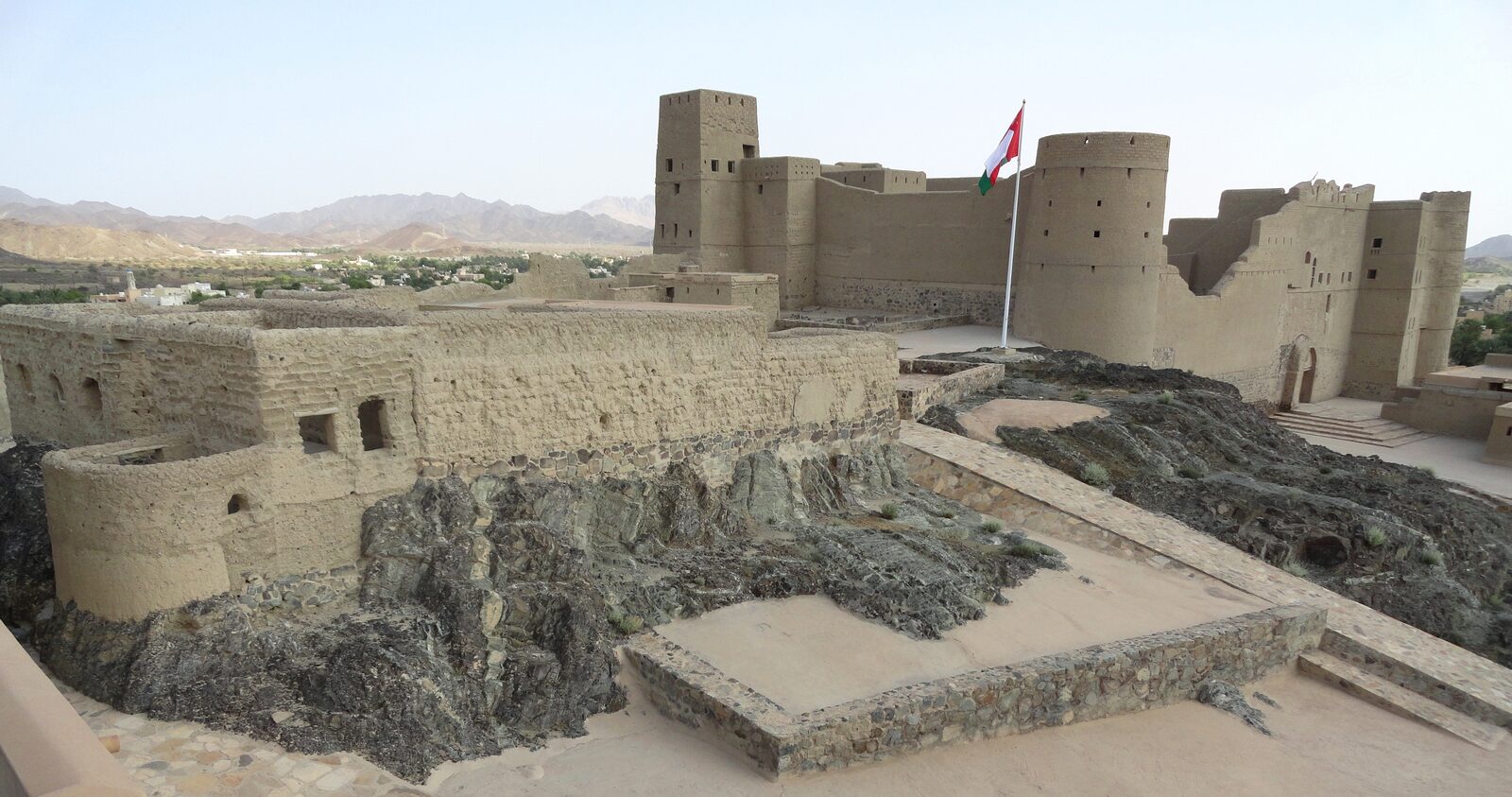
Bahla is a mud-brick oasis town in Oman whose fort, oasis walls and Friday Mosque were inscribed as a UNESCO World Heritage Site in 1987. The physical ensemble is thoroughly documented; the town's epithet "the City of Magic" and the tale that its long perimeter wall was raised in a single night by jinn summoned by two sisters are living folklore, not records.
Filed 2026-07-16 · Last updated 16 July 2026
Briefing
Bahla is a mud-brick oasis town in Oman’s Ad-Dakhiliyah governorate whose fort,
oasis walls and Friday Mosque were inscribed as a UNESCO World Heritage Site in
1987 [1]. It remains the country’s oldest fortified oasis ensemble. Alongside
the documented record sits a persistent local tradition — still recounted by
residents and guides today — that the town’s long perimeter wall was raised in a
single night by jinn summoned by two sisters, earning Bahla the epithet
Madinat al-Sehr, “the City of Magic” [2][3]. This file separates the two: the
physical site is thoroughly documented; the overnight-construction and jinn
claims are living folklore, not records.
Sequence of events
Antiquity — settlement and empire
- The wider oasis area has been settled since at least the second millennium
BC [4].
- The fort and settlement developed under the Banu Nebhan tribe, who
dominated central Oman and made Bahla their capital from the twelfth century
to the end of the fifteenth century [1].
1987 — inscription
- Bahla Fort was inscribed on the UNESCO World Heritage List in 1987 as site
No. 433, under criterion (iv), as an outstanding example of a fortified oasis
settlement [1].
1988–2004 — the Danger List
- The site was placed on the List of World Heritage in Danger in 1988, the
fort decaying after each rainy season [1].
- During early consolidation work, an audience hall was reported demolished in
1992 [2].
- It was removed from the Danger List in 2004 following extensive
conservation using earthen-based materials [1].
2012 — reopening
- Major restoration was completed and the fort reopened in 2012. Accounts
differ on the month: reported as May 2012 by Gulf News and as November
2012 by the ArCHIAM documentation project [2][4].
Documentary record
The primary institutional record is the UNESCO World Heritage Centre listing
No. 433, which establishes the 1987 inscription under criterion (iv), the
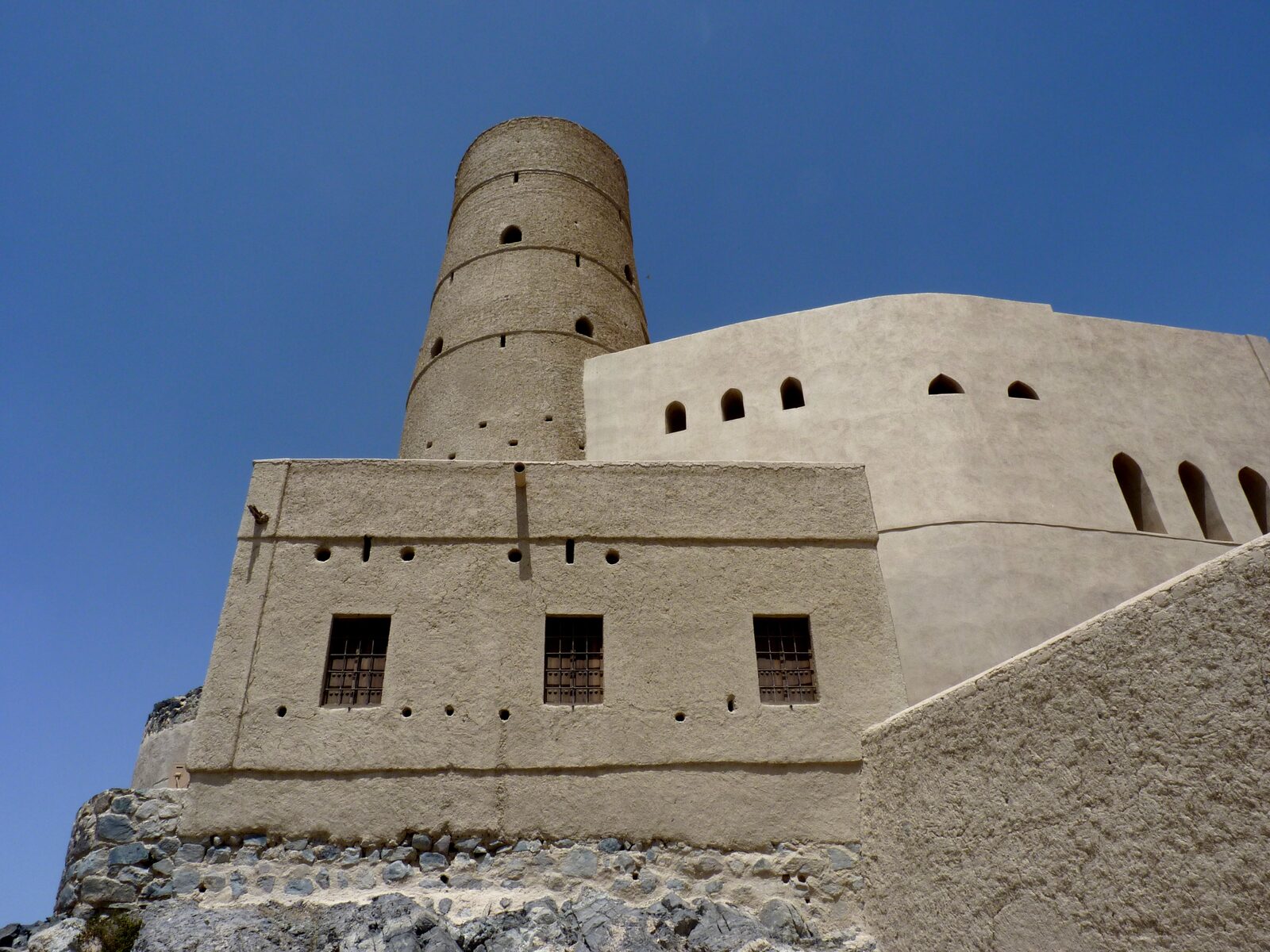
Banu Nebhan dating, the Danger-List history, and the physical description: walls
and towers of mud brick on stone foundations, a labyrinth of mud-brick dwellings
and cultivable land within an extensive perimeter wall, several gateways, and an
adjacent Friday Mosque with an ornately sculpted mihrab [1]. The oasis is
watered by a falaj system — wells and underground channels bringing
groundwater from distant springs [1]. The ArCHIAM Documentation and Heritage
Management Plan for Harat al-Aqr, Bahla Fort and Oasis — commissioned by
Oman’s Ministry of Heritage and Culture and completed in 2013 — confirms the
second-millennium-BC settlement, the scale of the mud-brick fort, and completion
of restoration [4].
Against this documented record stand the folkloric claims, which are
reported and unverified. Folklore holds that the town’s defensive wall was built
in a single night by jinn conjured by two magically skilled sisters — named in
modern reporting as Maitha and Gaitha — to protect Bahla from invaders
[2][3]. The wall is locally said to run about thirteen kilometres around the
oasis [2][3]. Witness testimony records the belief as living: the guide Hamad
al-Rabaani stated “we believe that jinn are among the creations of God … so it
is not strange,” and told of “men who suddenly transform into donkeys and other
animals” [3]. The resident Mohammed al-Hashemi recalled being warned as a child
“not to go out after sunset because of magic” [3]. The professor of Islamic
history Ali Olomi read Bahla’s lore as “stories of phantom blazes and fires,
animated desert storms and edifices built by supernatural forces,” attributing
such beliefs to remote desert communities keenly experiencing nature [3]. Other
residents place the tales at a remove: Mazen al-Khaterri said “these are just
stories told by our grandparents. We don’t know if they are right or wrong” [3].
Open questions
- The primary records do not date the perimeter oasis wall itself, nor confirm
the widely quoted thirteen-kilometre figure against a surveyed
measurement [2][3]. A traceable primary source for that length could not be
located.
- The names “Maitha and Gaitha” appear only in modern travel and news
reporting; no primary or dated folkloric record attaching them could be found
[2][3].
- The exact reopening month — May versus November 2012 — is not reconciled
across sources [2][4].
- No primary source dates the origin of the jinn tradition itself.
- The often-repeated claim that Omanis still actively avoid Bahla for fear of
jinn is supported only by individual witness testimony, not by any survey or
documented record [3].
Status
This file is CONFIDENTIAL — admitted to the archive on the strength of the
UNESCO institutional listing and the ArCHIAM heritage documentation, which
together establish the site, its dating and its physical form beyond dispute
[1][4]. The supernatural material — the overnight wall, the two sisters, the
summoned jinn — is carried here as reported folklore, not evidence, and is
labelled as such throughout. Notably, the guide Hamad Ali’s claim that the fort
predates the Islamic era and that “nobody can confirm or deny” the legend
conflicts with UNESCO’s twelfth-to-fifteenth-century Banu Nebhan attribution of
the fortified ensemble [1][2]. The tale of a wall raised in one night by
conjured spirits places this file alongside the archive’s wider record of
supernatural-entity traditions, though it is filed on the
merits of the documented site, not the legend. UNESCO’s State of Conservation
reports — which detail the 1990s restoration controversy — could not be directly
retrieved during research and are not relied upon here.
References
- Bahla Fort — UNESCO World Heritage Centre, List No. 433. Establishes the 1987 inscription (criterion iv), the Banu Nebhan dating (12th–15th c.), the physical description (mud brick on stone, falaj, Friday Mosque with sculpted mihrab), and the Danger-List history (1988 listing, 2004 removal).
- Oman’s Bahla fort — where civilisations vie with legends. Gulf News. Madinat al-Sehr epithet, the ~13 km wall figure, the 1992 audience-hall demolition, and the reported May 2012 reopening.
- Magical myths still haunt ancient Omani oasis town. Taipei Times / AFP. Witness testimony (al-Rabaani, al-Hashemi, al-Khaterri, “Hasan”), the sisters/jinn legend variants, and Ali Olomi’s academic reading.
- Documentation and Heritage Management Plan: Harat al-Aqr, Bahla Fort and Oasis. ArCHIAM, commissioned by Oman’s Ministry of Heritage and Culture (completed 2013). Confirms 2nd-millennium-BC settlement, the scale of the mud-brick fort, and completion of restoration (reported November 2012).
Frequently asked
- Why is Bahla called the "City of Magic"?
- Bahla is popularly known as Madinat al-Sehr, "the City of Magic," because of a living local tradition — recounted by residents and guides today — that the town's long perimeter wall was raised in a single night by jinn summoned by two magically skilled sisters. The physical site is documented by UNESCO; the overnight-construction and jinn claims are folklore, not records.
- Is Bahla Fort a real, recognised historical site?
- Yes. Bahla Fort was inscribed on the UNESCO World Heritage List in 1987 as site No. 433 under criterion (iv), an outstanding example of a fortified oasis settlement. The fort and settlement developed under the Banu Nebhan tribe, who made Bahla their capital from the twelfth century to the end of the fifteenth century.
- Who were the two sisters said to have built Bahla's wall?
- Modern travel and news reporting names them Maitha and Gaitha, said to be magically skilled sisters who conjured jinn to build the town's defensive wall. Accounts vary — one version has both sisters build the wall, another has one build the wall while the other created the irrigation system. No primary or dated folkloric source attaching these names could be located.
- How long is Bahla's oasis wall?
- The wall is locally said to run about thirteen kilometres around the oasis, a figure repeated across travel and news writing. The primary records do not date the perimeter wall itself, and a traceable primary source confirming the thirteen-kilometre figure against a surveyed measurement could not be located.