CONFIDENTIAL
MY-26002
Father Crespi's Missing Gold Artifacts of Cuenca
- Incident
- 1962-07-19
- Location
- Cuenca, Azuay Province, Ecuador
- Coords
- -2.8974, -79.0045
Brief
Father Carlo Crespi Croci, an Italian Salesian priest in Cuenca, amassed thousands of artifacts across six decades — among them metal plates said to bear unknown scripts, which he maintained were gifts from local Shuar people. After a fire in 1962 and his death in 1982, the surviving collection passed to the Central Bank of Ecuador; the inscribed plates have never been publicly re-exhibited, catalogued by mainstream archaeology, or authenticated. No government, court, or FOIA record documenting the plates has been located.
Filed 2026-07-11 · Last updated 11 July 2026
Briefing
Between his arrival in Cuenca in 1923 and his death in 1982, the Italian
Salesian priest Carlo (Carlos) Crespi Croci accumulated thousands of
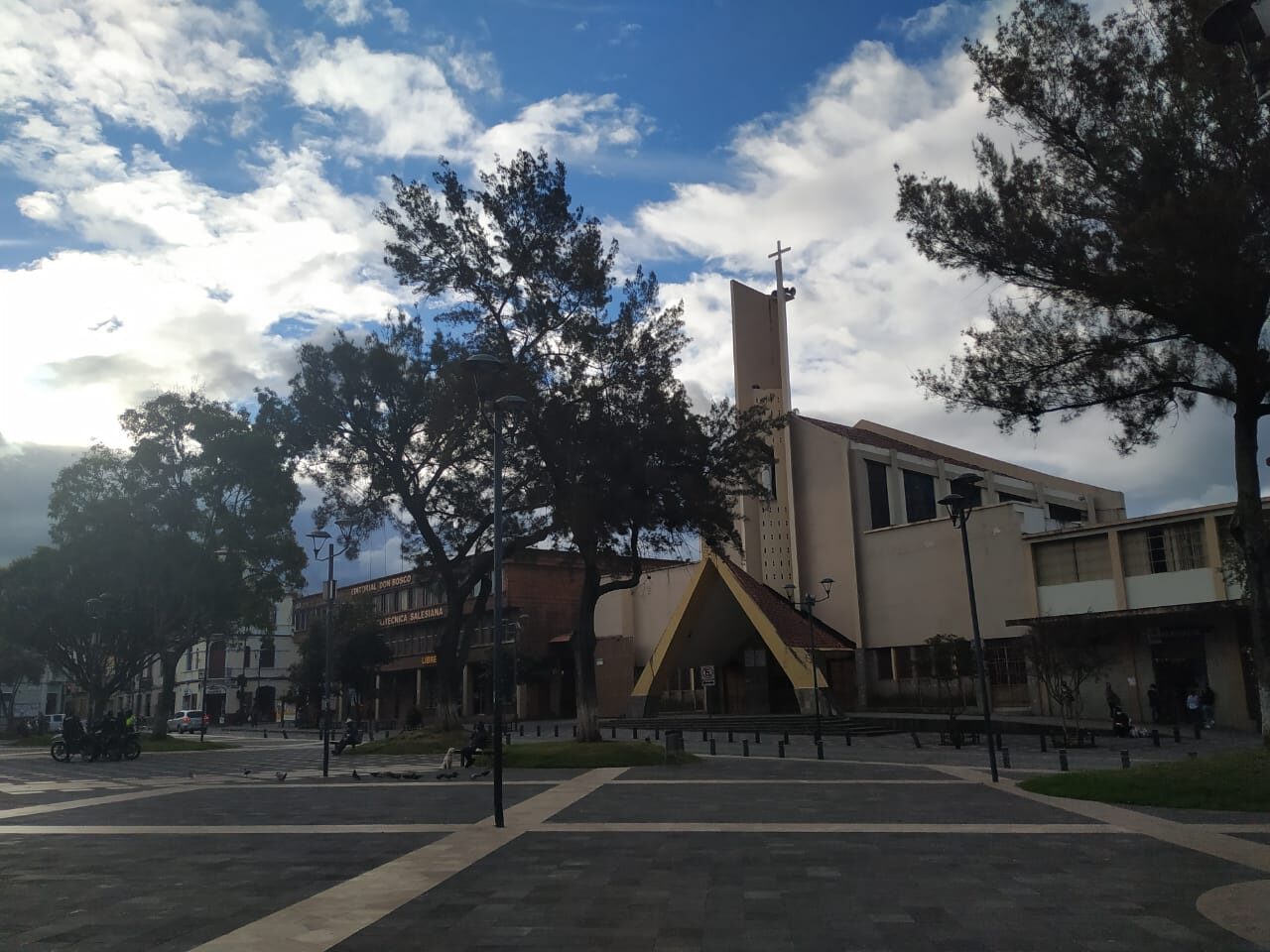
artifacts in the courtyard museum of the Maria Auxiliadora church — ritual
objects, ceramics, figurines, and a set of metal plates said to bear unknown
scripts [1][2]. Crespi maintained the items had been donated to him by local
Shuar people [1][2]. The plates are the reason the file is open: after a fire in
1962 and the priest’s death two decades later, the surviving collection passed
to the Central Bank of Ecuador, and the inscribed plates were never publicly
re-exhibited, independently catalogued, or authenticated [1][2].
This archive holds no government inventory, court record, or FOIA release
documenting the plates. The strongest published source is a 1973 popular book
whose own named informant subsequently repudiated it [4][5].
Sequence of events
1891 to 1932 — arrival and settlement
- Crespi is reported to have been born on the twenty-ninth of May 1891 in
Legnano, in the province of Milan, and to have become a Salesian priest [1][2].
- He arrived in Cuenca, Ecuador on the twenty-third of April 1923 and
remained in Ecuador for the rest of his life, in missionary, educational and
charitable work [1].
- He founded several schools between 1928 and 1932 [1].
The decades of collecting
- Over many years Crespi accumulated ritual objects, ceramics, figurines, and
inscribed metal plates, displayed in a private museum in the courtyard of the
Maria Auxiliadora church [1][2].
- Crespi maintained throughout that the objects were gifts from local Shuar
people [1][2]. Whether he himself ever asserted that the plates were ancient
— as opposed to simply donated — is not clearly documented.
The nineteenth of July 1962 — the fire
- A fire destroyed school buildings and parts of the museum [1].
- Contemporary accounts in the Cuenca papers El Mercurio and El Tiempo
offered competing explanations: a candle, an electrical fault, or a deliberate
act [1]. No cause is settled.
1978 to 1982 — sale, death, and disappearance
- Wikipedia states that over 5,000 objects were inventoried and sold to the
Central Bank of Ecuador in 1978 to settle a debt; the am-sur Cuenca
chronology instead dates the museum sale to 1979–1980 for ten million
sucres [1][2]. Both accounts are on the record; this archive does not
adjudicate between them.
- Crespi died in Cuenca on the thirtieth of April 1982 [1][2]. Sources
conflict on whether he was ninety or ninety-one [1][2].
- Following the acquisition, the inscribed gold and metal plates were not put on
public display and have not been independently catalogued. They are commonly
described as stored in Central Bank vaults and effectively inaccessible [2].
Documentary record
There is no primary documentary record of the plates. No FOIA release, no
official Ecuadorian government inventory, no court record, and no peer-reviewed
archaeological study of the “unknown-script” plates was located during this
research.
What exists instead is a published claim and its retraction. Erich von
Däniken’s The Gold of the Gods (Putnam, New York, 1973; German original
Aussaat und Kosmos) is the origin of the international story [5]. Von Däniken
wrote that the Hungarian-Argentine explorer János “Juan” Móricz had guided
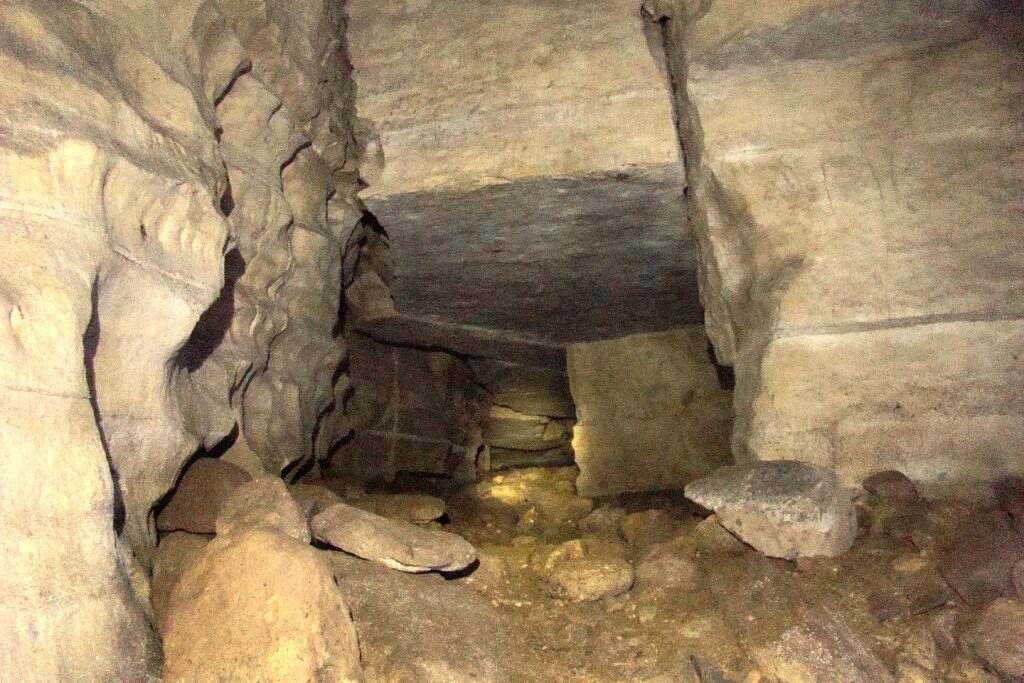
him through man-made tunnels in the Cueva de los Tayos, where he saw mounds of
gold, statues, and a “metal library” of inscribed tablets [5]. Móricz had
claimed since the 1960s to have found such a library in Ecuador’s caves and had
linked it to Crespi’s collection, but he never disclosed an exact location and
reportedly demanded payment for verification [3]. He described a polished stone
desk bearing large books made of gold with engraved hieroglyphs, variously
assigning the script to Phoenician or cuneiform styles [3]. A further claim
attributed to him — that four aliens spoke to him telepathically on a first cave
encounter — is single-source and uncorroborated [3].
The account did not survive contact with its own informant. Móricz told the
German magazine Der Spiegel that there had been no expedition, that von
Däniken’s descriptions came from “a long conversation,” and that the book’s
photographs had been “fiddled” [4]. In 1976 the Scottish amateur archaeologist
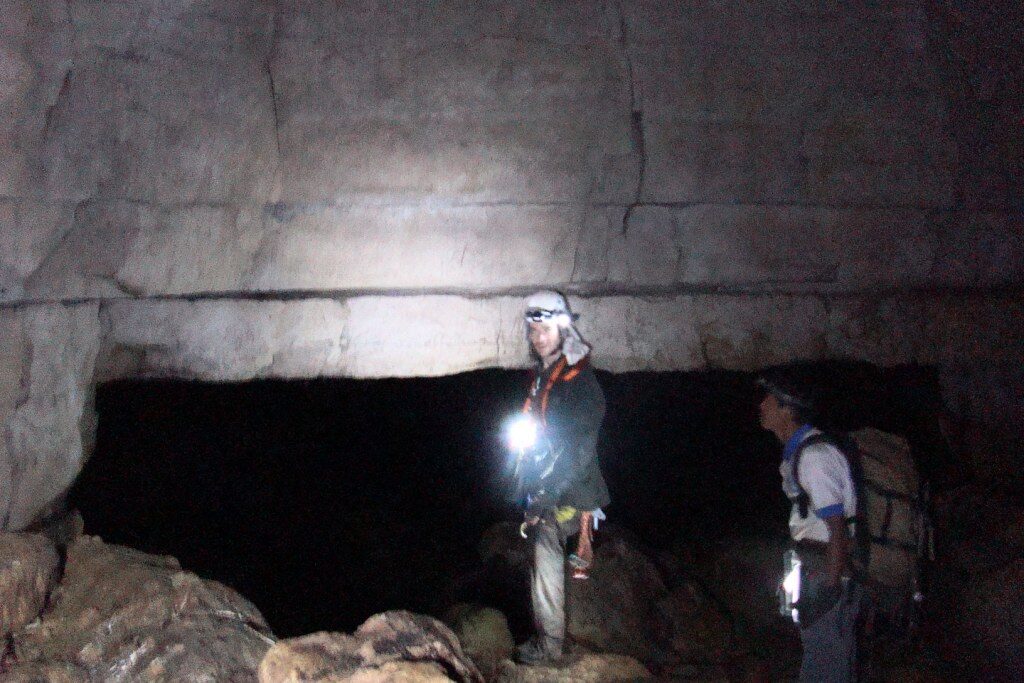
Stan Hall organised an expedition to the Cueva de los Tayos to test the
claims; it reportedly involved more than a hundred participants, including
British and Ecuadorian military personnel and the former astronaut Neil
Armstrong as honorary leader [3]. The expedition found engineered-looking
passages and human burials dated as early as around 1500 BCE — but no golden
library [3]. The mainstream archaeological position, as summarised by Wikipedia,
is that the golden library was a hoax [3].
The relationship between the caves and the courtyard museum is therefore a
claimed one, made by Móricz and amplified by von Däniken, and repudiated by
Móricz himself. The plates in Cuenca are a separate object of inquiry from the
library in the caves, and this archive treats them as such. Readers tracing the
wider pattern of asserted ancient contact across the Atlantic and Pacific may
find the pre-Columbian contact files
useful context; the unread inscriptions themselves sit alongside the archive’s
other undeciphered manuscripts.
Open questions
- No located primary record establishes the plates’ material composition, their
age, or the meaning — if any — of the inscriptions upon them.
- The exact terms of the Central Bank of Ecuador acquisition — its date, its
price, and an item-by-item inventory of what was included — are not settled by
any primary document accessible here. Secondary accounts disagree, and the
frequently-cited purchase price of US$433,000 appears only in secondary web
summaries that could not be verified [1][2].
- Whether the inscribed plates still physically exist, were dispersed to
private buyers, returned to the Salesians or the Vatican, or were melted down
or lost, is not answered by any primary source. Various accounts hold that
surviving artifacts were stored in the cellar of Maria Auxiliadora, sold to
private collectors, or sent to the Vatican; these are mutually inconsistent
and unsourced to primary records [2].
- Whether Crespi himself ever asserted the plates were ancient — rather than
simply gifts from the Shuar — is not clearly documented.
- The widely-repeated figure of “50,000 artifacts” in the collection appears
throughout popular articles but cannot be traced to any primary catalogue or
official inventory. The archive does not carry it.
- The frequent assertion that Crespi received Vatican permission to open the
museum could not be confirmed against any primary Salesian or Vatican record.
Status
This file is CONFIDENTIAL — admitted on the strength of a well-documented
biography and a well-documented disappearance, not on the strength of the
artifacts themselves. That Crespi lived in Cuenca, collected in volume, lost part
of the collection to fire in 1962, and that the remainder passed to the Central
Bank of Ecuador, is consistently reported across the available sources [1][2].
That the inscribed plates bear an unknown script, or are ancient, or came from a
cave, is not documented anywhere this archive can reach — it rests on the
testimony of a single explorer who later denied the expedition that supposedly
produced it [3][4].
The archive therefore records the case as an inaccessibility rather than a
discovery: the objects that would settle the matter are, by every available
account, in a bank vault, unphotographed and uncatalogued. Updates pending any
official inventory or independent examination of the Central Bank holdings.
References
- Cuenca: Father Crespi – Chronology, Museum, Social Work and Legacy — am-sur.com. Chronology of Crespi’s life, the museum, the 1962 fire and the contemporary El Mercurio and El Tiempo accounts, and the museum sale. Accessed 11th July 2026; licence unverified.
- Carlo Crespi Croci — Wikipedia. Biography, the collection and the Shuar donation claim, the sale of over 5,000 inventoried objects to the Central Bank of Ecuador, and the subsequent inaccessibility of the plates. Accessed 11th July 2026; CC-licensed.
- Cueva de los Tayos — Wikipedia. Móricz’s “metal library” claims, the 1976 Stan Hall expedition and Neil Armstrong’s participation, and the mainstream assessment of the golden library as a hoax. Accessed 11th July 2026; CC-licensed.
- Erich von Däniken — Wikipedia. Records Móricz’s statements to Der Spiegel that there had been no expedition, that the descriptions came from “a long conversation,” and that the photographs had been “fiddled”. Accessed 11th July 2026; CC-licensed.
- The Gold of the Gods — Erich von Däniken, G. P. Putnam’s Sons, New York, 1973 (German original Aussaat und Kosmos), via the Internet Archive. The primary published origin of the international claim. Access-restricted/borrow-only; copyright status unverified. Accessed 11th July 2026.