Briefing
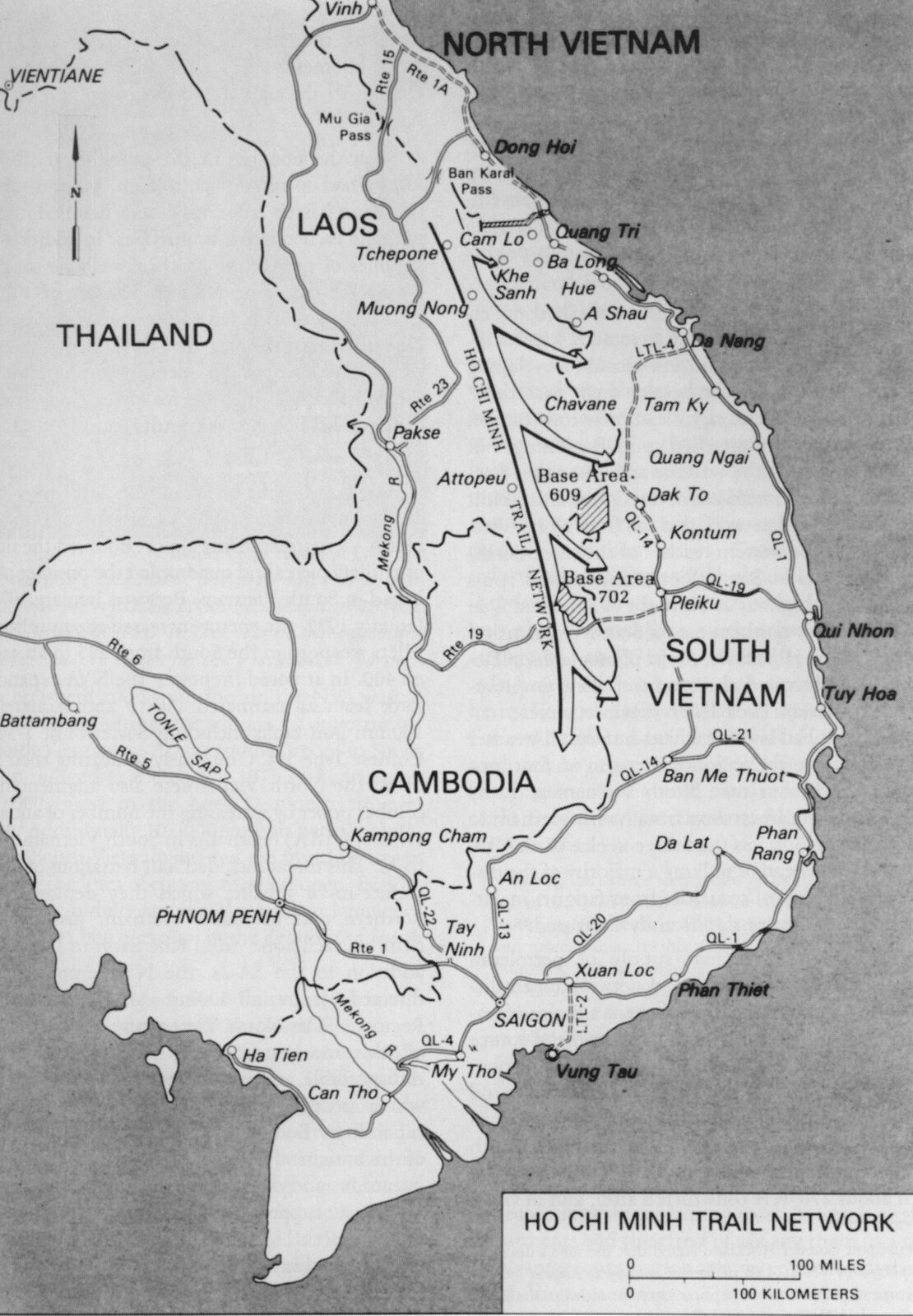
Between the twentieth of March 1967 and the fifth of July 1972, the
United States flew 2,602 cloud-seeding sorties over Laos, North Vietnam,
northeast Cambodia and parts of South Vietnam, expending 47,409 silver- and
lead-iodide units at a cost of approximately $3.6 million a year [1]. The
programme ran as Operation Popeye and under the cover names Intermediary,
Compatriot and Motorpool; its purpose was to extend the southwest monsoon and
mire the Ho Chi Minh Trail [1]. It was admitted to a closed Senate subcommittee
in a Top Secret hearing on the twentieth of March 1974 and made public on
the nineteenth of May 1974 [1][5]. Unlike most files in this archive,
Popeye is not a contested sighting but a documented state programme — the
uncertainty here concerns what it achieved and who authorised it, not whether
it happened.
Sequence of events
Origin and test — 1966
- The Office of the Director of Defense Research and Engineering proposed using
known weather-modification techniques in Southeast Asia to inhibit enemy
logistics [1].
- A scientifically controlled test was conducted in the Laos Panhandle during
October 1966 under the technical supervision of personnel from the Naval
Ordnance Test Station (later Naval Weapons Center), China Lake, California;
56 seedings were conducted and, in the 1974 DoD briefing, “over 85 percent of
the clouds tested reacted favorably” [1].
- A State Department memorandum of the thirteenth of January 1967 recorded a
different figure for the same test: “82% of the clouds seeded produced rain
within a brief period after seeding—a percentage appreciably higher than
normal expectation in the absence of seeding” [2].
- On the ninth of November 1966 CINCPAC reported the test complete and
concluded that cloud-seeding over infiltration routes in Laos “could be used
as a valuable tactical weapon” [1].
- On the thirteenth of January 1967 Foy D. Kohler, Deputy Under Secretary of
State for Political Affairs, forwarded the operational proposal to Secretary
of State Dean Rusk with reservations — uncontrolled effects on civilians,
ecological impact, sovereignty, international-legal exposure and publicity
risk — recommending a limit of five areas [2]. The FRUS editorial footnote
records that Rusk agreed to approve the operation “on a strictly experimental
basis” in those five limited areas, wished to be kept informed, and specified
that his approval was not a commitment to any broader application [2].
Operational phase — 1967 to 1972
- Seeding began the twentieth of March 1967 and was flown each
southwest-monsoon season, March to November, until the final mission on the
fifth of July 1972 [1].
- Area expansions were authorised for additional portions of Laos and North
Vietnam on the eleventh of July 1967; a small area over the A Shau Valley
in South Vietnam on the thirteenth of September 1967; and a further North
Vietnamese area on the twenty-fifth of September 1968 [1].
- All seeding inside North Vietnamese boundaries was terminated on the first
of November 1968 and, in DoD’s words, “never reinstituted” [1].
- In 1970 the Laos areas were modified; in 1972 the area was changed to include
parts of northeast Cambodia and South Vietnam and to limit activity to south
of 19°N in Laos [1].
- Sorties and units expended by year: 1967 — 591 sorties / 6,570 units
(including 1,017 over North Vietnam); 1968 — 734 / 7,420 (including 98 over
North Vietnam); 1969 — 528 / 9,457; 1970 — 277 / 8,312; 1971 — 333 / 11,288;
1972 — 139 / 4,362. Totals: 2,602 sorties and 47,409 units [1].
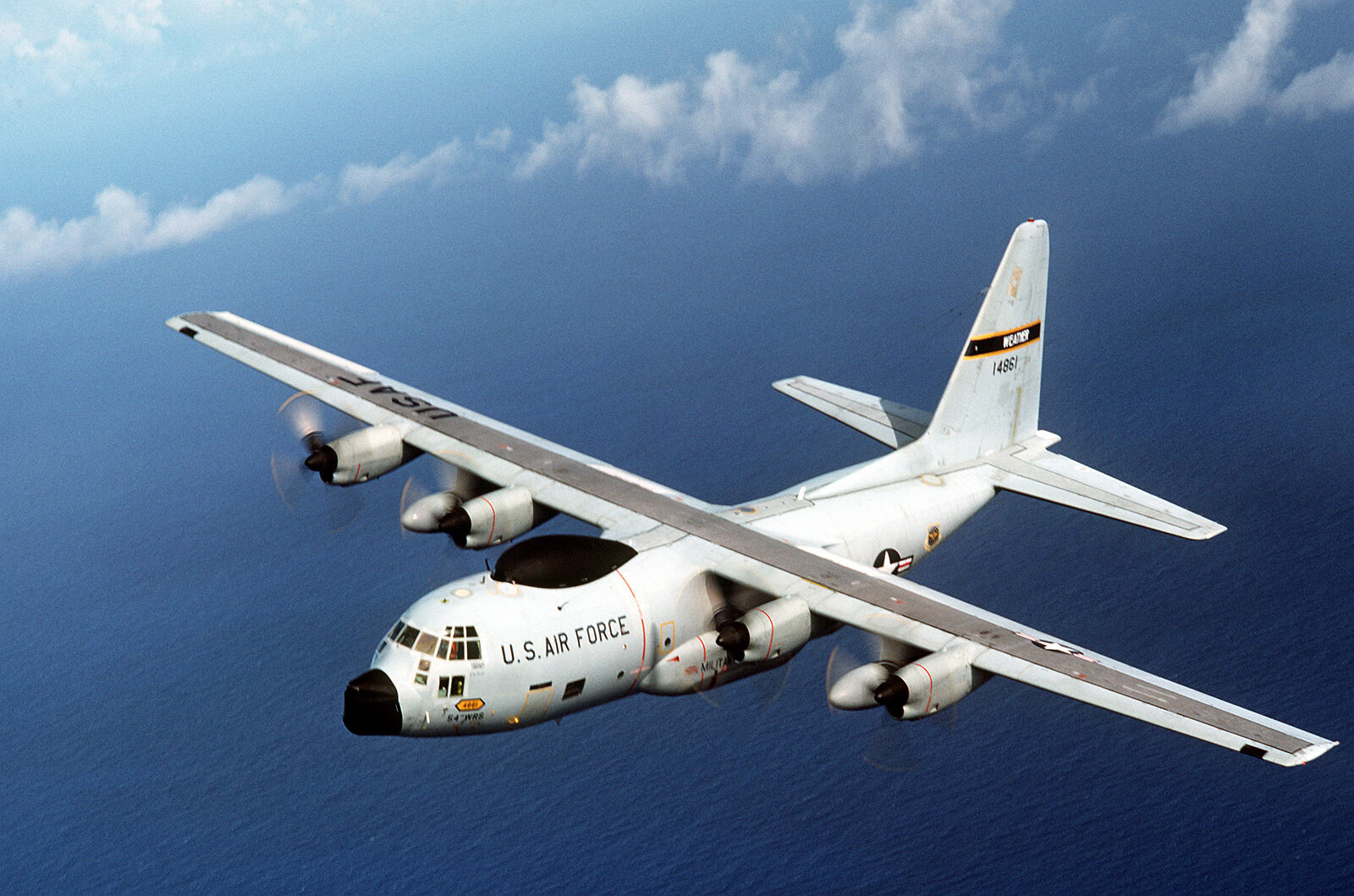
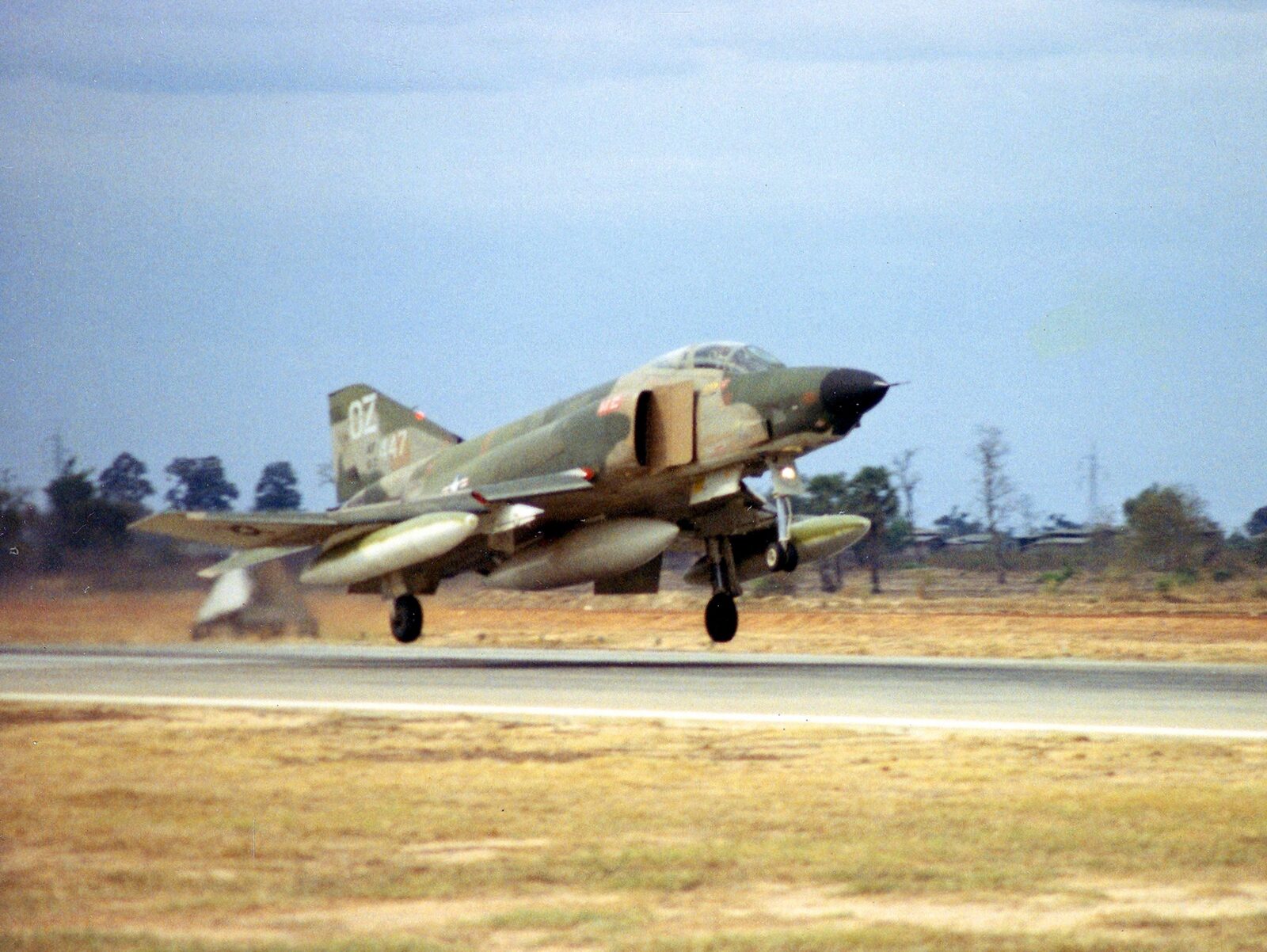
- The flying force was three WC-130 weather-reconnaissance aircraft and two
RF-4C reconnaissance aircraft operating from Thailand, each carrying 104
40mm photoflash-type seeding cartridges [1]. An Air Force organisational
history places the aircraft and crews at Udorn Air Base, Thailand, rotating
from the 54th Weather Reconnaissance Squadron at Andersen AFB, Guam, with
seeding flown at the freezing level, about 18,000 feet [3].
- The missions were hidden inside routine reporting: WC-130 sorties “were
flown, recorded, and reported through normal channels as weather
reconnaissance flights”, and the RF-4Cs flew as normal reconnaissance.
Separate evaluation reports went via special channels to the Joint Chiefs and
the Secretary of Defense [1].
Disclosure — 1972 to 1974
- On the eighteenth of April 1972, before the Senate Foreign Relations
Committee, Secretary of Defense Melvin R. Laird stated “we have never engaged
in that type of activity over North Vietnam” [1].
- On the twenty-eighth of January 1974 Laird wrote to Chairman
J. W. Fulbright: “I have just been informed that such activities were
conducted over North Vietnam in 1967 and again in 1968,” expressing “regret
that this information was not available to me at the time of my appearance”
[1].
- Fulbright asked on the twenty-ninth of January 1974 whether the letter
could be made public. Laird replied on the eleventh of February 1974 that
the Department of Defense still classified the material, and on the
twenty-second of February 1974 Acting DoD General Counsel L. Niederlehner
ruled the SECRET classification “is still appropriate” [1].
- The Top Secret briefing was given on the twentieth of March 1974 in room
S-116 of the Capitol; the transcript was made public on the nineteenth of
May 1974 [1][5].
- The Convention on the Prohibition of Military or Any Other Hostile Use of
Environmental Modification Techniques was approved by UN General Assembly
resolution 31/72 of the tenth of December 1976 and entered into force on
the fifth of October 1978 [4].
Documentary record
The primary record is the published hearing, Weather Modification, before the
Subcommittee on Oceans and International Environment of the Senate Foreign
Relations Committee, 93rd Congress, 2nd session, sitting on the twenty-fifth of
January and the twentieth of March 1974 [1][5]. It contains the DoD briefing,
all sixteen DoD-supplied charts — sorties, units expended, maps, and a June
1971 rainfall analysis — the Laird–Fulbright correspondence, the list of
categories of personnel cleared, and the answers on the Pollack Committee. Its
cover note reads: “[Top Secret hearing held on March 20, 1974; made public on
May 19, 1974]” [1][5].
The earlier decision record survives in the Kohler memorandum to Rusk of the
thirteenth of January 1967, “Weather Modification in North Vietnam and Laos
(Project Popeye)”, printed as Document 274 of FRUS 1964–68, Volume XXVIII,
Laos, and sourced to Department of State Central Files, POL 27 VIET S, Top
Secret [2]. The operational detail — basing, rotation, flare configuration and
freezing-level seeding altitude — comes from the Department of the Air Force
organisational history of the 54 Weather Reconnaissance Squadron, which also
notes that the governments of Thailand, Laos and South Vietnam, and the US
ambassadors to them, were not informed [3]. The treaty record is held by the UN
Office for Disarmament Affairs [4].
Two figures conflict across the documents and are recorded here unresolved. The
October 1966 test appears as “over 85 percent of the clouds tested reacted
favorably” in the 1974 DoD briefing and as “82% of the clouds seeded produced
rain” in the January 1967 State memorandum [1][2]. The 1974 hearing chart gives
734 sorties for 1968, while the Air Force organisational history gives 737 for
the same year, matching the hearing exactly on 591 sorties for 1967 and on the
6,570 and 7,420 flare counts [1][3].
Witnesses of record include Dennis J. Doolin, Deputy Assistant Secretary of
Defense (East Asia and Pacific Affairs), DoD’s lead witness; Lt. Col. Ed
Soyster, USA, of the Organization of the Joint Chiefs of Staff, who delivered
the operational briefing; Maj. Gen. Ray Furlong, USAF, Deputy Assistant
Secretary of Defense (Legislative Affairs); Col. Albert J. Kaehn, Jr. of
ODDR&E; and William Chapin of the State Department [1]. Sen. Claiborne Pell
(D-RI) chaired both hearings, with Sen. Clifford Case (R-NJ) the only other
senator present on the twentieth of March 1974 [1]. Dr. John Foster, Director
of Defense Research and Engineering, headed the office that conceived the
operation; approval authority inside DoD lay with the Secretary of Defense, and
information then went to the White House [1]. It is reported that Gen. William
C. Westmoreland (COMUSMACV) and Gen. William W. Momyer (Seventh Air Force) were
among the small number of senior officers cleared for the programme [3], and
reported by Doolin that approximately 1,400 personnel were cleared into the
project over its six years [1].
Open questions
- Who in the White House knew or approved. Doolin told Pell he could not
supply a list: “I know that information on this operation was sent to the
White House. Whether it was for information or whether it was for approval, I
do not know. I have been unable to find out” [1].
- Which four congressional committee chairmen were informed, and when. DoD
confirmed only that four chairmen of the Armed Services and Appropriations
committees were told, and that this was “not done on a recurring basis” [1].
- Which State Department officials were briefed. Furlong could give only a
function — “the Under Secretary of State for Political Affairs” — and said he
could not say whether that was the limit [1].
- Why the programme ended on the fifth of July 1972. The hearing records
the last mission date but no stated reason [1].
- How much rainfall was actually induced. DoD stated results “cannot be
precisely quantified… due to the lack of sufficient ground stations to
report” [1]. The only quantified effect in the primary record is the DIA’s
estimate of up to thirty per cent in limited areas, which DoD itself
presented with the qualifier “subjectively, it is believed” [1].
- Civilian and agricultural effects on the ground in Laos and North
Vietnam. No damage assessment appears in the record; DoD asserted that
intelligence analysis showed “no significant danger to life, health, or
sanitation” [1].
- Why the Pollack Committee was refused. DoD confirmed for the record that
a National Security Council interagency panel, the Pollack Committee, sought
information on weather modification in Southeast Asia and was denied it, the
stated reason being the “classification then assigned to this information
precluded its availability” [1].
Status
This file is CONFIDENTIAL — admitted on the strength of a published
congressional hearing transcript, a declassified State Department memorandum,
and an Air Force unit history [1][2][3]. The operation itself is not in dispute;
the archive’s caution attaches only to its effects and its chain of approval.
Three claims commonly attached to Popeye are excluded from the body above
because no primary source for them was located. The figure that “the monsoon was
extended by 30 to 45 days” appears across secondary accounts but is absent from
the 1974 hearing, the FRUS memorandum and the Air Force history; its origin is
untraced. CIA operational involvement is not supported: asked directly,
Doolin and Furlong stated it was entirely a Department of Defense operation
flown by the US Air Force, and the CIA Director appears only on the list of
categories informed [1]. No casualty, flood or crop-loss figure attributed
to the programme could be traced to a primary source.
Two further items are held at lower confidence. It is reported that public
disclosure was triggered by a Jack Anderson newspaper column — Doolin testified
that “the first I learned of it was, as the result of a Jack Anderson column,”
and that he was then told not to pursue the matter [1]; the widely cited date
for that column could not be verified against a primary source. It is also
reported that Seymour Hersh of the New York Times was pursuing the story
before declassification, Doolin telling the subcommittee that “Mr. Hersh has
been trying to get ahold of me, from the New York Times” [1].
Two statements of opinion are recorded as such. Doolin, asked for a personal
view, said: “I am not convinced that it had anything more than a marginal
effect, but that is something that even the experts disagree on,” and separately
called rainmaking “really quite humane, if it works” [1]. Pell stated that the
programme “was the only program about which the DOD did not feel able to respond
to questions in either public or private session,” and that in retrospect “if
this had been unclassified, there would have been far less feeling about it”
[1].
Popeye sits in the archive’s record of programmes whose existence was denied on
the record and later conceded, alongside the files on
covert domestic surveillance and disruption and
CIA behavioural-control research. Updates pending
identification of the White House approval chain.
References
- Weather Modification: Hearings before the Subcommittee on Oceans and International Environment of the Committee on Foreign Relations, United States Senate, 93rd Congress, 2nd Session, January 25 and March 20, 1974 — U.S. Government Printing Office (GPO 29-544, 1974), via GovInfo. Public domain.
- Foreign Relations of the United States, 1964–1968, Volume XXVIII, Laos, Document 274: Memorandum From the Deputy Under Secretary of State for Political Affairs (Kohler) to Secretary of State Rusk, January 13, 1967 — Weather Modification in North Vietnam and Laos (Project Popeye) — Office of the Historian, U.S. Department of State. Source note: Department of State, Central Files, POL 27 VIET S. Top Secret.
- 54 Weather Reconnaissance Squadron — Department of the Air Force Organizational Histories — compiled unit lineage and history, created 19th February 2025; hosted at usafunithistory.com (private mirror; licence unverified).
- Convention on the Prohibition of Military or Any Other Hostile Use of Environmental Modification Techniques (ENMOD) — United Nations Office for Disarmament Affairs. Text of Article I, UNGA resolution 31/72, entry into force 5th October 1978; UN Secretary-General as depositary.
- CHRG-93shrg29544O — Weather modification hearings, publication record and citation metadata — GovInfo, U.S. Government Publishing Office.