Briefing
A patient with advanced dementia has not recognised her family for a year. She
does not speak. Then, hours or days before she dies, she sits up, uses names
correctly, and holds a coherent conversation. The phenomenon has a name —
terminal lucidity — given to it by Michael Nahm and Bruce Greyson in a
literature survey published in the Journal of Nervous and Mental Disease in
December 2009, in which they located 81 case references, retrieved 49 full
case reports, and observed that most had been recorded before 1849 [1].
Unusually for a file in this archive, the record here is not contested at its
foundation. Since a 2018 workshop convened by the US National Institute on
Aging, the phenomenon has been a funded mainstream research programme under the
alternative label “paradoxical lucidity” [4][5]. What remains open is not
whether it happens, but what it means.
Sequence of events
2009 — the phenomenon is named
- Nahm and Greyson publish their survey of the literature, coining the term
“terminal lucidity”; 81 case references located, 49 full reports retrieved,
most predating 1849 with comparatively few published thereafter [1].
2011 — the case collection
- Nahm, Greyson, Emily Williams Kelly and Erlendur Haraldsson publish an
expanded review in Archives of Gerontology and Geriatrics (received the
fourteenth of December 2010, accepted the twenty-fifth of June 2011),
identifying 83 cases across the preceding 250 years, reported by 55 different
authors, “mostly by professionals working in the medical setting” [2].
- Of the cases describing the course of illness, 22 patients were female and 32
male, with 18 further general claims by physicians or caregivers who gave no
details [2].
- Only two sources estimating frequency are found. The first is an 1844 book
by N.H. Julius, updating statistics compiled by Thurnam on a British asylum,
tabulating mental status at death for all 139 patients who died there between
1796 and 1841: 13% considerably improved, 2% considerably worse, 63%
unchanged, 22% changed in quality — with the highest remission rates in mania
(16%) and melancholia (17%) [2].
- The second is Brayne, Lovelace and Fenwick’s 2008 nursing-home study, in
which seven of ten caregivers reported having observed patients with dementia
or confusion becoming lucid a few days before death within the previous five
years [2].
2018 to 2019 — the institutional turn
- The US National Institute on Aging sponsors a workshop on lucidity in dementia
in 2018 (the month is not given in the source), leading to two papers in
Alzheimer’s & Dementia volume 15 and to two funding announcements,
RFA-AG-20-016 and RFA-AG-20-017 [4][5].
- George Mashour and nine co-authors — including Nahm, Batthyány, Greyson,
Kolanowski, Pakhomov, Karlawish and Shah — conclude that paradoxical lucidity,
“if systematically confirmed, challenges current assumptions and highlights the
possibility of network-level return of cognitive function in cases of severe
dementias” [5].
2020 to 2021 — the modern case series
- A retrospective chart review at Dongguk University Ilsan Hospital (Lim and
colleagues, Death Studies, 2020) examines 338 deaths — 187 in intensive
care, 151 on general wards — and identifies terminal lucidity in six cases, all
on general wards. Lucid periods ran from several hours to four days; half the
patients died within a week and the rest within nine days [6].
- Alexander Batthyány and Greyson survey caregivers who had witnessed a lucid
episode within the preceding twelve months (published online the
twenty-seventh of August 2020). Of 221 respondents who accessed the survey, 187
completed it, producing detailed reports on 197 cases, of which 124 (72%) were
dementia patients. Mean patient age 80.4 (SD 11.1, range 33 to 100); 58% women.
Before the episode, 39% had been awake but unresponsive most of the time and
27% mostly unconscious; during it, 79% showed “clear, coherent, and ‘just about
normal’” verbal communication. Death followed within two hours in 15% of cases,
within two to twenty-four hours in 41%, within two to three days in 23%, within
four to seven days in 15%, within eight to twenty-eight days in 3%, and more
than a month later in 3% [3].
2022 to 2026 — prospective observation
- The registered trial NCT05234866, “Paradoxical Lucidity in Severe End-Stage
Dementia”, sponsored by NYU Langone Health with the NIA as collaborator and Sam
Parnia as principal investigator, starts on the second of June 2022 with an
estimated enrolment of 520 and estimated completion the thirty-first of May
2027. It was listed as recruiting when checked [12].
- Jason Karlawish, Andrew Peterson and colleagues at the University of
Pennsylvania interview 30 family caregivers about 29 people with advanced
dementia between May 2021 and February 2022; 25 of 33 interviewed
caregivers (76%) report lucid episodes, describing 34 episodes, of which 21
(62%) lasted only seconds. The authors recommend eliminating “paradoxical” from
the terminology [7].
- September 2025. Andrea Gilmore-Bykovskyi and colleagues report the first
prospectively documented, directly observed lucid episodes: across 539
audiovisual observations of 20 people with advanced dementia, nine validated
episodes occurred in three participants. Recovery of verbal communication was
the defining shared feature [10].
- December 2025. A multi-site prospective study by Tollock, Leontovich,
Gonzalez and Parnia screens 1,768 patients at NYU Langone, VNS Health and
Bellevue Hospital; 1,405 (79.5%) meet criteria and 151 (10.7%) enrol. Of those
151, 93 (61.6%) report lucidity across 267 discrete events — appropriate
orientation to events 67.8%, return of old memories 34.8%, return of functional
abilities 27.7%, non-verbal communication 25.1%, and terminal lucidity with
memories consistent with near-death experiences 4.1%. A further 9.7% reported
hallucinations or delusions not consistent with reality [9].
- May 2026. Levin, Bonhag, Johnson and Post survey a nationally
representative US sample of 5,940 observers of dementia patients and put the
national prevalence of unexpected lucidity at 43.6% (weighted n = 2,587),
concluding that lucid episodes are “not rare, but possibly a normative feature
of the dementing process” [11].
Documentary record
The 2011 review and case collection is the archive’s primary document: it
gathers cases across brain abscesses, tumours, strokes, dementias, meningitis,
schizophrenia and affective disorders, and carries the full nineteenth-century
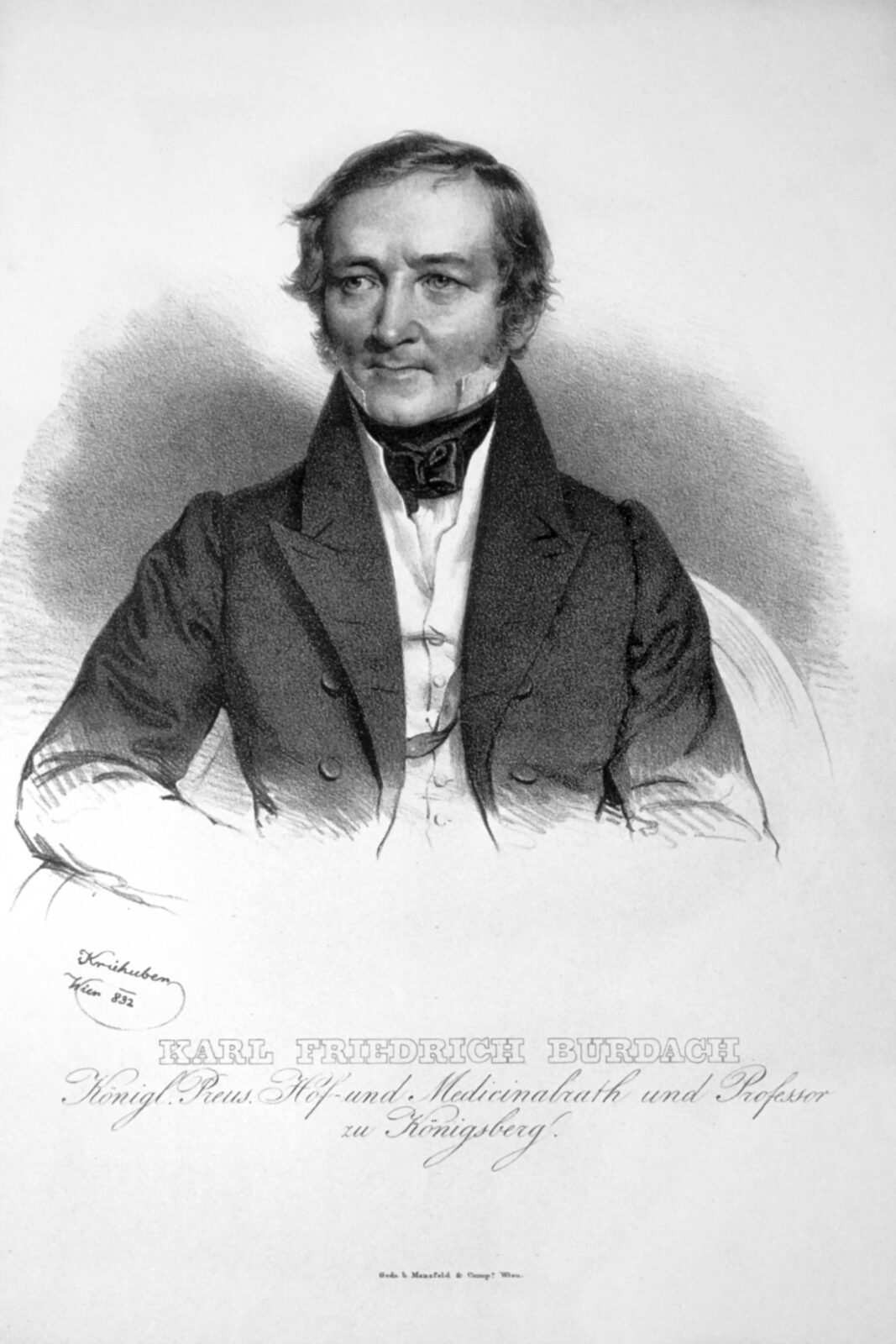
citation trail — Vering 1820, Pfeufer 1822, Burdach 1826, Bergmann 1829, Jacobi
1837, Butzke 1840, Leubuscher 1846 [2]. Nahm and colleagues record that
Burdach described two distinct manifestations as early as 1826 — a slow
decrease of derangement tracking bodily decline, and a sudden emergence of full
clarity just before dying — and conclude that “there may be no unitary mechanism
behind terminal lucidity” [2].
The historical cases within that collection are secondary retellings of
nineteenth-century sources and are not independently verified: the 1822 case
of a seventeen-year-old with two hen’s-egg-sized brain abscesses who rose from
bed, declared himself free of pain and died within minutes; and the 1820 case of
a nun whose madness fully vanished three weeks before death, with brain tissue
found so swollen at autopsy that the skull could not be closed [2]. Later
reported cases follow the same pattern: Noyes (1952) described a ninety-one-year-old
woman, paralysed and speechless after two strokes, who sat up, smiled, raised
her arms and called her deceased husband’s name before dying; Turetskaia and
Romanenko (1975) described three patients with chronic schizophrenia hospitalised
continuously for eleven, twenty and twenty-seven years — the last spending
seventeen years profoundly catatonic — who were “almost normal shortly before
they died”; and Haig (2007) reported, via a nurse and the patient’s wife, a man
with brain metastases who had lost all speech and movement waking an hour before
death to say goodbye and talk for about five minutes [2].
One account in the collection is witness testimony rather than clinical record:
an eighty-one-year-old woman in an Icelandic retirement home, unrecognising and
non-speaking for a year, who reportedly sat up, addressed her son Lydur by name,
recited a psalm stanza clearly, then lay back non-responsive and died about a
month later. Her son wrote the verse down immediately, believing it his mother’s
own composition [2]. This archive records it as testimony, not as evidence.
The official position is set out in the NIA Perspective by Eldadah, Fazio and
McLinden, which documents the 2018 workshop, the two funding announcements, and
the agency’s own caveats on definition and under-reporting [4].
Open questions
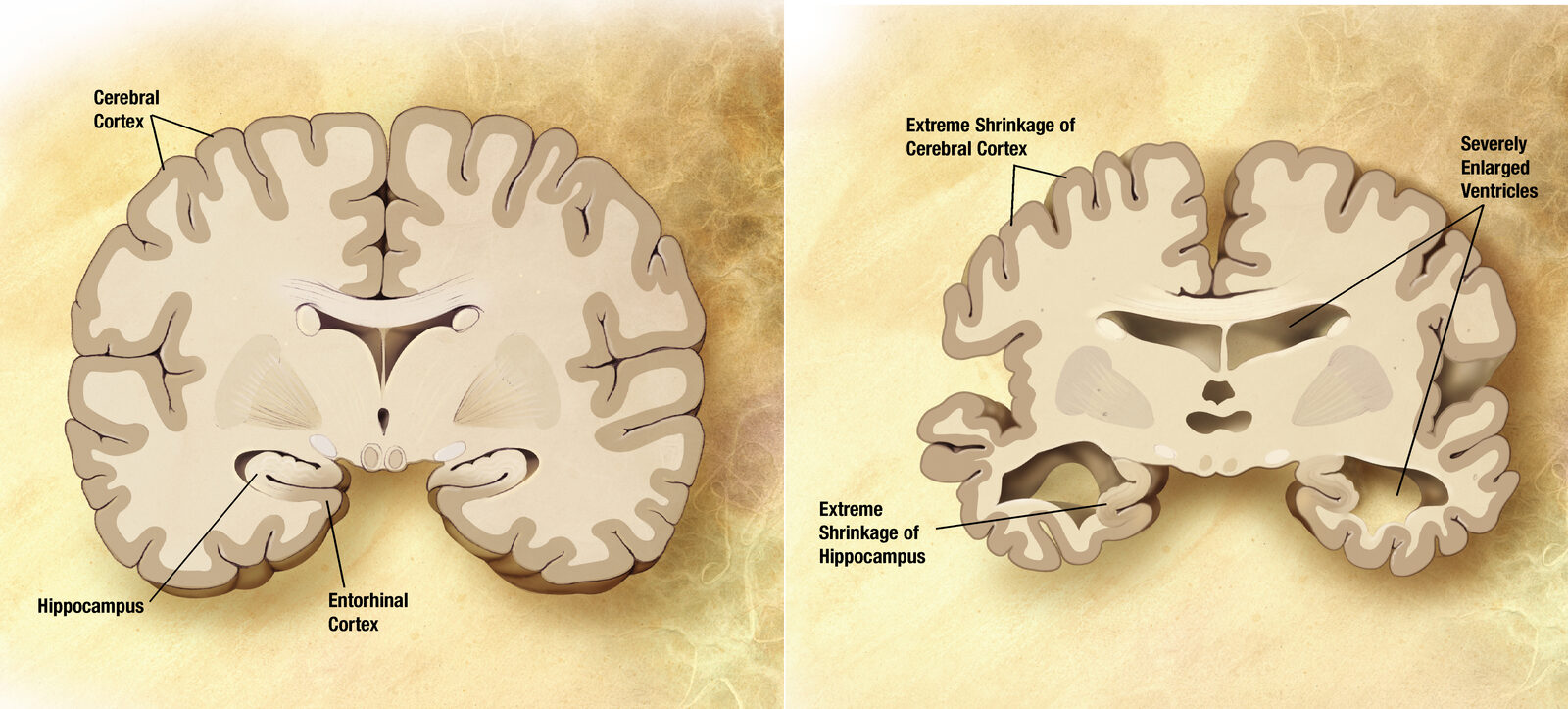
- Mechanism. No source consulted states a confirmed physiological
mechanism. Nahm and colleagues state explicitly that it is “not possible to
formulate definitive mechanisms” and that different disorders may involve
different processes [2]. They speculate — offered explicitly as conjecture —
that cachexia may shrink brain tissue and relieve pressure from
space-occupying lesions, permitting a fleeting return of function [2]. Mashour
and colleagues frame network-level return as a possibility requiring
systematic confirmation, not an established finding [5].
- True incidence. The NIA’s Perspective states “we don’t know how often
lucidity occurs”, and lists transience, masking by antipsychotics,
social-desirability and confirmation bias, and the lack of reporting channels
as causes of under-reporting [4]. Published estimates run from six of 338
hospital deaths [6] to 61.6% of enrolled patients [9] to 43.6% national
prevalence among observers [11]. The primary sources do not reconcile these
differing denominators.
- Definition. Eldadah and colleagues ask directly: “What exactly defines
lucidity? What makes it paradoxical and not expected? To whom do these
definitions apply?” — and predict the terminology will change [4].
- Whether it is specific to dying. The NIA notes that lucidity may prove to
occur at more points along the disease trajectory once prospective studies
mature, and raises whether it is a manifestation of the broader “end-of-life
rally” that hospice nurses describe [4].
- Whether dementia is irreversible. Batthyány and Greyson pose this as the
outstanding fundamental question rather than answering it [3].
- Terminology, contested in print. Nahm published a clarification arguing
that terminal lucidity and paradoxical lucidity are distinct entities
(Alzheimer’s & Dementia, March 2022) [8]; a 2022 conference abstract states
“We disagree with this distinction and argue that terminal lucidity is a
special subtype of paradoxical lucidity” [13]; Karlawish and colleagues
separately recommend dropping “paradoxical” altogether [7]. Both positions are
recorded here without adjudication.
- The eighteenth century. No primary source was located for the frequently
repeated framing that terminal lucidity has been “recorded since the
eighteenth century” as a matter of named individual cases. The traceable chain
runs to Julius’s 1844 tabulation of deaths beginning in 1796 and to Marshall
(1815); the “250 years” figure is the reviewers’ characterisation of the
literature’s span [1][2]. Nahm and colleagues further note that Julius
mentioned some patients dying suddenly, for example of stroke, “but he
included no case descriptions in his book” — the underlying detail does not
exist in the source [2].
- Triggers. Parnia’s group identified music, anniversaries, emotional
distress, and medication changes including immunomodulating agents and
antihistamines as potential triggers. This is reported in a conference
abstract, not yet a full peer-reviewed paper [9].
- No measurement during an episode. No source consulted provides a
documented physiological measurement — EEG or imaging — captured during a
terminal lucidity episode. The NYU trial listing that plans video-EEG capture
was still recruiting at the time of checking [12].
Status
This file is CONFIDENTIAL — admitted on the strength of peer-reviewed
clinical literature, government-funded research programmes and a registered
clinical trial, chiefly the 2011 case collection, the NIA Perspective, and the
first directly observed prospective episodes reported in 2025 [2][4][10]. The
documentary basis here is stronger than for most files in this archive; what is
weak is not the record but the explanation.
The historical and single-witness cases reproduced above are retained as context
only and would not, alone, clear our editorial bar. The archive’s interest is
narrow and specific: this is a phenomenon in which an outcome held to be
impossible is nonetheless recorded, repeatedly, by qualified observers — the same
evidentiary shape that characterises the glitches in the matrix
reports elsewhere in our reality anomalies files, though
with a documentary record those accounts do not possess. Updates pending
publication of the NYU trial, whose estimated completion is the thirty-first of
May 2027 [12].
References
- Nahm, Michael & Greyson, Bruce (2009). “Terminal lucidity in patients with chronic schizophrenia and dementia: a survey of the literature.” Journal of Nervous and Mental Disease 197(12):942–944.
- Nahm, Michael; Greyson, Bruce; Kelly, Emily Williams & Haraldsson, Erlendur (2011). “Terminal lucidity: A review and a case collection.” Archives of Gerontology and Geriatrics. DOI 10.1016/j.archger.2011.06.031.
- Batthyány, Alexander & Greyson, Bruce (2021). “Spontaneous Remission of Dementia Before Death: Results From a Study on Paradoxical Lucidity.” Psychology of Consciousness: Theory, Research, and Practice 8(1):1–8. DOI 10.1037/cns0000259.
- Eldadah, Basil A.; Fazio, Elena M. & McLinden, Kristina A. (2019). “Lucidity in dementia: A perspective from the NIA.” Alzheimer’s & Dementia 15:1104–1106.
- Mashour, George A. et al. (2019). “Paradoxical lucidity: A potential paradigm shift for the neurobiology and treatment of severe dementias.” Alzheimer’s & Dementia 15(8):1107–1114.
- Lim, Chun-Yeop et al. (2020). “Terminal lucidity in the teaching hospital setting.” Death Studies 44(5):285–291.
- Karlawish, Jason; Peterson, Andrew et al. (2024). “Caregiver Accounts of Lucid Episodes in Persons With Advanced Dementia.” The Gerontologist 64(6), gnad170. DOI 10.1093/geront/gnad170.
- Nahm, Michael (2022). “Terminal lucidity versus paradoxical lucidity: A terminological clarification.” Alzheimer’s & Dementia 18(3):538–539.
- Tollock, S.; Leontovich, A.; Gonzalez, N. & Parnia, Sam (2025). “A Multi-Site Prospective Study of Paradoxical Lucidity in Moderate to Severe Dementia.” Innovation in Aging 9(Suppl 2). DOI 10.1093/geroni/igaf122.2914.
- Gilmore-Bykovskyi, Andrea et al. (2025). “A prospective observational study of lucid episodes in advanced dementia.” The Gerontologist 65(9). DOI 10.1093/geront/gnaf178.
- Levin, J.; Bonhag, R.; Johnson, K. & Post, S. (2026). “Prevalence and Patterns of Unexpected Lucidity Among Deeply Forgetful Patients: Findings From a U.S. Population-Based Study.” International Journal of Psychiatry in Medicine. DOI 10.1177/00912174261453176.
- ClinicalTrials.gov (2022–). “Paradoxical Lucidity in Severe End-Stage Dementia”, NCT05234866. Sponsor: NYU Langone Health; collaborator: National Institute on Aging; principal investigator: Sam Parnia.
- “Is There a Difference Between Terminal Lucidity and Paradoxical Lucidity?” (2022). Innovation in Aging 6(Suppl 1).