CONFIDENTIAL
CR-26008
The Gold-Digging Ants of Persia
- Incident
- -000430-01-01
- Location
- Dardae country, northern India, eastern frontier of the Persian Achaemenid empire (modern Gilgit-Baltistan)
- Coords
- 35, 75.5
Brief
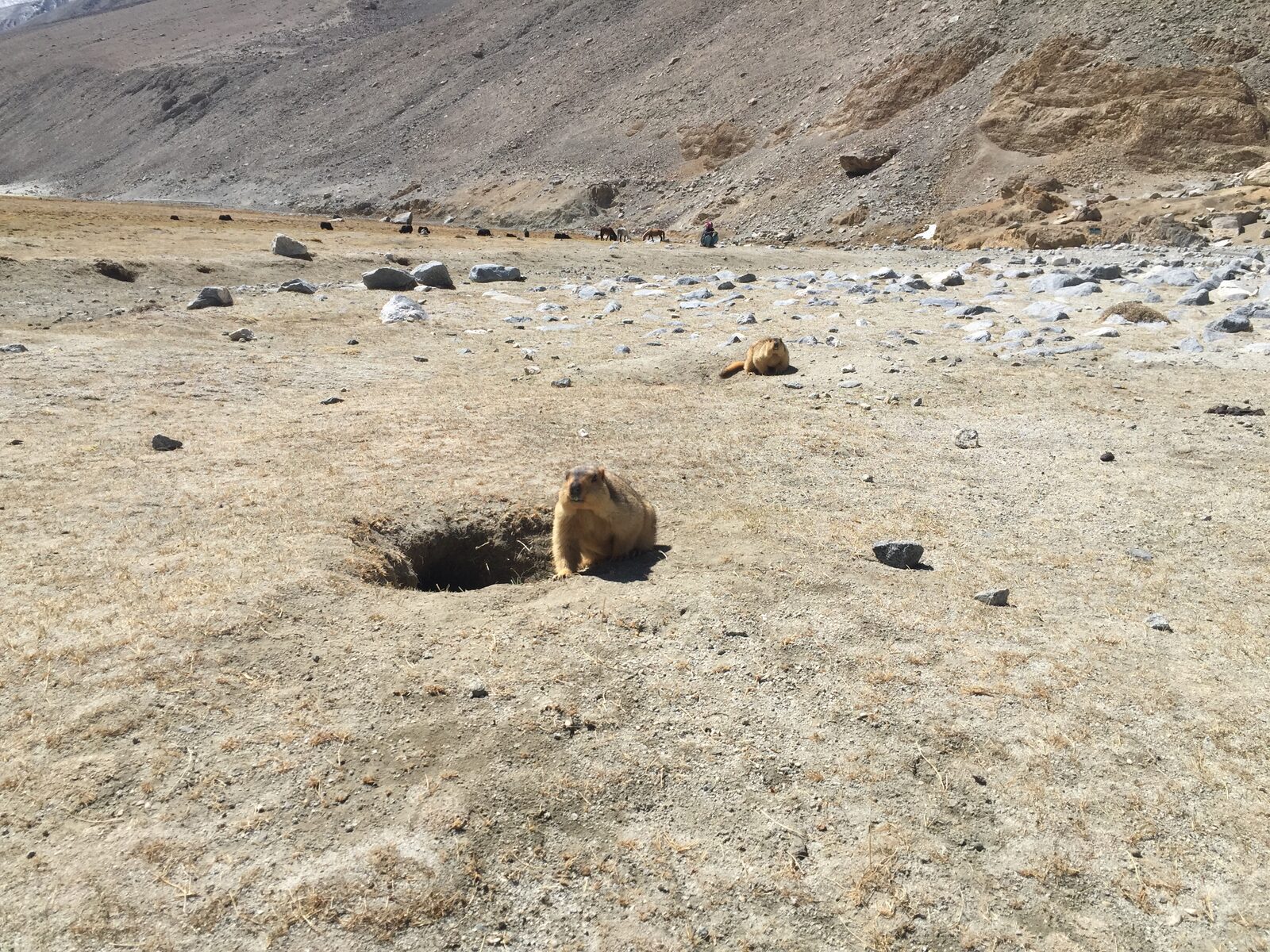
Around 430 BCE the Greek historian Herodotus recorded that a sandy desert of northern India, within the Persian empire, was home to gold-throwing ants "smaller than dogs but bigger than foxes" whose spoil the local Indians raided on fast camels. Later Greek and Roman writers repeated and embroidered the account for six centuries. The dominant modern reading, advanced by the French ethnologist Michel Peissel, is that the "ants" were gold-flecked-spoil-throwing Himalayan marmots.
Filed 2026-07-19 · Last updated 19 July 2026
Briefing
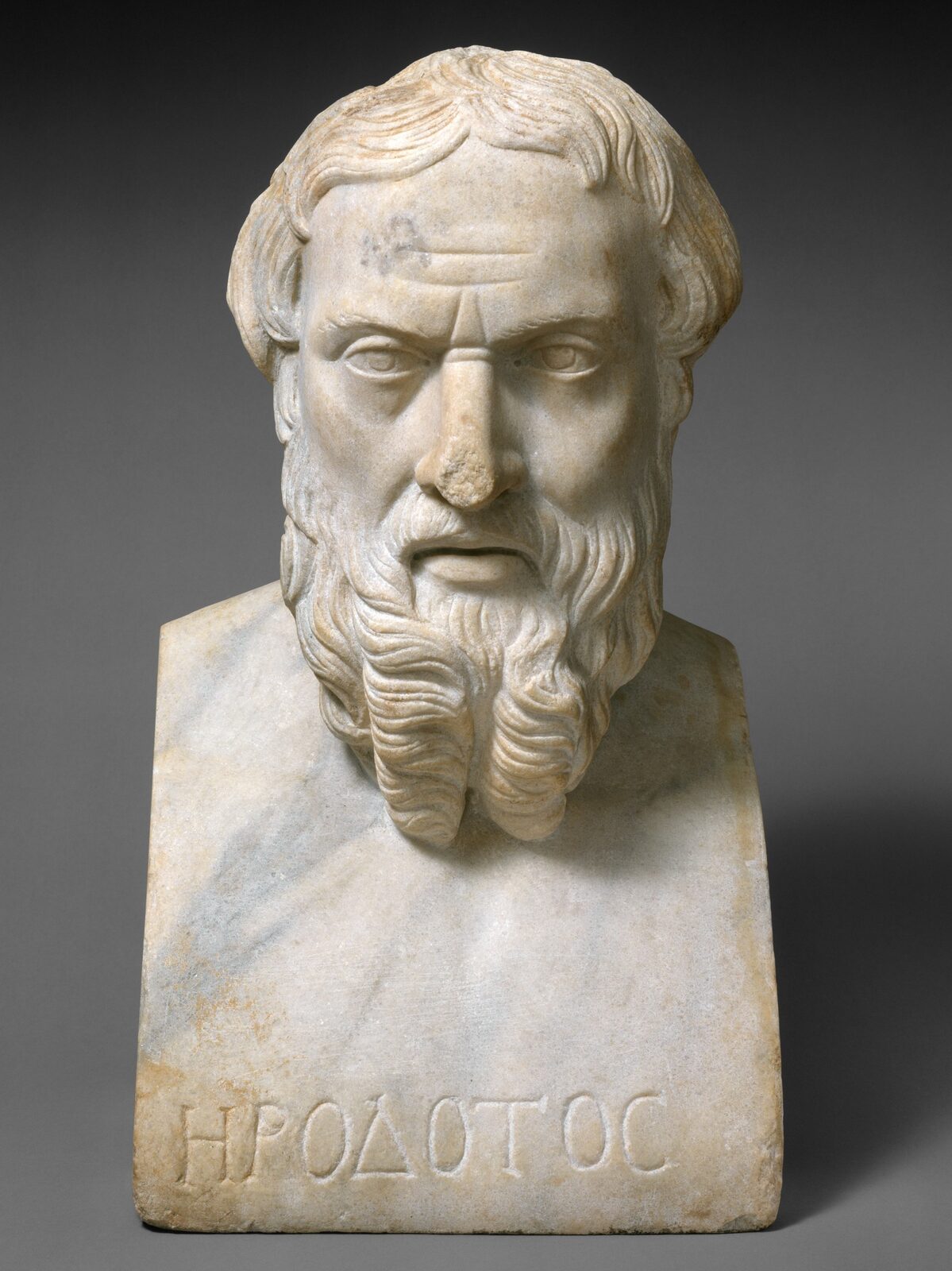
Around 430 BCE the Greek historian Herodotus recorded that, in a sandy
desert of northern India lying within the Persian Achaemenid empire, there
lived ants “smaller than dogs but bigger than foxes” that threw up gold-bearing
sand as they burrowed — spoil the local Indians raided on fast camels [1]. The
account was not Herodotus’s own observation but information he gathered about
the eastern frontier of the empire [1]. Over the following six centuries the
tale was repeated and embroidered by Nearchus, Megasthenes, Strabo and Pliny
[2][3]. Its dominant modern resolution identifies the “ants” as burrowing
Himalayan animals — a reading discussed below and held here as theory, not
established fact.
Sequence of events
c. 430 BCE — Herodotus, Histories 3.102–105
- Herodotus wrote that in the Indian desert east of the city of Caspatyrus
there are ants “in size somewhat less than dogs, but bigger than foxes”,
which build underground dwellings and, in digging, “throw up the sand” in
gold-rich heaps [1].
- He described the theft: Indians collect the gold-sand using three camels — a
female flanked by two males — timing the raid for the midday heat, when “the
ants … hide themselves under the ground”, and fleeing before the ants,
“following the scent”, give chase [1].
- Herodotus framed the whole as information gathered about the eastern edge of
the Persian empire, not personal observation [1].
Late 4th century BCE — Nearchus
- Nearchus, an admiral of Alexander, reported — as later quoted by Strabo —
that “the skins of the gold-mining ants are like those of leopards” [2].
c. 300 BCE — Megasthenes
- Megasthenes, Seleucid envoy to India and also preserved via Strabo, located
the ants among the Derdae (or Dardae), a populous eastern Indian
people; he said the ants “are no smaller than foxes”, are extremely swift,
dig holes in winter and heap the earth “like moles”, and that the resulting
gold-dust “requires but little smelting” [2].
- He described a different theft method: neighbouring peoples lay out pieces of
wild-beast flesh to draw the ants from their holes, then carry off the
gold-dust with beasts of burden; discovered thieves are pursued and killed
[2].
c. 77 CE — Pliny the Elder
- Pliny recorded that horns of an Indian ant were displayed in the Temple of
Hercules at Erythrae; that the ants “carry gold out of caves” in the land of
the northern Indians called the Dardae; that they are “of the colour of cats
and the size of Egyptian wolves”; and that Indians steal the winter-dug gold
in the summer heat, fleeing on “very fast camels” while the ants sting them
[3].
Documentary record
The founding text is Herodotus, Histories 3.102–105, which establishes the
size, the three-camel raid, the midday-heat timing, and the Persian-empire
framing [1]. Strabo, Geography 15.1.43–44 preserves the otherwise-lost
testimony of Nearchus (the leopard-like skins) and Megasthenes (the Derdae,
winter digging, the meat-decoy theft, and the easy smelting) [2]. Pliny,
Natural History 11.36 adds the physical relic — horns in the Temple of
Hercules at Erythrae — together with the cat-colour, wolf-size description and
the Dardae localisation [3]. It should be stressed that none of these texts
names a species; “ant” is the authors’ own word.
A modern resolution was advanced by the French ethnologist Michel Peissel
(1937–2011). Per a Time report of the ninth of December 1996, Peissel’s
expedition to the militarised Dansar plain, near the India–Pakistan cease-fire
line, located gold-bearing marmots [4]. Peissel argued the “ants” were Himalayan
marmots (Marmota himalayana), cat-sized burrowing rodents whose high-plateau
spoil carries gold dust, and that the Minaro or Dard people had for generations
collected gold from marmot spoil and fur [4][5]. He further proposed that
Herodotus confused an Old Iranian word for “marmot” with one for “mountain ant”,
the error compounded through a chain of translations [5]. Peissel is quoted as
saying the findings “at long last vindicate Herodotus, ending what may be the
longest treasure hunt in history” [4] — a reported claim, not an adjudicated
conclusion. The account of this file’s subject sits closer, in spirit, to the
archive’s other Himalayan legendary creature
cases than to any single named beast.
Open questions
- The primary ancient texts name no species; because “ant” (myrmex) is the
authors’ own word, the sources cannot themselves confirm or refute the
marmot reading [1][2][3].
- The ancient record is internally inconsistent — Herodotus, Nearchus and
Megasthenes give different sizes, and Strabo and Pliny disagree over
leopard-like skins versus horns — and none of the surviving sources
reconciles them [1][2][3].
- No ancient source states the “Persian word for marmot ≈ word for ant” claim;
that etymological bridge is a modern reconstruction, and the exact Old
Iranian words are not documented in the sources gathered here [5].
- The location is not settled: the Time report calls the site the “Dansar
plain” [4], while the secondary summary names the “Deosai Plateau” [5]; the
primary sources do not adjudicate.
- A scholarly suggestion, noted in secondary sources, holds that the “horns”
in Pliny’s Temple of Hercules were more likely a gold-miner’s pickaxe than
any animal horn [5] — an opinion, not a documented finding.
Status
This file is CONFIDENTIAL — admitted to the archive on the strength of a
continuous documentary chain running from Herodotus through Strabo to Pliny,
each an extant primary text [1][2][3]. What is documented is the record of the
claim, not the creature: the ancient authors describe gold-throwing “ants” but
name no species, and their accounts do not agree. The marmot identification and
the translation-error etymology are held here as theory, advanced by Michel
Peissel and relayed through secondary sources [4][5]; Peissel’s own words of
“vindication” are logged as reported testimony. The frequently used “Persian
gold-digging ants” label is a modern framing — the sources place the creatures
in the Indian country of the Dardae, at the eastern edge of the Persian empire.
Updates pending any primary linguistic source for the marmot–ant etymology,
which could not be traced in the material gathered here.
References
- Herodotus, Histories 3.102–105 — the gold-digging ‘ants’. Livius.org, reproducing the Thayer/LacusCurtius public-domain text. Composed c. 430 BCE.
- Strabo, Geography Book 15, Chapter 1 (§§39–73). LacusCurtius, University of Chicago (Loeb/Jones translation); preserves the fragments of Nearchus and Megasthenes.
- Pliny the Elder, Natural History Book 11, ch. 36. Wikisource (Rackham/Jones/Eichholz translation), c. 77 CE.
- “Gold Ants” — Time magazine, 9 December 1996, on Michel Peissel’s marmot theory. Via the UCLA Marmot Burrow archive.
- Gold-digging ant. Wikipedia — secondary summary of Peissel’s The Ants’ Gold (1984), the etymology proposal, the Deosai Plateau localisation, and the pickaxe suggestion.