CONFIDENTIAL
CR-26005
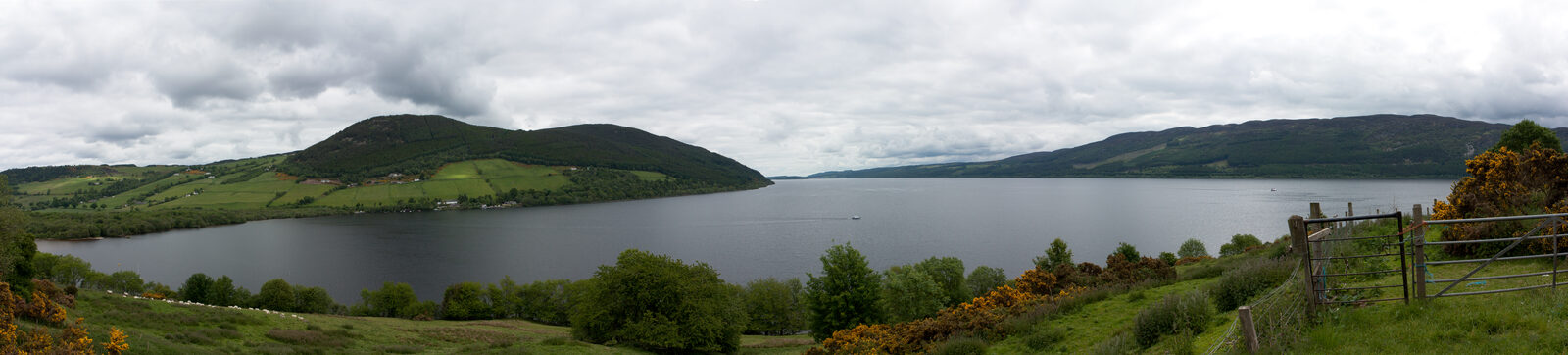
The Loch Ness Monster Sonar Contacts
- Incident
- 1972-08-07
- Location
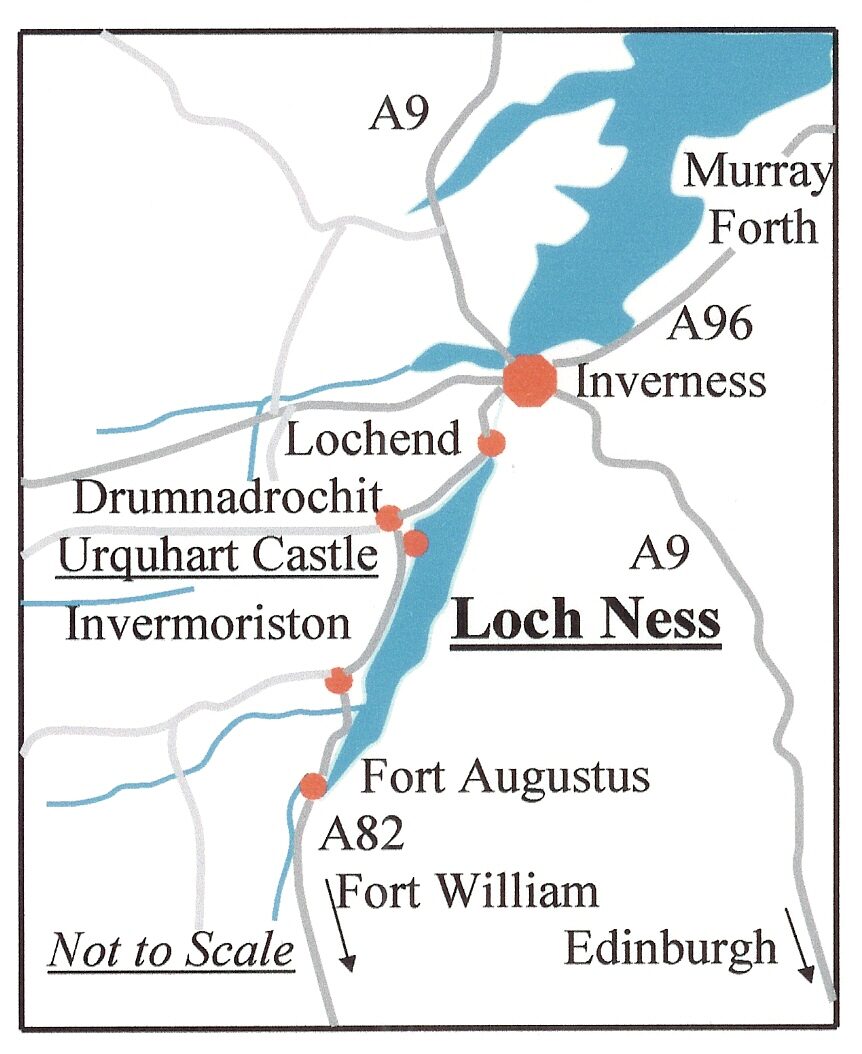
- Loch Ness, Highland, Scotland, United Kingdom
- Coords
- 57.3229, -4.4244
Brief
Between 1972 and 1987, two overlapping efforts tried to detect a large animal in Loch Ness using sonar and strobe photography — Robert Rines's Academy of Applied Science expeditions and Adrian Shine's 24-boat Operation Deepscan. The instrumentation is documented in granted US patents and the proposed name was published in Nature, but the biological interpretation of every sonar contact remains contested. No primary source in this file confirms a large unknown animal.
Filed 2026-07-13 · Last updated 13 July 2026
Briefing
Two overlapping campaigns sought a large animal in Loch Ness by instrument
rather than by eye: the Academy of Applied Science (AAS) expeditions led by
Robert Rines, which produced the disputed 1972 “flipper” photographs and the
1975 Nature naming of Nessiteras rhombopteryx [1][3], and Operation
Deepscan in October 1987, Adrian Shine’s 24-boat sonar sweep of the whole
loch [6][7]. The equipment is a matter of record — the method is described in
two granted US patents [4][5] — and the naming is published [3]. What the
instruments detected is not. Every contact remains open to interpretation, and
no primary source consulted for this file confirms a large unknown animal.
Sequence of events
The night of the seventh to eighth of August 1972
- The AAS and the Loch Ness Investigation Bureau ran a two-boat operation:
Narwhal carrying sonar and Nan carrying the camera, roughly 36 m apart,
with the camera about 13 m deep — a 16 mm time-lapse cine camera with a 50 W
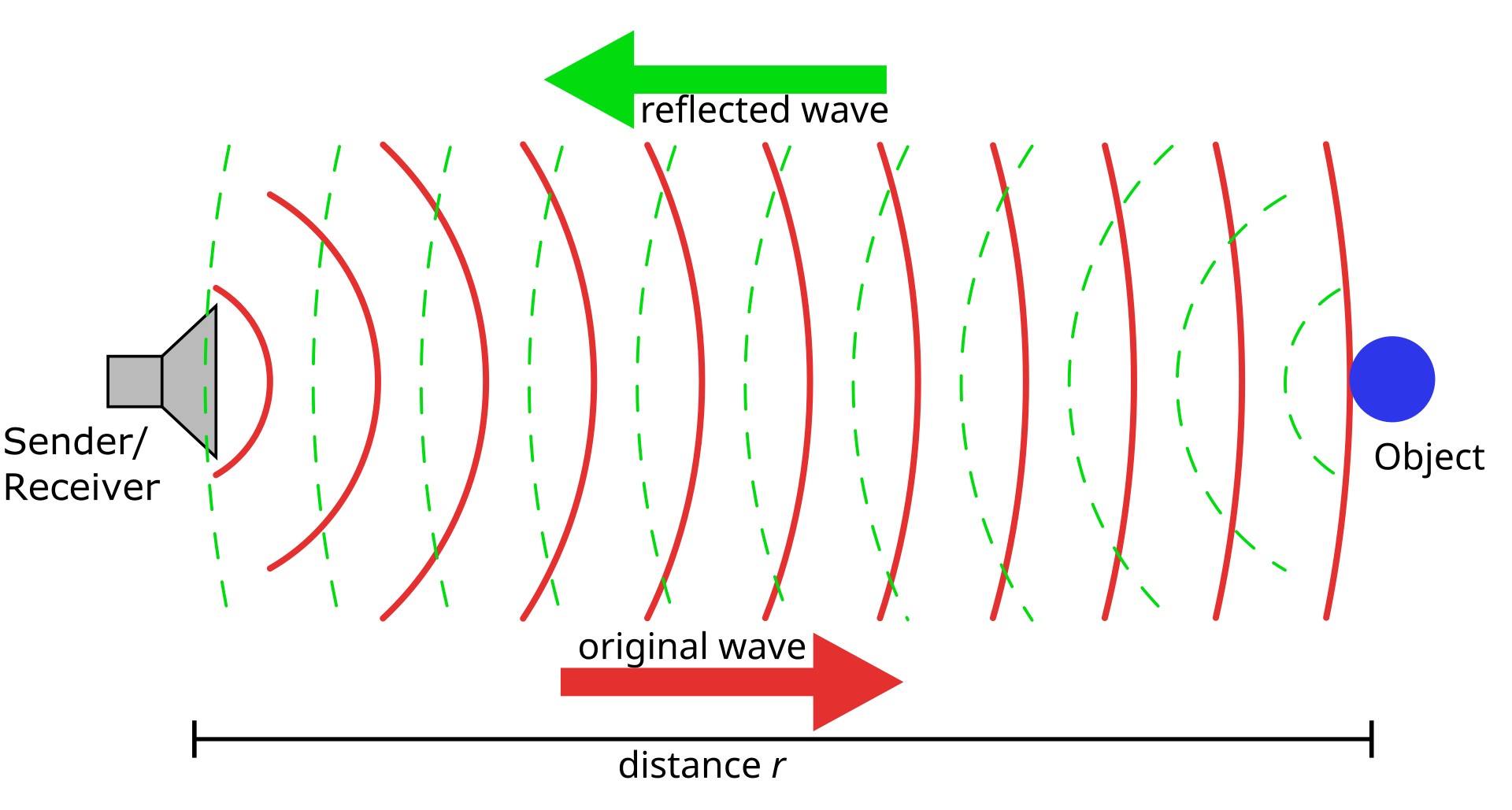
strobe, alongside a Raytheon DC 725 sonar [1].
- Between roughly 01:40 and 02:10, the sonar registered targets the team
interpreted as large animals [1].
- Of the approximately 2,000 frames exposed, three showed objects read as
diamond-shaped “flippers” [1].
- The JPL scientist Alan Gillespie digitised the images in August 1972. He
later stated that the clean-edged, diamond-flipper versions circulating
publicly “were nothing to do with him”; his own enhancements were coarse,
edgeless masses [1].
- AAS team member Charles Wyckoff stated the photographs were retouched to
superimpose the flipper, and that the original enhancement showed a
considerably less-distinct object [2].
The eleventh of December 1975
- Sir Peter Scott and Robert Rines published “Naming the Loch Ness monster” in
Nature (vol. 258, pp. 466–468), proposing Nessiteras rhombopteryx so that
any protected species could carry a formal name under UK conservation law. It
appeared as comment or opinion, not as a peer-reviewed research paper [3].
October 1987 — Operation Deepscan
- Twenty-four boats fitted with echo sounders were deployed in a line across
the loch to sweep its full length, led by Adrian Shine; the sonar units
were donated by Darrell Lowrance of Lowrance Electronics [6][7].
- Three deep-water contacts of unusual size and strength were logged that could
not be relocated. Investigators attributed them variously to debris, thermal
effects, or possibly a seal [6].
- Lowrance said of one return: “There’s something here that we don’t
understand… something larger than a fish, maybe some species that hasn’t been
detected before” [7]. Shine speculated, on the basis of size, that the moving
contacts might be seals that had entered the loch [7].
- During the operation a tree stump was filmed that closely resembled the
“gargoyle head” of the 1975 Rines underwater photographs, undercutting that
image [7].
Documentary record
The strongest documents in this file are not photographs but patents. US
Patent 4,105,990 (Rines and Duane Marshall, assigned to Academy of Applied
Science Inc.), filed on the thirteenth of September 1976 and granted on the
eighth of August 1978, covers the use of sonar to trigger a strobe light and
photography only when a target of the desired size is detected; it cites
Rines’s article “Search for the Loch Ness Monster” in the MIT Technology
Review, March/April 1976 [4]. US Patent 4,335,944 (Duane Marshall, same
assignee), filed on the twenty-third of July 1980 and granted on the
twenty-second of June 1982, describes a self-contained underwater camera with a
sonar transducer array around the lens that auto-triggers successive flash
frames when a target meets preset size and range criteria [5]. Together these
establish the method behind the AAS imagery with certainty; they establish
nothing about its subject.
The Nature item of 1975 documents the naming and its stated legal-protection
rationale [3]. The MIT Technology Review article of 1976 is cited within
patent 4,105,990 but was not independently retrieved for this file [4].
The 1972 technical team included Harold Edgerton of MIT (strobe), Charles
Wyckoff of Applied Photo Sciences, Martin Klein (side-scan sonar), and Alan
Gillespie of JPL [1].
Open questions
- No fetched primary source establishes what the 1972 or 1987 sonar contacts
physically were. Fish, seal, debris, thermocline, or unknown animal — none of
these is resolved by any document held here [1][6][7].
- The raw sonar traces underlying the Nature item, and the unretouched
original photographs, were not accessible during this research [1][3].
- Secondary summaries place one notable Deepscan contact at roughly 180 m depth
near Urquhart Bay. That figure was not confirmed on a fetched primary
document and rests on secondary reporting [6][7].
- The 1975 “gargoyle head” and “body” photographs were promoted by the AAS as
showing a large animal; sceptics link the head image to the filmed tree stump
[7]. This archive could not retrieve an authoritative primary reproduction of
either image.
- Rines argued that the anagram controversy around Nessiteras rhombopteryx —
the London press rearrangement “Monster hoax by Sir Peter S.” — was
coincidental, offering his own rearrangement, “Yes, both pix are monsters.
R.” The anagram’s original newspaper source was not traced to a primary page
[8].
- A frequently repeated claim that Project Stargate
remote viewers targeted Loch Ness could not be tied to a confirmed
Loch-Ness-target document. The nearest reading-room session located — Site
#1012, viewer 095, dated the fifteenth of October 1987 — is heavily redacted
and its target is not confirmed as Loch Ness. The connection is treated as
unverified [9].
Status
This file is CONFIDENTIAL. It is admitted on the strength of the
documentary record surrounding the search — two granted US patents and a
published Nature item [3][4][5] — and not on the strength of any confirmed
detection. The sonar contacts of 1972 and 1987 are recorded here as reported,
because the people who logged them did not agree on what they were, and the
instruments cannot settle it. A 2016 Kongsberg Maritime survey located a
roughly 9 m Nessie model prop on the loch bed, built for the 1970 Billy Wilder
film The Private Life of Sherlock Holmes — a useful reminder of how large
man-made objects sit on the bottom of this loch [7].
The archive keeps this case alongside its other instrumented-search files, such
as the expeditions recorded under Mokele-mbembe,
where the equipment is documented and the animal is not. Updates pending
retrieval of the unretouched 1972 frames.
References
- Naish, Darren. “The 1972 Loch Ness Monster Flipper Photos”, Tetrapod Zoology — the 1972 two-boat operation, the equipment, the 01:40–02:10 contacts, and Alan Gillespie’s account of the digitisation.
- “Loch Ness Monster”, Wikipedia — Charles Wyckoff’s statement that the photographs were retouched to superimpose the flipper.
- Scott, Peter, and Rines, Robert (1975). “Naming the Loch Ness monster”, Nature, vol. 258, pp. 466–468, 11th December 1975 — the proposed binomial Nessiteras rhombopteryx and its legal-protection rationale; published as comment.
- US Patent 4,105,990 A — “Process of and apparatus for exploring objects detected by different energy sources” (Rines & Marshall, Academy of Applied Science Inc.). Filed 13th September 1976; granted 8th August 1978. USPTO / Google Patents — cites Rines, “Search for the Loch Ness Monster”, MIT Technology Review, March/April 1976.
- US Patent 4,335,944 A — “Apparatus for underwater image-recording as by sonar-triggered elapsed time strobe photography” (Marshall, Academy of Applied Science Inc.). Filed 23rd July 1980; granted 22nd June 1982. USPTO / Google Patents
- “Operation Deepscan: The hunt for the Loch Ness Monster”, BBC Science Focus — the 24-boat sweep of October 1987 and the three unrelocatable deep-water contacts.
- “Loch Ness Monster”, Wikipedia — Lowrance’s and Shine’s statements, the filmed tree stump, and the 2016 Kongsberg survey of the 1970 film prop.
- “Nessiteras Rhombopteryx (1975)”, Hoaxes.org — the anagram controversy and Rines’s response.
- Remote Viewing Session Data, Site #1012, Remote Viewer 095, 15th October 1987. CIA Reading Room, via Internet Archive — heavily redacted; target not confirmed as Loch Ness. Held here as unverified.
Frequently asked
- What did the Loch Ness sonar contacts actually show?
- No fetched primary source establishes what either the 1972 or the 1987 sonar contacts physically were. In 1972 the Academy of Applied Science registered targets its team interpreted as large animals; in 1987 Operation Deepscan logged three deep-water contacts of unusual size and strength that could not be relocated, and which investigators attributed variously to debris, thermal effects, or possibly a seal.
- Was the Loch Ness monster ever given a scientific name?
- Yes. On the eleventh of December 1975, Sir Peter Scott and Robert Rines published "Naming the Loch Ness monster" in Nature, proposing the binomial Nessiteras rhombopteryx — "Ness monster/wonder with a diamond-shaped fin" — so that any protected species could carry a formal name under UK conservation law. It appeared as comment, not as a peer-reviewed research paper.
- Were the 1972 "flipper" photographs retouched?
- The clean-edged, diamond-flipper images that circulated publicly are disputed. Alan Gillespie of JPL, who digitised the frames in August 1972, later stated those versions "were nothing to do with him" and that his own enhancements were coarse, edgeless masses. Team member Charles Wyckoff stated the photographs were retouched to superimpose the flipper.
- What was Operation Deepscan?
- Operation Deepscan was a sonar sweep of Loch Ness led by Adrian Shine in October 1987, in which 24 boats fitted with echo sounders — donated by Darrell Lowrance of Lowrance Electronics — moved in a line across the loch to sweep its full length. It logged three unrelocatable deep-water contacts and produced no confirmed identification.