Briefing
Between November 1966 and December 1967, residents around Point Pleasant,
Mason County, West Virginia reported roughly two dozen sightings of a large
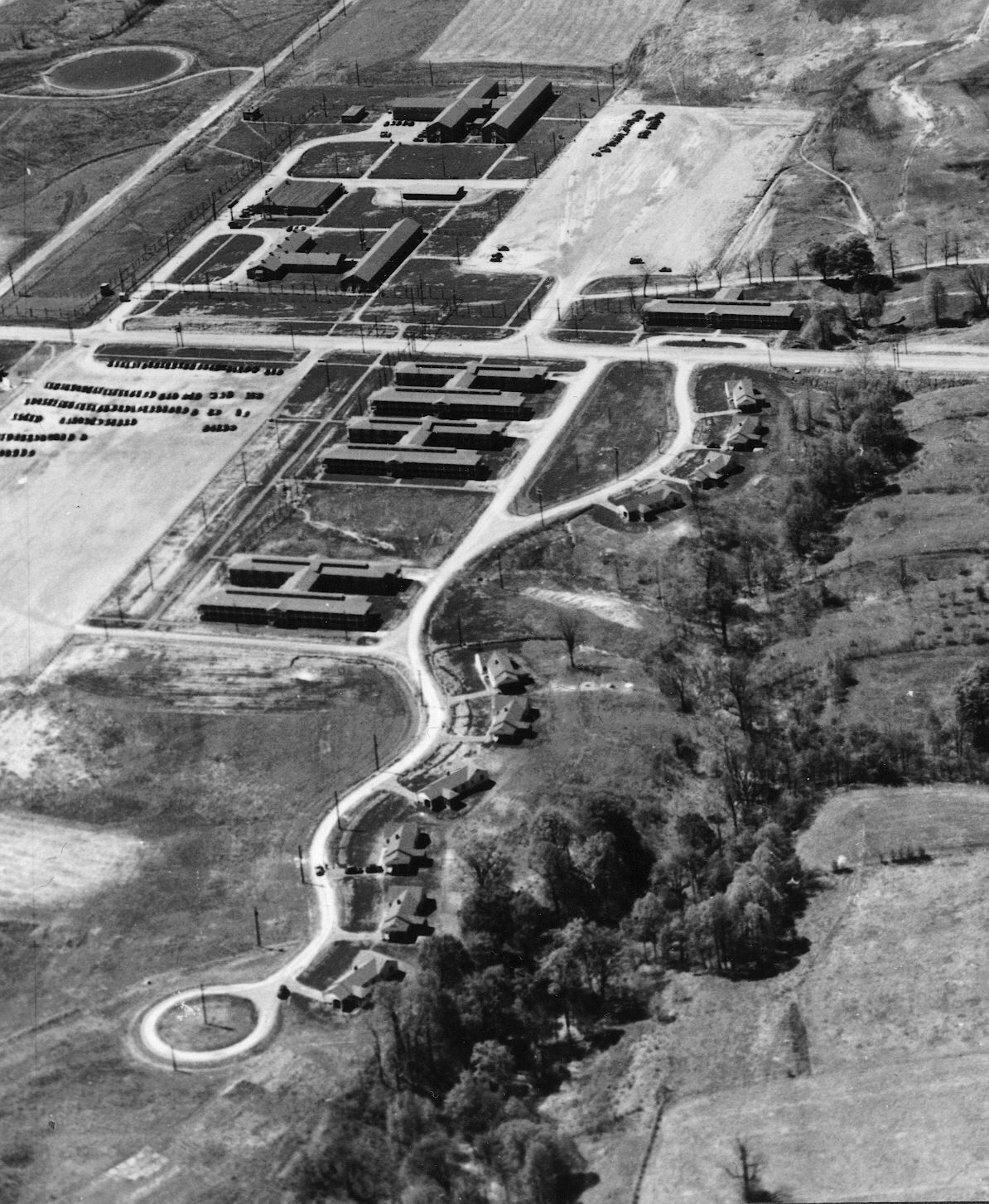
winged creature, most of them near the abandoned West Virginia Ordnance Works —
a Second World War TNT plant known locally as “the TNT area” [1][2]. On the
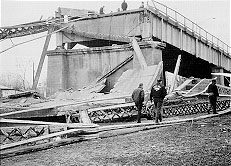
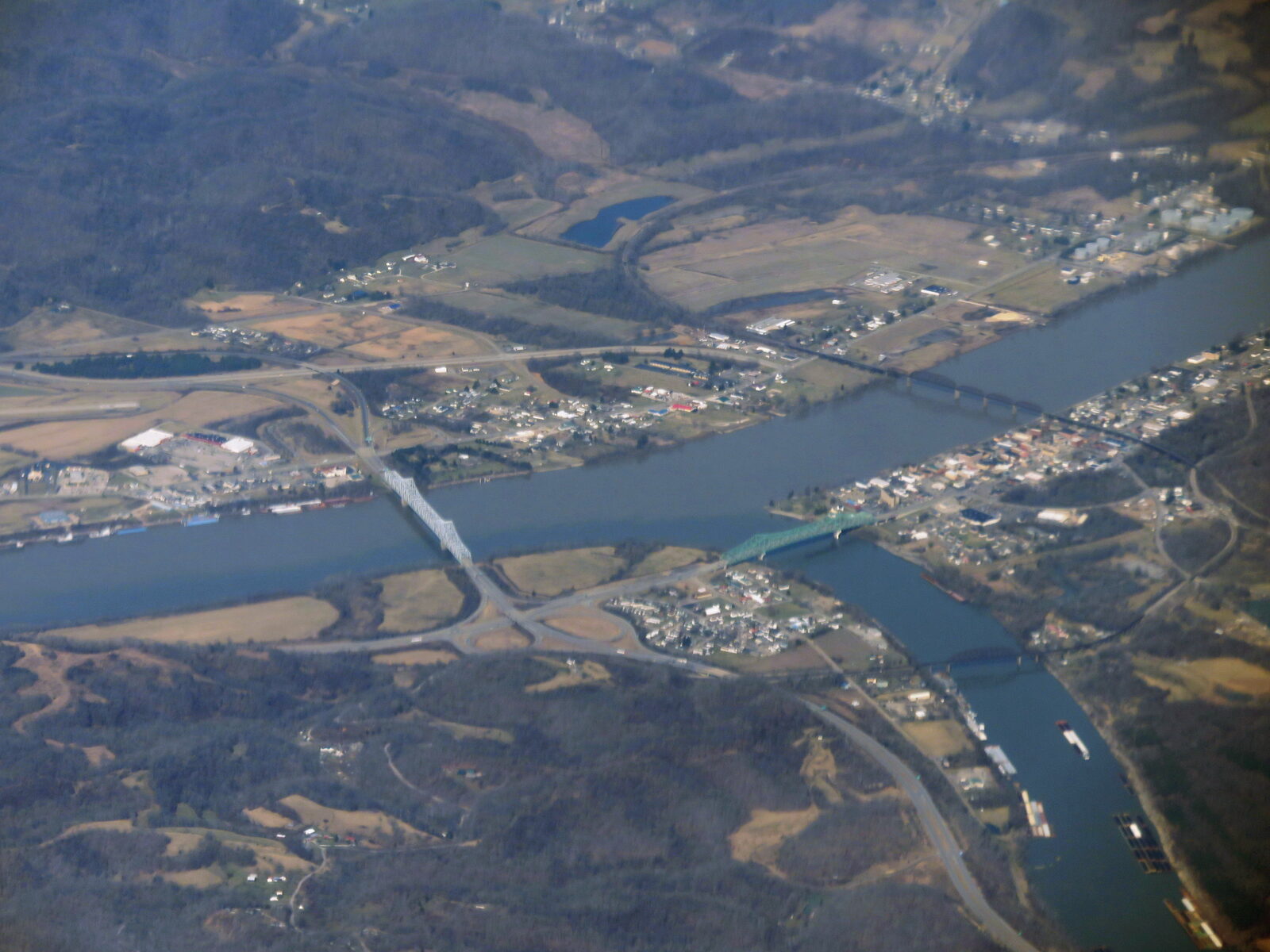
fifteenth of December 1967 the US Route 35 “Silver Bridge” over the Ohio
River collapsed at about five in the afternoon, killing forty-six people [4].
The federal investigation, NTSB-HAR-71-1 of December 1970, attributed the
collapse to a cleavage fracture in a single eyebar caused by stress corrosion
and corrosion fatigue over the bridge’s forty-year life [5][6]. No official
record connects the creature reports to the failure; the “harbinger” link
originates in later popular literature [2][11]. This file keeps the two strands
separate, because the record does.
Sequence of events
1942 to 1945 — the ordnance works
- The West Virginia Ordnance Works near Point Pleasant encompassed about
8,323 acres and operated as a TNT manufacturing plant from 1942 to 1945,
using ten manufacturing lines [1].
- Waste “red water” and “yellow water” were stored in reservoirs and
discharged to the Ohio River and Mill Run Creek [1].
- At the close of operations in 1945 the site was, in the EPA’s words,
“decontaminated, subsequently declared surplus and the facilities salvaged or
disposed. No records currently exist regarding the general extent of this
decontamination effort.” [1]
- The industrial portion was deeded to West Virginia on condition that it be
used for wildlife management, becoming the McClintic Wildlife Station of
2,788 acres under the West Virginia Division of Natural Resources [1].
November 1966 to December 1967 — the sightings
- Reported. The West Virginia Department of Tourism states that on the
fifteenth of November 1966, two young couples in Point Pleasant reported
seeing a large, man-sized creature with wings and red glowing eyes, at the
TNT area on the outskirts of town, and that the creature reportedly followed
their vehicle [3].
- Reported. Persistent sightings “began in November 1966, and totaled 26 over
a one-year span,” centred on the Point Pleasant area and “usually in or near
a vast, abandoned munitions facility known as the TNT plant” [2].
The fifteenth of December 1967 — the collapse
- The Silver Bridge had opened to traffic on the nineteenth of May 1928 [4].
- “On Friday, December 15, 1967, at about 5 p.m., the bridge spanning the Ohio
River at Point Pleasant collapsed.” Forty-six people were killed in total,
including five on the Ohio shore [4].
- The National Transportation Safety Board recorded forty-six deaths and nine
injuries, with thirty-one of the thirty-seven vehicles on the bridge falling
with it [5][6].
1968 to 1971 — the response
- Congress included a bridge-inspection provision in the Federal-Aid Highway
Act of 1968, signed by President Lyndon B. Johnson on the twenty-third of
August 1968 [7]. Section 26 amended 23 U.S.C. §116 to require that the
Secretary “shall as soon as possible establish national bridge inspection
standards in order to provide for the proper safety inspection of bridges,”
specify inspection method and maximum time between inspections, require
written State reports, and require each State to “maintain a current
inventory of all bridges on the Federal-aid system” [8].
- The National Bridge Inspection Standards regulation was enacted on the
twenty-seventh of April 1971 [7].
- Civil claims arising from the disaster were consolidated before the United
States Judicial Panel on Multidistrict Litigation as “IN RE: Multidistrict
Litigation Arising From the Silver Bridge Disaster,” docket 1:70-F-00039 [9].
Documentary record
The primary document on the collapse is NTSB-HAR-71-1, “Highway Accident
Report: Collapse of U.S. 35 Highway Bridge, Point Pleasant, West Virginia
December 15, 1967,” published December 1970 and running to 193 pages with 48
figures, 39 references and 2 appendices [5][10]. Its probable cause is recorded
verbatim as: “THE SAFETY BOARD FINDS THAT THE CAUSE OF THE COLLAPSE WAS THE
CLEAVAGE FRACTURE IN THE LOWER LIMB OF THE EYE OF EYEBAR 330 AT JOINT C13N OF
THE NORTH EYEBAR SUSPENSION CHAIN IN THE OHIO SIDE SPAN.” The flaw developed
over the bridge’s forty-year life through the joint action of stress corrosion
and corrosion fatigue [6].
Two contributing factors are recorded. In 1927, when the bridge was designed,
stress corrosion and corrosion fatigue were not known to occur in bridge
materials under normal exposure; and the flaw location was inaccessible to
visual inspection and undetectable by then-known methods “WITHOUT DISASSEMBLY
OF THE EYEBAR JOINT” [5][6]. The Federal Highway Administration records the
cause as “an instantaneous fracture of a single eye-bar in a suspension chain,
due to a small defect 0.1 inches (2.5 mm) deep” [7].
The EPA Five-Year Review Report for the West Virginia Ordnance Works
establishes the plant’s operating years, acreage, surplus disposal, the
McClintic Wildlife Station transfer, and the 1983 National Priorities List
(Superfund) listing; the site is also designated a Formerly Used Defense Site,
with the Army Corps of Engineers responsible for remediation [1]. EPA Region III
signed the OU-1 Record of Decision with the Department of the Army in April
1987 [1].
On the creature, the surviving record is thinner and of a different character.
The West Virginia Encyclopedia entry by Gordon Simmons records the sighting
count and notes that the New York writer and paranormal investigator John
Keel was drawn to Point Pleasant, and that his 1975 book The Mothman
Prophecies — later a 2002 film — connected the reports of strange occurrences
to “the Mothman” [2]. The West Virginia Department of Tourism records that some
blamed the Mothman for the bridge collapse and others viewed him as “a
harbinger of doom” [3]. Both are accounts of what was reported and believed,
not findings of fact.
Against that, the NTSB’s own fiftieth-anniversary post by Don Karol, dated
the fifteenth of December 2017, states as opinion that “no evidence was ever
found connecting the Mothman to the failure” and that “Supernatural forces do
not bring down bridges; neglect does.” [11]
Readers tracing the federal handling of anomalous-sighting reports in this
period should note the scope of the era’s only standing programme: NARA’s
Project BLUE BOOK records cover 1947 to 1969 and comprise 12,618 reported
sightings, of which 701 were classed “Unidentified”; the project was terminated
by announcement of the Secretary of the Air Force on the seventeenth of
December 1969, and the records are public, accessed via 94 rolls of 35mm
microfilm [12]. Point Pleasant belongs beside the archive’s other
winged-cryptid reports rather than its
unexplained-death and disappearance files, and we
class it accordingly.
Open questions
- The primary documents do not record any Air Force, FBI or other federal
investigation of the Point Pleasant creature reports. No Project Blue Book
case file for Point Pleasant in 1966–67 was located; the NARA finding aid
describes the collection only at series level, so absence here is not proof
of absence in the case files [12].
- No fetched official source names the witnesses of the fifteenth of November
1966, records the police report number, or gives the deputy or sheriff who
took the report. Secondary accounts consistently give four names; no primary
document, court record or official page verified here carries them.
- The Point Pleasant Register report of the sixteenth of November 1966 is
quoted identically across many sites, but no scan or archival copy of the
page could be fetched and verified for this file.
- The NTSB report’s own treatment of alternative causes — sabotage, explosion,
overloading — could not be read directly: the scanned PDF on ntsb.gov is an
image-only file with no extractable text layer, and the probable-cause
wording above was verified instead against the NTSB investigation page and
the TRB/TRID bibliographic record [5][6][10].
- No official record states a total sighting count other than the West
Virginia Encyclopedia’s twenty-six, and the basis for that figure is not
given [2].
- The 1987-era EPA record notes that no documentation survives of the extent
of the 1945 decontamination, so what remained on the TNT site during the
1966–67 sighting period is not established by record [1].
- No traceable contemporaneous source was found for any claim that the
creature was seen on or near the Silver Bridge on the fifteenth of December
1967, and no federal or state government document mentioning the Mothman in
connection with the bridge investigation was located.
- The EPA Five-Year Review states that the ten TNT lines “produced an average
of 250,000 tons of TNT per day,” which is not physically plausible and
appears to be an error in the document. It is reproduced here only as what
the record says [1].
Status
This file is CONFIDENTIAL. The bridge collapse is documented to a high
standard — a federal accident report, a statute, a regulation and a
multidistrict litigation docket [5][6][8][9] — and the site history is
established by an EPA Superfund review [1]. The creature reports are admitted
as reported only: they rest on an encyclopedia entry and a state tourism
page, neither of which is a primary witness record [2][3]. The connection
between the two is classed as theory, originating with John Keel’s 1975 book,
and is contradicted by the investigating agency’s own position [2][11].
A life-sized Mothman sculpture was installed in downtown Point Pleasant in
September 2003; the annual festival, held on the third weekend of September,
draws more than 4,000 people [2][3]. That is a record of commemoration, not of
the events of 1966 and 1967, and this archive does not treat it as evidence of
either.
Updates pending: a verified scan of the November 1966 newspaper report, and a
text-searchable copy of NTSB-HAR-71-1 sufficient to read its alternative-cause
analysis directly.
References
- U.S. Environmental Protection Agency, Region III. Five-Year Review Report: West Virginia Ordnance Works, Point Pleasant, West Virginia. Public domain (work of the U.S. federal government).
- Simmons, Gordon. “Mothman”, e-WV: The West Virginia Encyclopedia. West Virginia Humanities Council.
- West Virginia Department of Tourism. “Who Is the Mysterious Mothman?”
- Sutphin, Gerald W. “Silver Bridge Collapse”, e-WV: The West Virginia Encyclopedia. West Virginia Humanities Council.
- National Transportation Safety Board. Investigation record: Collapse of U.S. 35 Highway Bridge, Point Pleasant, West Virginia (HAR-71-01)
- Transportation Research Board / TRID. “Highway Accident Report: Collapse of U.S. 35 Highway Bridge, Point Pleasant, West Virginia December 15, 1967” (NTSB-HAR-71-1) — bibliographic record and abstract
- Federal Highway Administration, U.S. Department of Transportation. “Happy 50th Anniversary: National Bridge Inspection Standards”
- Federal-Aid Highway Act of 1968, Public Law 90-495, 82 Stat. 815, Sec. 26 (bridge inspection), signed 23rd August 1968. U.S. Government Publishing Office.
- IN RE: Multidistrict Litigation Arising From the Silver Bridge Disaster, docket 1:70-F-00039. United States Judicial Panel on Multidistrict Litigation, via govinfo.
- National Transportation Safety Board. NTSB-HAR-71-1, full report PDF, December 1970 — scanned, image-only, no text layer.
- Karol, Don (2017). “The Silver Bridge Collapse: Don’t Blame the Mothman!”, NTSB Safety Compass blog, 15th December 2017
- U.S. National Archives and Records Administration. “Project BLUE BOOK — Unidentified Flying Objects”