CONFIDENTIAL
UF-26010
Thomas Mantell Incident
- Incident
- 1948-01-07
- Location
- Godman Army Airfield, Fort Knox, Kentucky, United States
- Coords
- 37.907, -85.972
Brief
On the seventh of January 1948, Captain Thomas F. Mantell of the Kentucky Air National Guard died when his F-51D Mustang broke up during a high-altitude climb in pursuit of an unidentified object seen over Godman Army Airfield, Fort Knox. The US Air Force attributed his death to oxygen deprivation; Project Blue Book later identified the object as a then-classified Skyhook research balloon. The case survives in the Blue Book files held by the US National Archives and is one of the earliest deaths connected to a UFO sighting.
Filed 2026-07-11 · Last updated 11 July 2026
Briefing
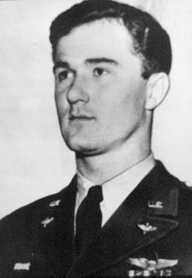
On the seventh of January 1948, Captain Thomas F. Mantell Jr. of the
Kentucky Air National Guard died when his F-51D Mustang broke up in a
high-altitude climb while pursuing an unidentified aerial object seen over
Godman Army Airfield, Fort Knox, Kentucky [1][2]. It is one of the earliest
deaths connected to a UFO sighting. The event was investigated by the US Air
Force and the case survives in the Project Blue Book files held by the US
National Archives [1][2]. The Air Force attributed Mantell’s death to oxygen
deprivation; Blue Book later identified the object he chased as a classified
high-altitude Skyhook balloon [3][4].
Sequence of events
The seventh of January 1948 — Godman Army Airfield
- Approximately 13:15 local time. Civilians reported an unusual aerial object;
by about 13:45 the object was observed from the Godman tower [4].
- Tower witnesses included Colonel Guy F. Hix, the airfield’s commanding
officer, Tech Sergeant Quinton Blackwell and Private First Class Stanley
Oliver [4]. Their descriptions of the object were recorded in the
Godman/Blue Book documentation; secondary transcriptions render it as
“metallic … of tremendous size”, and tower witnesses were reported to have
likened it to an “ice-cream cone” or parachute — white and round on top,
conical beneath [3][4].
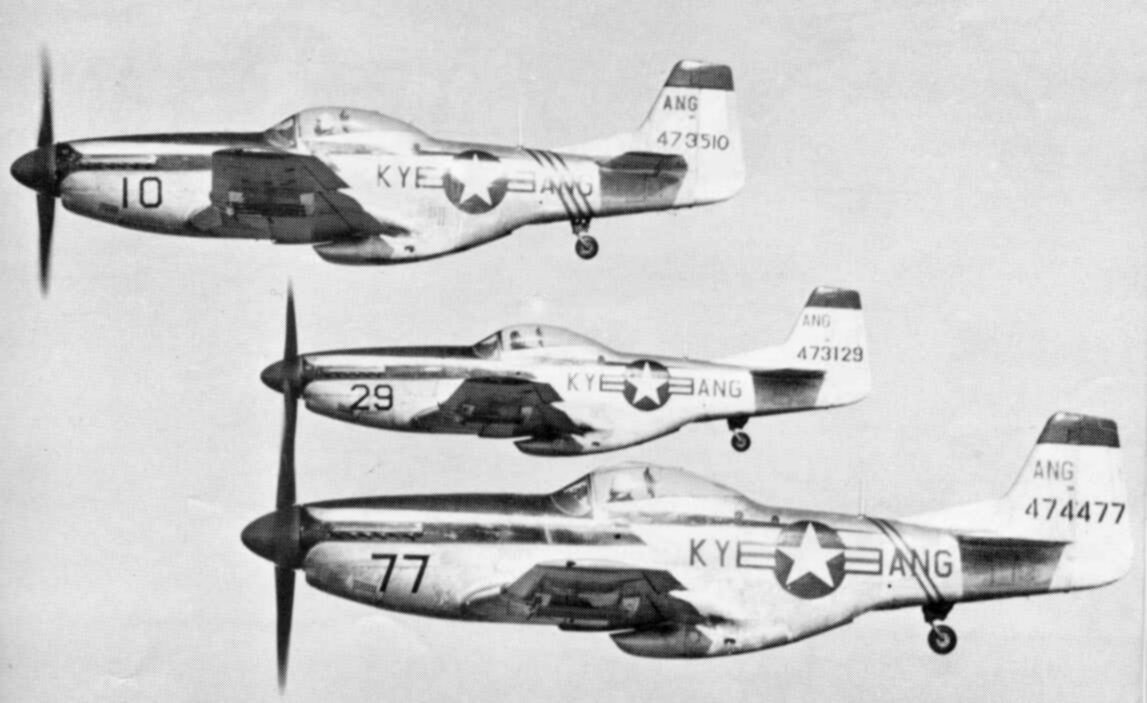
- Four F-51D Mustangs of Flight C, 165th Fighter Squadron, Kentucky Air
National Guard were directed toward the object, the flight led by Captain
Mantell [4]. Lt Hendricks, a fourth pilot, diverted to Standiford Field [4].
- Around 14:45, Mantell radioed that he had the object in sight near 14,000
feet; at 15,000 feet he transmitted that it was “directly ahead of me and
above me now, moving at about half my speed” [4].
- Near 22,000 feet, the two pilots still with him — Lieutenants Clements and
Hammond — broke off the climb as their oxygen ran low. Mantell continued
alone toward roughly 25,000 feet [4].
- Mantell’s aircraft broke up in flight and crashed. Debris was discovered
around 17:00; his wristwatch was stopped at 15:18 [4].
Documentary record
The Air Force accident assessment concluded that Mantell lost consciousness
from oxygen deprivation at altitude, after which the aircraft continued
climbing before entering a fatal descent [3][4]. The Army account cites a
shredded seatbelt and a throttle position consistent with an
oxygen-deprivation scenario, though this archive records that physical
evidence as reported rather than independently verified [4].
The Project Blue Book Mantell case file is preserved and digitised; The
Black Vault hosts a ninety-two-page collection of approximately fifteen
megabytes, including crash-site photographs [1]. The National Archives holds
the declassified Blue Book records transferred from the Air Force —
approximately two cubic feet of project and administrative files,
thirty-seven cubic feet of chronologically arranged case files and three
cubic feet of OSI-related records, available on ninety-four rolls of 35 mm
microfilm (T-1206) [2]. Across 1947 to 1969, Blue Book logged 12,618 reported
sightings, of which 701 remain classified “Unidentified”; the project closed
in 1969 [2].
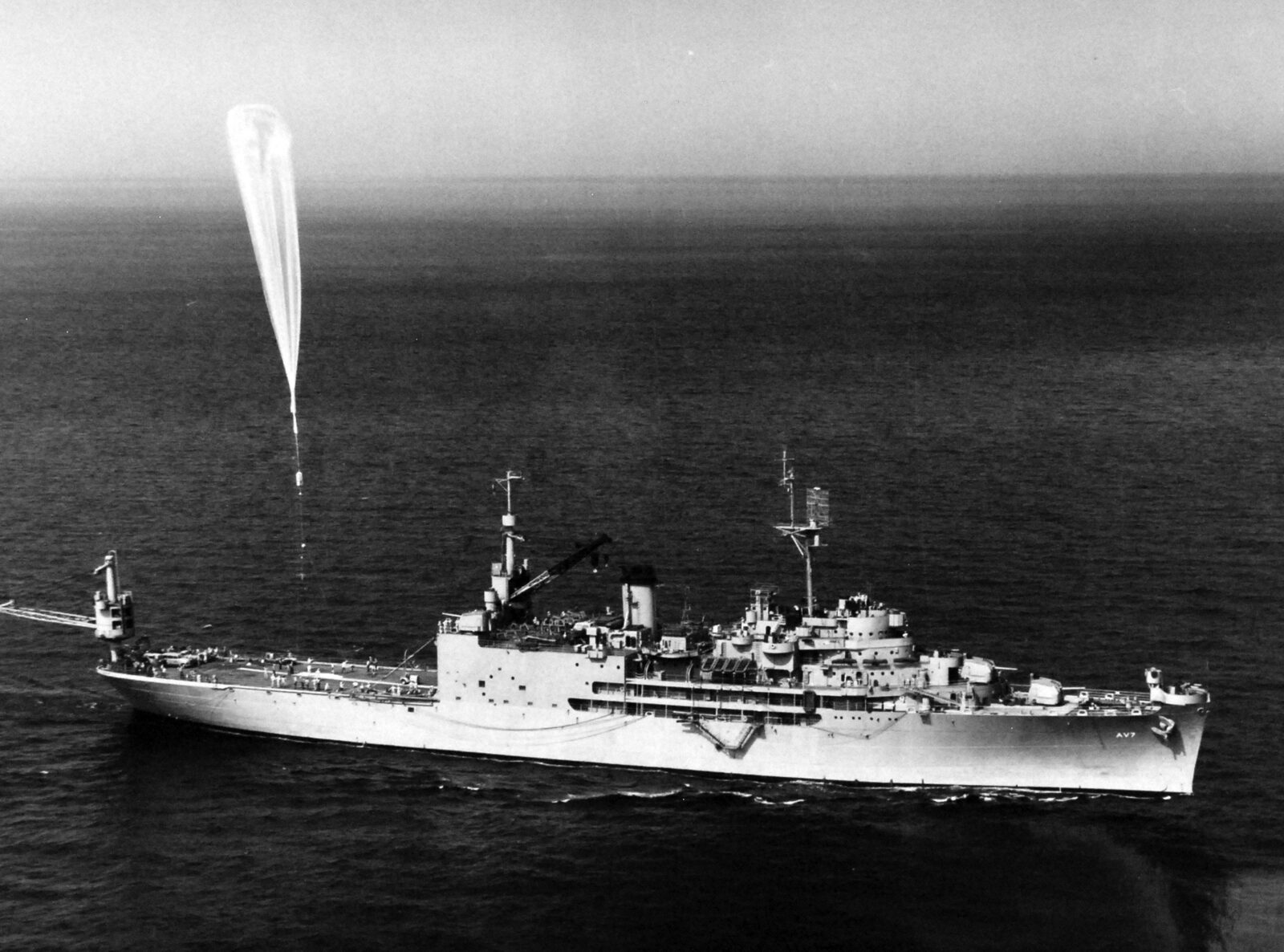
In 1952, Blue Book identified the object as a Skyhook balloon, a
then-classified high-altitude research programme Mantell would not have known
about [1][3]. The summary attributed to Blue Book calls the sighting “most
likely a case of mistaken identity: a classified Skyhook weather balloon” [3].
Skyhook balloons were reported to be very large — figures up to roughly 600
feet tall and 100 feet in diameter are cited, reaching very high altitude —
which would be consistent with the “tremendous size” descriptions from the
tower [4]. J. Allen Hynek, astronomical consultant to Project Sign and Blue
Book, initially proposed Venus as the object in 1948 and later retracted that
opinion, stating that Venus “wasn’t bright enough” and that haze would have
obscured it [2].
Open questions
- The primary National Archives holdings page does not itself reproduce the
Mantell case narrative, conclusions, or verbatim transmissions; those reach
the record through secondary and republished-official channels [2].
- The Skyhook identification is a later reconstruction. It was not confirmed
by the pilot, and no object was physically recovered [3].
- Reported timings differ across accounts — the first tower sighting, the
loss-of-sight time and the crash time among them — and the raw
accident-report transcript has not been directly verified by this archive
[3][4].
- The figure of approximately 2,867 flight hours attributed to Mantell, a
Distinguished Flying Cross recipient aged twenty-five, appears in the
Army retelling but has not been cross-checked against the raw accident
report [4].
- Frequently repeated details — a Vanderbilt University astronomer observing
a pear-shaped balloon with cables and a basket in the late afternoon, and
multiple Skyhook launches from Clinton County, Ohio, that day — could not be
corroborated against a directly verifiable source and are not treated as
evidence here.
Status
This file is CONFIDENTIAL — admitted to the archive on the strength of a
preserved, digitised official case file and the declassified Project Blue Book
holdings at the US National Archives [1][2]. The death itself, the date and
the location are documented; the object’s appearance, the flight’s radio
traffic and the Skyhook identification are reported, and the archive does not
elevate them beyond that. The tower’s “round on top, conical beneath”
description places this file alongside the archive’s other
disc and saucer reports of the early Blue Book era,
while the unresolved discrepancies in the accident timeline keep it within
scope of our cold cases record. Updates pending
direct examination of the raw accident report.
References
- The Black Vault — Project Blue Book: The Thomas Mantell Case, 7 January 1948. Digitised 92-page FOIA case-file collection (≈15 MB), including crash-site photographs. Public domain.
- U.S. National Archives and Records Administration — Project BLUE BOOK: Unidentified Flying Objects. Declassified Project Blue Book records transferred from the Air Force; 94 rolls of 35 mm microfilm (T-1206); 12,618 sightings logged 1947–1969, 701 “Unidentified”.
- The UFO Database — Mantell UFO Incident: Project Blue Book Case File. Secondary republication of official material; licence unverified.
- DVIDS / U.S. Army, Fort Knox (Eric Pilgrim) — Questions remain 75 years after mysterious Fort Knox UFO incident, downed pilot. US Government work; public domain. This article is a work of the U.S. Department of War / U.S. Army and its use here does not imply endorsement.
Frequently asked
- What happened to Thomas Mantell?
- Captain Thomas F. Mantell Jr., a Kentucky Air National Guard pilot, died on the seventh of January 1948 when his F-51D Mustang broke up in flight during a high-altitude climb in pursuit of an unidentified object seen over Godman Army Airfield, Fort Knox, Kentucky. The Air Force accident assessment concluded he lost consciousness from oxygen deprivation at altitude, after which the aircraft continued climbing before entering a fatal descent.
- What was the object Mantell was chasing?
- In 1952, Project Blue Book identified the object as a Skyhook balloon — a then-classified high-altitude research programme Mantell would not have known about. This is a later reconstruction rather than something confirmed by the pilot or established by physical recovery, and the archive records it as reported rather than documented.
- Is the Mantell case file publicly available?
- Yes. The Project Blue Book Mantell case file is preserved and digitised; The Black Vault hosts a ninety-two-page collection of roughly fifteen megabytes, including crash-site photographs. The wider declassified Blue Book records are held by the US National Archives, including thirty-seven cubic feet of chronologically arranged case files available on ninety-four rolls of 35 mm microfilm under T-1206.
- Did Blue Book explain every sighting it investigated?
- No. Across 1947 to 1969, Project Blue Book logged 12,618 reported sightings, of which 701 remain classified "Unidentified". The project closed in 1969.