CONFIDENTIAL
RA-26001
The Tombstone Thunderbird and the "Lost" 1890 Photograph
- Incident
- 1890-04-26
- Location
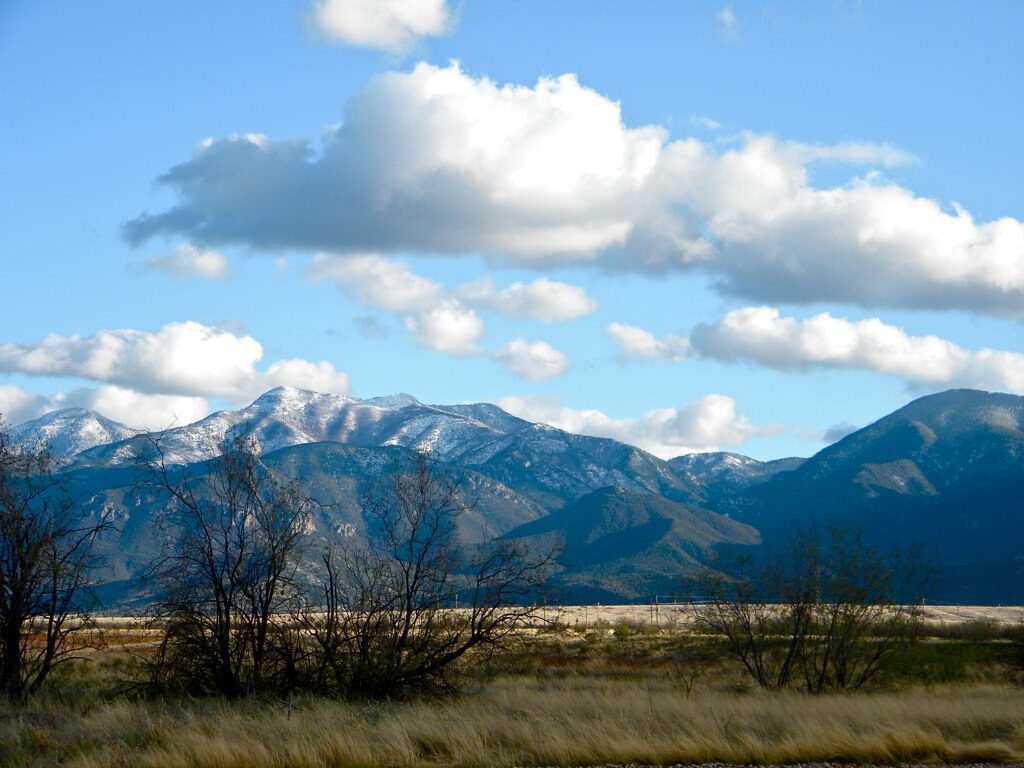
- Huachuca Desert, between the Whetstone and Huachuca Mountains, Arizona Territory, United States
- Coords
- 31.7, -110.4
Brief
In April 1890 the Tombstone Epitaph printed a news item claiming two ranchers shot a giant winged creature with a wingspan of roughly 160 feet on the desert between the Huachuca and Whetstone mountains. No photograph accompanied that article — the paper could not print photographs in 1890 — yet since a 1963 magazine retelling, many people, including the cryptozoologist Ivan T. Sanderson and the author John Keel, have insisted they remember seeing one. No such photograph has ever been produced, which makes this a case about memory rather than a documented zoological event.
Filed 2026-07-12 · Last updated 12 July 2026
Briefing
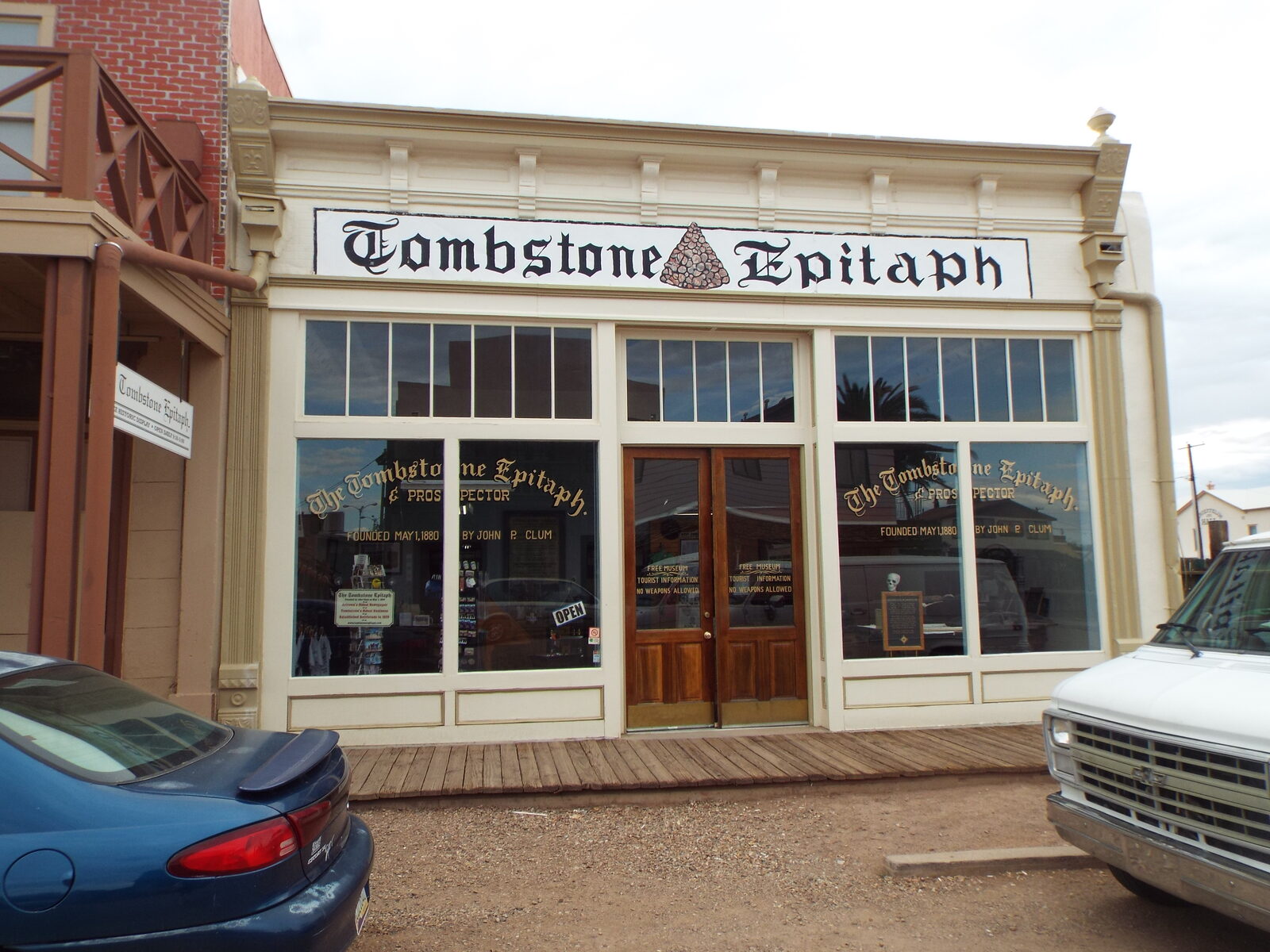
In April 1890 the Tombstone Epitaph, of Arizona Territory, printed a news
item claiming that two ranchers had shot and killed a giant winged,
alligator-like creature on the desert between the Huachuca and Whetstone
mountains [1]. No photograph accompanied that article; the paper of that era
could not print photographs at all [3][4]. Yet since a 1963 magazine retelling,
a great many people — including the cryptozoologist Ivan T. Sanderson and the
author John Keel — have insisted they remember seeing a photograph of the bird
nailed to a wall with men posed beneath it [2]. No such photograph has ever been
produced. The file is admitted not as a zoological record but as a documented
case of collective misremembering, of a piece with the archive’s other
Mandela effect material.
Sequence of events
April 1890 — the original article
- The Epitaph runs a piece headlined “Found in the Desert — A Strange Winged
Monster Discovered and Killed on the Huachuca Desert” [1].
- Per the article, two ranchers returning from the Huachuca Mountains find an
exhausted creature “resembling a huge alligator with an extremely elongated
tail and an immense pair of wings” [1].
- They chase it several miles on horseback, open fire with Winchester rifles,
and after “a few well directed shots” it “partly rolled over and remained
motionless” [1].
- The measurements given: about ninety-two feet long, a body diameter of some
fifty inches, a head roughly eight feet long with strong sharp teeth, eyes “as
large as a dinner plate”, and one wing measured at seventy-eight feet —
implying a tip-to-tip span of about a hundred and sixty feet. The skin is
described as smooth, featherless and hairless; the wings as a thick
transparent membrane [1].
- The men reportedly cut off a small portion of one wing tip and take it with
them, one riding into town for supplies and help skinning the creature,
intending to send the hide east for examination by eminent scientists [1]. No
record has been located of any hide, wing tip, or specimen reaching a
scientist [1][4].
- The article carries no photograph [3][4].
May 1963 — the photograph enters the record
- In the May 1963 issue of Saga magazine, the writer Jack Pearl describes
a photograph of the Thunderbird nailed to a barn or wall, wings spread wide,
with men posed beneath it for scale — and dates the encounter, mistakenly, to
1886 [3][4][2].
- In Fate magazine of September 1963, the correspondent H. M. Cranmer states
that the photograph existed and had “appeared in newspapers all over
America” [2]. No such newspaper instance has been traced by any researcher
consulted [2].
1960–1966 — the searches
- Researchers and Epitaph staff search the paper’s archives — the search is
variously reported as taking place in 1960 and in 1966 — and find no
photograph. None had been printed with the original article, and no follow-up
article was published [3][4].
Later recollections
- Ivan T. Sanderson, cryptozoologist, says he once possessed a photostat
copy of the photograph, showing the bird nailed to a wall with cowboys
beneath it, and that he loaned it to two researchers who lost it [2].
- John Keel, author, insists in the late 1990s: “I know I saw it!” — placing
it in a men’s magazine, Saga or True, and describing a “long and pointed
beak like a Pteranodon” [2].
- W. Ritchie Benedict recalls Sanderson displaying a photostat of the
photograph on “The Pierre Berton Show” on Canadian television [2].
Documentary record
The primary document is the April 1890 Tombstone Epitaph news item itself. Its
text is widely reproduced online; the version consulted here reproduces the
“Found in the Desert” article and attributes it to the issue of the
twenty-sixth of April 1890 [1]. The underlying 1890 text is public domain; the
licence of the reproducing page is unverified. The Library of Congress is cited
secondhand as holding that issue, said to contain no images, though the archive
could not independently retrieve a digitised page from a primary repository
during this research [3].
Everything after that is secondary and, in the matter of the photograph, wholly
unsupported. Jack Pearl’s 1963 Saga article is the earliest located source for
the wall-mounted photograph and for the erroneous 1886 date [4][2]. The
recollections of Sanderson, Keel, Cranmer and Benedict are witness testimony to
having seen an image, not evidence that the image existed [2]. The modern
“six men and a pterodactyl” picture that circulates online is a deliberate fake
by the British digital artist Chris Smith — a recent fabrication, and not the
“lost” photograph the old-timers describe [4].
Two counter-accounts are on record. Paul Brown cites a 1970 letter from Harry
McClure claiming the creature’s wingspan was in fact only some thirty feet, not
a hundred and sixty, and that it escaped alive — which contradicts the killed-
and-retrieved version outright [4]. Dale Drinnon argues that the remembered
photograph may derive from an early-twentieth-century novelty or hoax montage,
possibly built on an 1893 photograph of the outlaw John Sontag’s death [2]. Both
are proposed explanations, not established findings.
Open questions
- Which exact issue carried the article? Sources conflict: the twenty-sixth of
April 1890 [1][3] against “Saturday, the twenty-seventh of April 1890” [4].
Daily and weekly Epitaph editions may account for the discrepancy, but the
archive could not verify this against a digitised original scan.
- Was any physical evidence — wing tip, hide — ever produced or examined by
scientists? No source records it [1][4].
- Did a photograph of the described wall-mounted creature exist in any era? The
primary record shows none accompanied the 1890 article [3][4]. Whether some
later, unrelated image seeded the memory remains open [2].
- Who were the two ranchers? Unnamed in the surviving text, with no primary
trace [1].
- H. M. Cranmer’s assertion that the photograph “appeared in newspapers all
over America” is unsupported: no traceable newspaper instance of any such
photograph has been located by any researcher consulted [2].
- Jack Pearl’s asserted 1886 Epitaph publication of the photograph: no such
issue or image has been found, and it appears to be an error or an
invention [4][3].
Status
This file is CONFIDENTIAL — admitted not as a creature report but as a
documented failure of collective memory. The 1890 article is a real newspaper
item and can be cited as such; every claim within it remains reported, never
corroborated, and no physical evidence, named witness, or follow-up record has
ever surfaced [1][4]. Paul Brown’s conclusion — that the story was a tall tale
which grew in the retelling, and that no authentic photograph ever existed — is
the reading this archive finds best supported by the record, though it is his
opinion and is stated as such [4].
The photograph is the case. Multiple commentators frame the persistent “I saw
it” recollections as a false-memory phenomenon [3][2], which places this file
with the archive’s other reality-anomaly material rather than with its
cryptid reports. Updates pending retrieval of a
digitised original of the April 1890 issue from a primary repository.
References
- “Found in the Desert — A Strange Winged Monster Discovered and Killed on the Huachuca Desert” — transcription of the article from the Tombstone Epitaph, 26th April 1890. CreationTales. Accessed 12th July 2026. The underlying 1890 text is public domain; the reproducing page’s licence is unverified.
- Drinnon, Dale. “That Thunderbird Photo”. Frontiers of Zoology, May 2011. Collects the Sanderson, Keel, Cranmer and Benedict recollections and proposes the montage hypothesis. Accessed 12th July 2026.
- “The Tombstone Thunderbird Photograph and the Mandela Effect”. Curious Archive. On the absence of any photograph in the 1890 article and the false-memory framing. Accessed 12th July 2026.
- Brown, Paul. “The Tombstone Pterodactyl”. Singular Discoveries. On the 1963 Saga origin of the photograph claim, the McClure letter, and the Chris Smith fabrication. Accessed 12th July 2026.
Frequently asked
- Is there a real photograph of the Tombstone Thunderbird?
- No photograph has ever been produced. The April 1890 Tombstone Epitaph article carried no image, and the paper of that era lacked the technology to print photographs at all. The modern, widely circulated "six men and a pterodactyl" picture has been identified as a deliberate fake by the British digital artist Chris Smith.
- What did the 1890 Tombstone Epitaph article actually say?
- The article, headlined "Found in the Desert — A Strange Winged Monster Discovered and Killed on the Huachuca Desert", reported that two ranchers chased an exhausted winged creature on horseback, wounded it with Winchester rifles, and killed it. It described a creature resembling a huge alligator with an elongated tail, about ninety-two feet long, with one wing measured at seventy-eight feet, implying a wingspan of roughly a hundred and sixty feet.
- Why do so many people remember seeing the photograph?
- The recollection traces to the May 1963 issue of Saga magazine, in which the writer Jack Pearl described a photo of the bird nailed to a wall with its wings spread and men posed beneath it for scale, and mistakenly dated the encounter to 1886. Multiple commentators frame the persistent "I saw it" recollections as a false-memory or Mandela-effect phenomenon.
- Who were the two ranchers who shot the creature?
- They are unnamed. The surviving article text gives no identities, and no primary trace of the two men, their later statements, or any corroborating record has been located.