Briefing
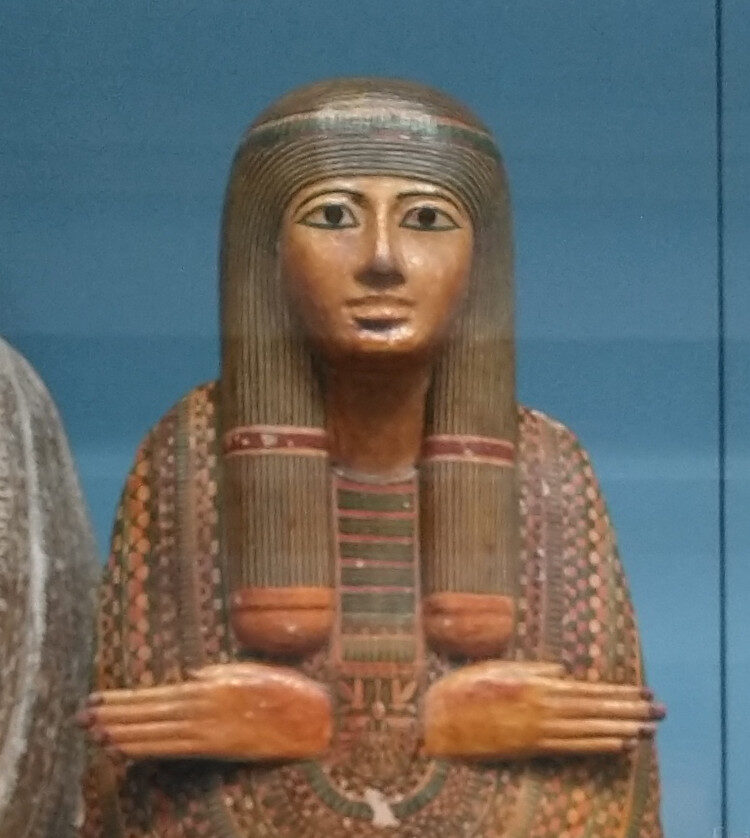
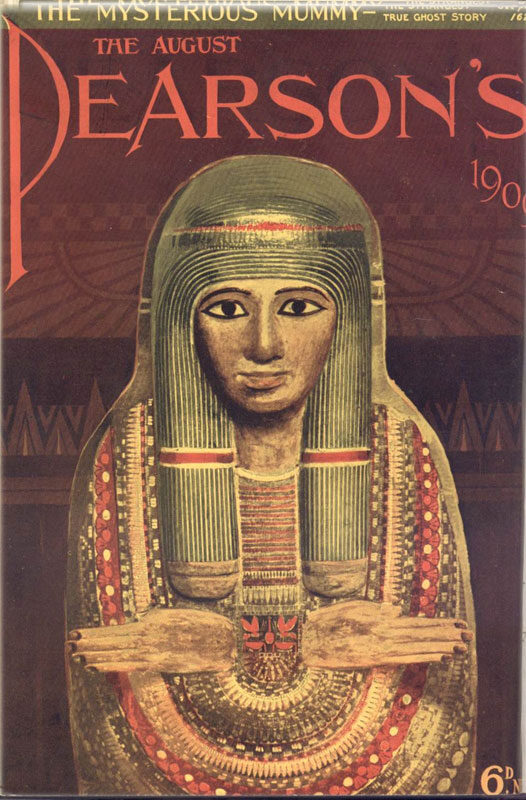
The object at the centre of this file is a painted wooden mummy-board — a
coffin lid, not a mummy — made at Thebes around 950 BC for an unidentified
woman, and held by the British Museum since 1889 under registration number
1889,0731.1, catalogue number EA22542 [1]. From the 1900s it accumulated a
reputation as a cursed object. After the RMS Titanic was lost on the
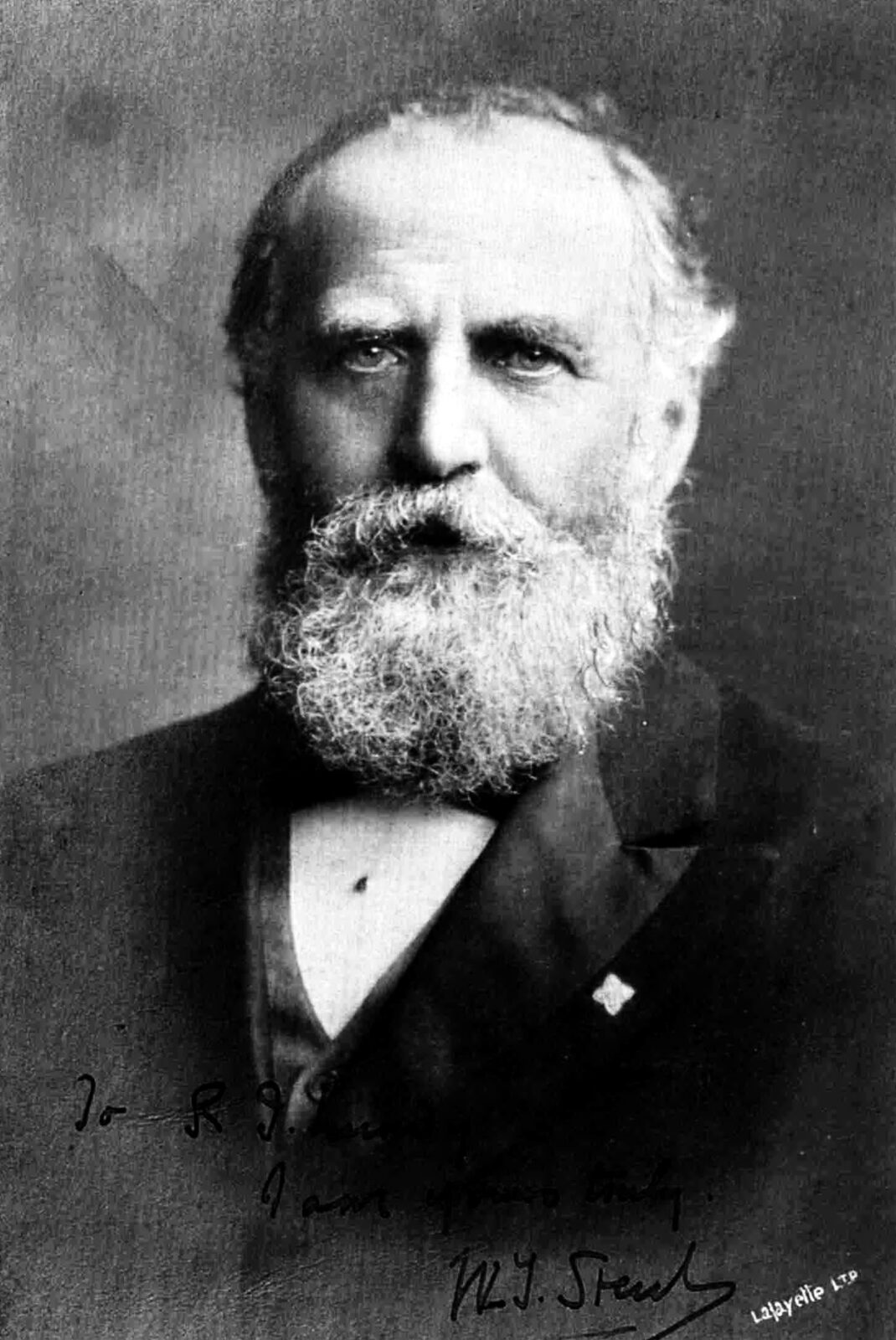
fifteenth of April 1912 with the spiritualist journalist W. T. Stead aboard,
American newspapers fused the two stories [2].
The board never left London [1][4]. What follows is a record of how a museum
accession became a shipwreck legend, and of which parts of that legend survive
contact with the documentary record.
Sequence of events
The acquisition, 1889 — two conflicting accounts
- The British Museum’s own record dates the object to c. 950 BC, 21st Dynasty,
provenance Thebes, and places it in the Department of Ancient Egypt and
Sudan [1].
- One account holds that the mummy-board was donated in July 1889 by Mrs
Warwick Hunt of Holland Park, London, on behalf of Mr Arthur F. Wheeler; the
source given is a report in The Times of the twenty-eighth of March 1921,
p. 11 [5]. That report was not retrievable in full during this research and
is cited here at second hand.
- Roger Luckhurst writes instead that Thomas Douglas Murray acquired the
case at Luxor while travelling down the Nile after leaving Oxford in 1865,
and donated it to the museum in 1889; Luckhurst also describes the case as
18th Dynasty, which conflicts with the museum’s own 21st Dynasty dating
[3][1].
- Both accounts are recorded here without adjudication.
The chain of misfortune, from 1865
- Luckhurst states that Murray, after acquiring the case, suffered a shooting
accident near the pyramids in which he lost an arm — the first link in the
chain of misfortunes later attributed to the object [3]. No contemporary
record for the incident is cited.
- Murray moved in a circle of diplomats, colonial officials, painters and
writers, and belonged to the Ghost Club, a spiritualist society; Luckhurst
treats this social position as the reason the story travelled as far as it
did [3].
- Bertram Fletcher Robinson researched the object’s history for the Daily
Express during 1904, is reported to have become convinced it had
malevolent powers, and died three years later aged 36 [5].
The sinking and the story, 1912
- RMS Titanic sailed from Southampton for New York on the tenth of April
1912 and was lost. The resulting US Senate investigation ran seventeen
days, heard eighty-two witnesses, and produced a 1,042-page report now held
by the US National Archives, alongside Carpathia survivor manifests, White
Star limitation-of-liability filings, and hundreds of damage claims filed
between October 1912 and April 1913 [6][7].
- The Washington Post of the twelfth of May 1912 published “Ghost of the
Titanic: Vengeance of Hoodoo Mummy Followed Man Who Wrote Its History,”
proposing that W. T. Stead was the latest victim of “the avenging spirit of
an Egyptian priestess” [2].
- That article stated that Stead told fellow passenger Frederick K. Seward
the mummy story at the saloon table, that Stead said “I know the story, but I
shall never write it,” and that he died a few hours afterwards [2]. The
account rests on the newspaper’s own unsourced narration.
Afterlife in print
- The phrase “hoodoo mummy” was still circulating in the American press two
years later: the Georgia Historic Newspapers index returns it in the Atlanta
Georgian of the seventh of June 1914, in two editions of the same issue
[8].
- Half a century on, the story was still being retold as fact in mass-market
print: Reader’s Digest published Edgar Wallace’s article “The Curse of
Amen-Ra” in the 1966 collection Great True Stories of Crime, Mystery &
Detection [9].
Documentary record
The British Museum Images record for EA22542 is the load-bearing document.
It gives object number EA22542 (1889,0731.1), date c. 950 BC, 21st Dynasty,
provenance Thebes, and the description “Wooden mummy-board; painted detail on
plaster; protruding hands,” materials wood and plaster, Department of Ancient
Egypt and Sudan [1]. It establishes two things the legend requires to be
false: that the object is a coffin board rather than a mummy, and that it is a
museum holding.
Against it stands no shipping document at all. The US National Archives
inventory of its Titanic holdings — the Senate hearings report, the Carpathia
manifests for 706 survivors, the limitation-of-liability court records in which
cargo appears only as an assessed liability figure of $2,073, and the
correspondence to President Taft — describes no itemised cargo list [6]. The
1998 NARA press release covering the Carpathia passenger and crew manifests
(microfilm T715, roll 1883, naming some 400 of the 700-plus rescued) is
explicitly a survivor record, not a cargo record [7].
Roger Luckhurst’s account, drawing on British Museum files, is the source
for the institution’s long-running position: curators “were (and continue to
be) constantly asked to confirm or deny stories of the curse attached to
catalogue number 22542” [3]. The Egyptologist Carol Andrews is quoted
stating that No. 22542 “hasn’t left the British Museum since it was delivered
there about 1889” and has never caused harm [4]. Bob Brier, in The
Encyclopedia of Mummies, goes further, holding that the story “was initiated
early in this century by Douglas Murray and T. W. Stead,” who attached it to
No. 22542 after visiting the Egyptian Room [4]. Brier’s account is a theory of
origin, not a documented one.
This archive files the case alongside its other records of contested material
heritage from lost civilisations, where
an object’s paper trail rather than its aura is the evidence.
Open questions
- Neither the museum’s own online catalogue record nor any British Museum
statement page could be retrieved directly during this research
(britishmuseum.org returned HTTP 403). The museum’s formal denial is
documented here only through Luckhurst and through Andrews’s quoted remarks
[3][4].
- No itemised Titanic cargo manifest was located in NARA’s published
descriptions. The absence of the mummy-board from the cargo is therefore
established by the object’s continuous museum provenance rather than by a
negative manifest search [1][6][7].
- The 1904 Daily Express articles by Bertram Fletcher Robinson were not
located in any accessible digitised archive, and his cause of death is not
established by any primary record retrieved here.
- The exact date and wording of the first Stead–mummy story in print, and
whether Stead ever published it himself, are not established by any source
consulted.
- Trove indexes an item headed “CURSE OF THE MEUX MUMMY — FEARS FOR THE
BRITISH MUSEUM,” Port Fairy Gazette, the twenty-sixth of May 1911 —
which would place a British Museum mummy scare in print before the Titanic
sailed — but the page was inaccessible behind bot protection and its text
is unverified.
- The identity of the woman for whom the board was made is unrecoverable: the
museum’s record names no owner [1].
Status
This file is CONFIDENTIAL — admitted on the strength of the museum’s own
object record and the federal archival inventory of the Titanic disaster
[1][6][7]. The documented core is narrow and firm: the object exists, it is a
coffin lid, it has been in London since 1889, and no record places it at sea.
Everything attached to it is reported rather than documented.
Three claims commonly told as fact are recorded here as unfindable. The
identification of the board as belonging to a “Priestess of Amen-Ra” has no
primary source; the museum’s record names no owner, and the inscriptions are
described elsewhere as short religious formulae omitting the deceased’s name
[1]. The sequence of photographers, porters, dealers and museum staff said to
have been struck down after handling the object has no traceable contemporary
record, inquest, or museum document for any individual death. The claim that
the board was sold to an American, shipped on the Titanic, and later placed
aboard the Empress of Ireland or Lusitania is supported by no shipping
document, sale record or manifest at any leg, and is contradicted by the
object’s continuous British Museum provenance [1][4]. No 1912 statement by the
Trustees denying the story was retrievable.
Readers tracing how a shipwreck acquires a supernatural afterlife may find the
archive’s file on maritime disappearances
a useful companion, though the two subjects share no evidential connection.
Updates pending direct retrieval of the British Museum catalogue record and of
The Times report of the twenty-eighth of March 1921.
References
- The Unlucky Mummy, mummy-board, 21st Dynasty, Thebes — British Museum Images record 00702983001 / 00142955001 (EA22542; registration 1889,0731.1). © The Trustees of the British Museum. Accessed 17th August 2026.
- Did a mummy’s curse sink the Titanic? The Washington Post once suggested it did. Slate, October 2018 — quoting the Washington Post, 12th May 1912, “Ghost of the Titanic: Vengeance of Hoodoo Mummy Followed Man Who Wrote Its History.”
- Luckhurst, Roger (2012). “Unwrapping the Mummy’s Curse”. New Humanist, 10th September 2012. Draws on British Museum files.
- Deem, James M. “The Titanic Mummy: Fact or Fiction?” — citing Bob Brier, The Encyclopedia of Mummies, and the quoted remarks of British Museum Egyptologist Carol Andrews.
- “Unlucky Mummy”. Wikipedia (tertiary source; used here only for its citations to The Times, 28th March 1921, p. 11, and The Atlanta Constitution, 19th June 1904).
- US National Archives and Records Administration (2012). “They Said It Couldn’t Sink”. Prologue, Spring 2012. Inventory of NARA’s Titanic holdings, including the 1,042-page Senate hearings report and limitation-of-liability records.
- US National Archives and Records Administration (1998). Press release NR98-94, “National Archives Makes Available Additional Records Relating to R.M.S. Titanic Disaster”. Carpathia passenger and crew manifests, microfilm T715, roll 1883.
- Georgia Historic Newspapers full-text search: “hoodoo mummy”, 1910–1925 (Atlanta Georgian, 7th June 1914). Digital Library of Georgia, University of Georgia.
- Internet Archive item record: Edgar Wallace, “The Curse of Amen-Ra”, Great True Stories of Crime, Mystery & Detection. Reader’s Digest, 1966.