CONFIDENTIAL
PN-26003
Third Man Syndrome
- Incident
- 1916-05-19
- Location
- South Georgia, South Atlantic
- Coords
- -54.2833, -36.5
Brief
"Third Man syndrome" is the name given to a recurring report from people in survival extremity: the vivid, sustained sense that an unseen companion is present, usually benign, often issuing guidance. The best-attested cases are contemporaneous first-person accounts published by the survivors themselves — Ernest Shackleton crossing South Georgia in May 1916, Joshua Slocum alone in the Atlantic in July 1895, and Frank Smythe near 28,000 ft on Everest in June 1933. Since 2006 neurology has produced a partial mechanistic answer: the "feeling of a presence" can be induced on demand by electrical stimulation of the temporoparietal junction and by robot-generated sensorimotor conflict in healthy volunteers.
Filed 2026-09-10 · Last updated 10 September 2026
Briefing
Three of the most-cited accounts of an unseen companion in extremity were
written down and published by the men who experienced them. Sir Ernest
Shackleton crossing South Georgia on the nineteenth and twentieth of May
1916 [1], Joshua Slocum alone in the Atlantic in July 1895 [2], and
Frank Smythe at roughly 28,000 ft on Everest on the first of June 1933
[5] each recorded a sustained, usually benign presence beside them. The phrase
“third man” itself is downstream of Shackleton, by way of T. S. Eliot [3].
Since 2006 the sensation has been produced deliberately in a laboratory [6][7].
That work establishes that a presence can be felt without one being there. It
does not explain why the survival accounts describe a companion that is kind,
that speaks, and that gives instructions.
Sequence of events
July 1895 — the Atlantic
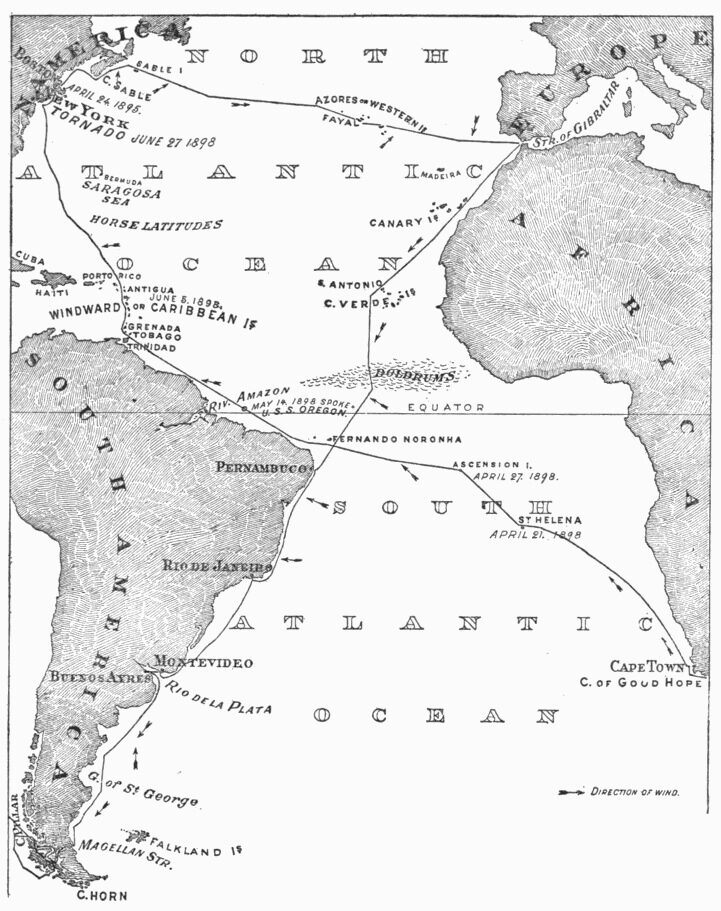
- [DOCUMENTED] Slocum, sailing the sloop Spray alone, left Horta in the
Azores early on the twenty-fourth of July 1895; passing St Michael’s on
the morning of the twenty-sixth he ate Pico white cheese with plums, and “by
night-time I was doubled up with cramps” [2].
- [WITNESS] Slocum wrote that he collapsed on the cabin floor, “became
delirious,” and on looking out “saw a tall man at the helm,” who said: “I am
one of Columbus’s crew… I am the pilot of the Pinta come to aid you. Lie
quiet, senor captain, and I will guide your ship to-night. You have a
calentura, but you will be all right tomorrow” [2].
- The chapter heading of his own book diagnoses the episode: “Delirious from
cheese and plums” [2].
The nineteenth and twentieth of May 1916 — South Georgia
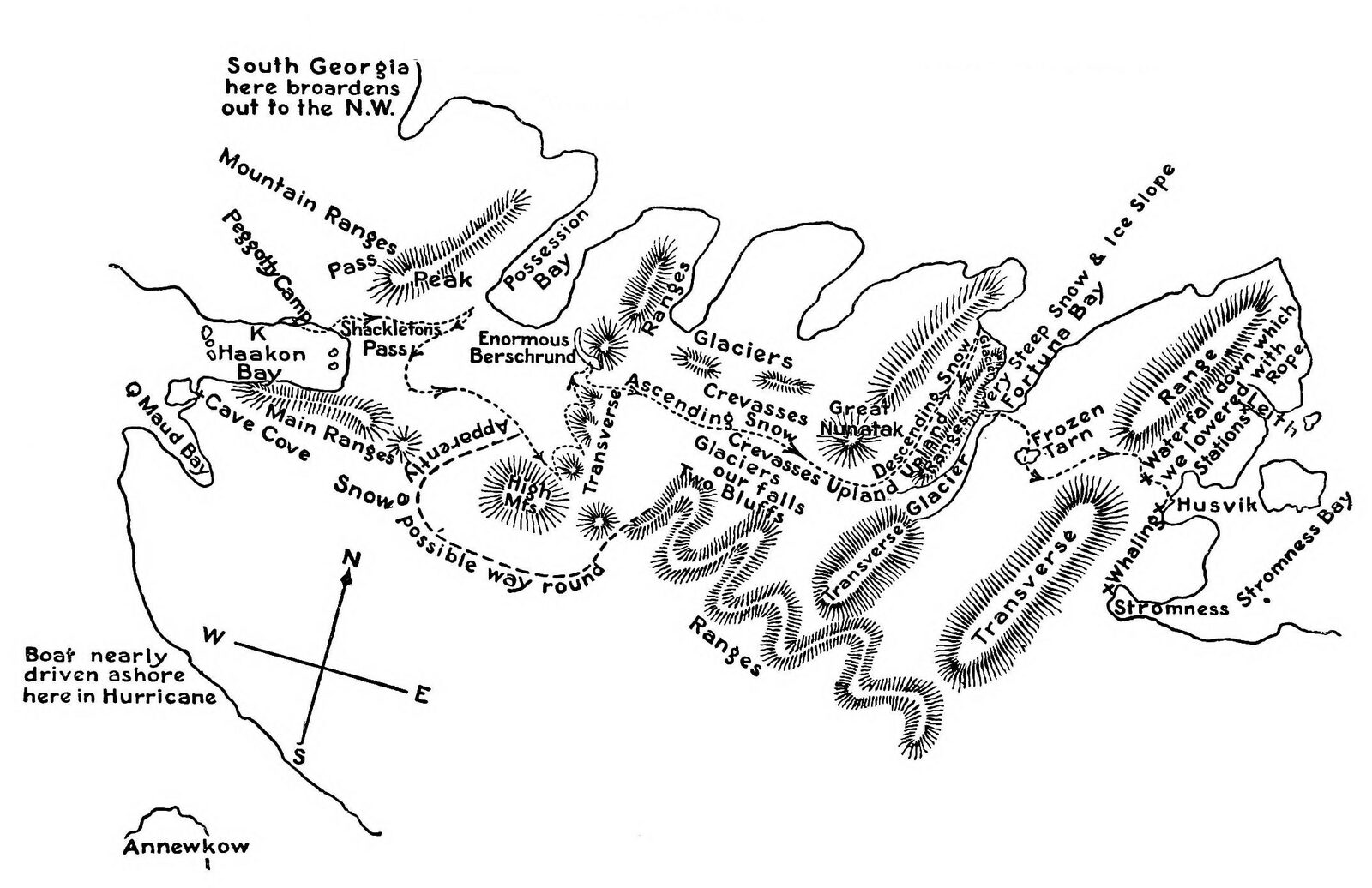
- [DOCUMENTED] Shackleton, Frank Worsley and Tom Crean crossed the unmapped
interior of the island. They turned out at 2 a.m. on the Friday, started at
roughly 3 a.m. under a full moon, and at 1.30 p.m. the following day sighted
Stromness whaling station 2,500 ft below [1].
- [WITNESS] Shackleton wrote in South (1919): “I know that during that long
and racking march of thirty-six hours over the unnamed mountains and glaciers
of South Georgia it seemed to me often that we were four, not three. I said
nothing to my companions on the point, but afterwards Worsley said to me,
‘Boss, I had a curious feeling on the march that there was another person
with us.’ Crean confessed to the same idea” [1].
1922 — the naming
- [DOCUMENTED] The Waste Land, lines 359–365, begin “Who is the third who
walks always beside you?” Eliot’s note to line 360 states the lines “were
stimulated by the account of one of the Antarctic expeditions (I forget
which, but I think one of Shackleton’s): it was related that the party of
explorers, at the extremity of their strength, had the constant delusion that
there was one more member than could actually be counted” [3]. This is the
traceable origin of the phrase.
The first of June 1933 — Everest
- [DOCUMENTED] Heavy snow fell on the thirty-first of May 1933; the following
morning Smythe and Eric Shipton nonetheless climbed on from Camp VI. Shipton
turned back; Smythe continued alone to a high point of about 28,000 ft
[4][5].
- [WITNESS] In Everest 1933 Smythe wrote: “All the time that I was climbing
alone I had a strong feeling that I was accompanied by a second person. This
feeling was so strong that it completely eliminated all loneliness I might
otherwise have felt. It even seemed that I was tied to my ‘companion’ by a
rope, and that if I slipped ‘he’ would hold me… I stopped to try and eat some
mint cake, I carefully divided it and turned round with one half in my hand.
It was almost a shock to find no one to whom to give it” [5].
- [WITNESS] Immediately afterwards, still roughly 200 ft above Camp VI, Smythe
reported “two curious-looking objects floating in the sky,” resembling
kite-balloons — one with “squat under-developed wings,” the other with “a
protuberance suggestive of a beak” — which “hovered motionless but seemed
slowly to pulsate.” He described testing himself by looking away and naming
peaks; the objects persisted until mist obscured them. He estimated their
height at about 27,200 ft [5]. No fetched source links these objects to the
presence, and the archive does not treat them as one event.
- [WITNESS] In Camp Six (1937) Smythe repeated the account and offered a
candidate explanation of his own: the feeling “was due to lack of oxygen and
the mental and physical stress of climbing alone at a great altitude. I do not
offer this as an explanation, but merely as a suggestion” [4].
2006 and 2014 — induction
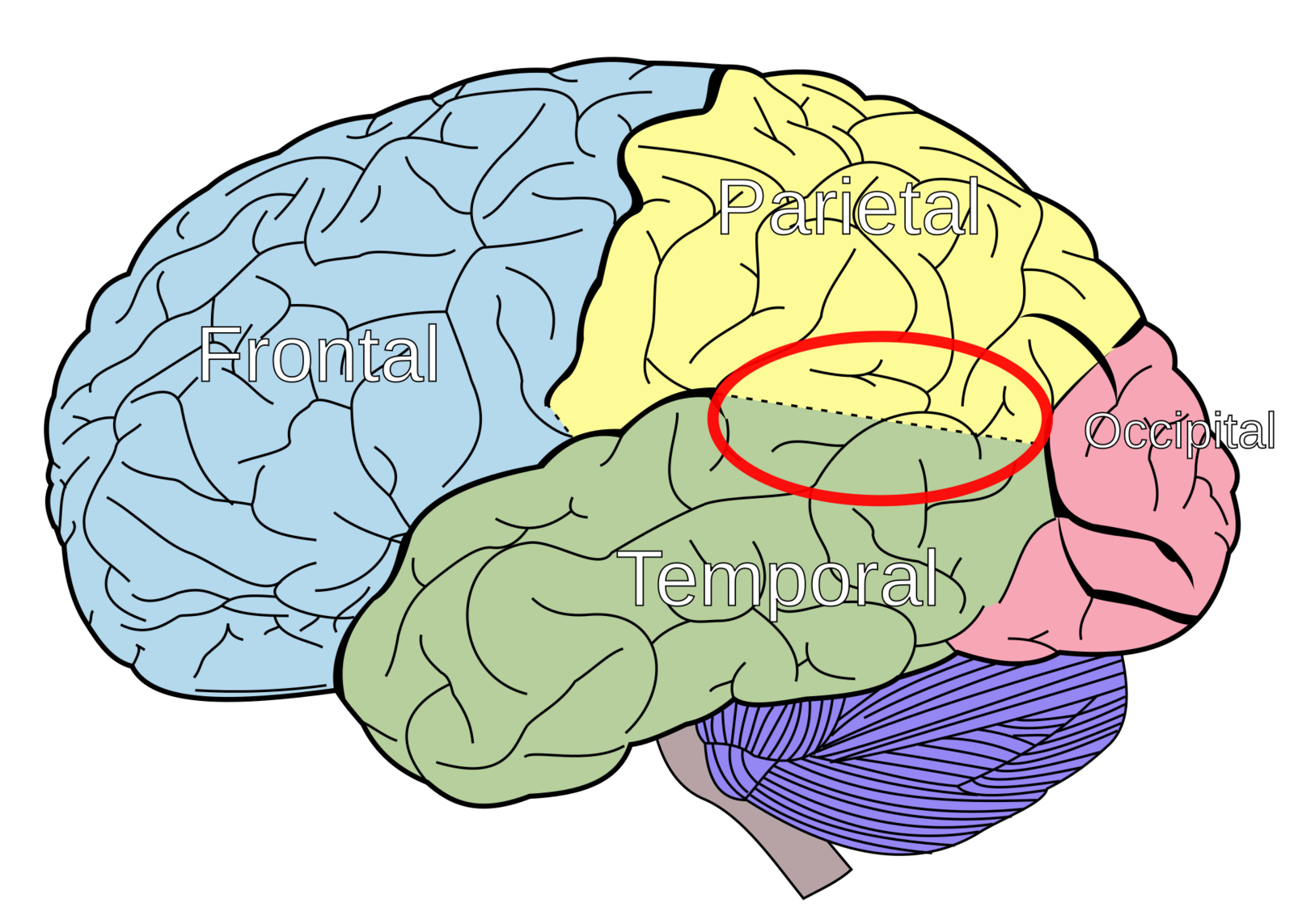
- [DOCUMENTED] Arzy, Seeck, Ortigue, Spinelli and Blanke reported in Nature
the repeated induction of the sensation of a nearby person in a patient
undergoing presurgical evaluation for epilepsy, by focal electrical
stimulation of the left temporoparietal junction; “the illusory person closely
‘shadowed’ changes in the patient’s body position and posture” [6].
- [DOCUMENTED] Blanke and colleagues published lesion analysis in neurological
patients with feeling-of-a-presence, locating it to temporoparietal, insular
and “especially frontoparietal cortex,” then built a master–slave robotic
system that induced the feeling in healthy participants via spatially and
temporally conflicting sensorimotor signals — concluding the illusion is
“caused by misperceiving the source and identity of sensorimotor… signals of
one’s own body” [7].
Documentary record
The three survival accounts are unusual in this archive in that each is a
contemporaneous first-person publication by the witness, not a later
retelling. South (1919) carries the “four, not three” passage inside the
narrative of the crossing, and Shackleton explicitly frames the Worsley and
Crean reports as testimony he collected afterwards [1]. Sailing Alone Around
the World (1900) places the helm episode in chapter IV under a self-diagnosing
heading [2]. Everest 1933 is the official expedition volume; its editor Hugh
Ruttledge declines to interpret Smythe’s narrative, writing only that “men under
physical and mental stress have experienced curious things on mountains… the
effects of oxygen-lack on the brain are complex and but little understood” [5].
Smythe’s fuller version appears in Camp Six [4].
The experimental record consists of the two induction papers [6][7]. Peter
Suedfeld and Jane Mocellin coined “sensed presence” as a research term in
1987, quoted in a 2026 Experimental Physiology editorial by Marino and Marino:
“Students of the presence phenomenon … usually fail to consider that it may be
an adaptive response, a normal reaction to an abnormal situation” [12]. Marino
and Marino go further and argue the Third Man “might represent more than a
perceptual distortion,” functioning as “a regulatory phenomenon that preserves
agency, suppresses despair and maintains purposeful behaviour” [12] — an
interpretation, clearly marked as such.
Adjacent measurements exist but do not settle the survival cases. Brugger,
Regard, Landis and Oelz interviewed eight world-class climbers who had
exceeded 8,500 m without supplementary oxygen; all but one reported somesthetic
illusions and visual or auditory pseudohallucinations, with solo climbing and
life-threatening danger identified as probable triggers [11]. A 2021 field study
at Everest Base Camp (99 participants, 279 assessments) found sub-diagnostic
psychotic symptoms in 10.3% on one instrument and 20.7% on another, with an
increased accident risk among those endorsing items [13]. The experience is not
confined to extremity: a systematic review of Parkinson’s disease reported
sensed-presence prevalence estimates ranging from 0.9% to 73.3% across studies
[14], and it is a common feature of isolated sleep paralysis [15]. A 16-item
Sensed Presence Questionnaire validated in 2017 found two underlying factors,
interpreted as “benign” and “malign” sensed presence [16].
One line of research is contested. Michael Persinger claimed that weak
(microtesla) complex-waveform transcranial magnetic fields evoke the sensed
presence in up to 80% of the general population [10]. Granqvist and colleagues
ran a double-blind sham-controlled replication (N=89) and “found no evidence for
any effects of the magnetic fields,” concluding that suggestibility accounted
for the earlier results [10]; Persinger and Koren published a reply in the same
journal [9]. Both accounts stand in the record and this archive does not
adjudicate between them.
Open questions
- The primary sources do not establish why the presence is usually benign.
The robot work explains that a presence is felt, not its reported
friendliness, guidance or speech [7].
- No fetched source establishes how common the experience is among
survivors of extremity. There is no denominator; Brugger’s 1999 study
interviewed eight climbers [11].
- Whether the Shackleton, Worsley and Crean reports were independent or
cross-contaminated is not resolvable from South. Shackleton says he
stayed silent during the march, but the reports were exchanged afterwards
[1].
- Mechanism is left open by the men closest to it: Ruttledge declines to
interpret, and Smythe offers hypoxia only “as a suggestion” [4][5].
- Smythe’s pulsating objects and his sensed companion occurred within minutes
of each other. No fetched source links or separates the two causally [5].
Status
This file is CONFIDENTIAL — admitted on the strength of contemporaneous
first-person publication by the witnesses themselves [1][2][5], corroborated at
the mechanistic level by two peer-reviewed induction experiments [6][7]. The
survival accounts are testimony, and are marked as such throughout; the
laboratory findings are documented and constrain, but do not close, the
question.
Three widely repeated claims are excluded from the body of this file. The
account of Ron DiFrancesco, said to have been directed out of the South
Tower on the eleventh of September 2001 by a voice and a felt presence, traces
to John Geiger’s The Third Man Factor (2009) [8]; every version located was
secondary retelling, and the publisher’s own catalogue record mentions only the
general phenomenon. No firsthand statement, deposition or official record could
be obtained. Reinhold Messner is frequently named as a case; no fetchable
firsthand statement by him was located, and nothing is asserted here. The
familiar framing of “dozens of survivors” is common in secondary literature but
no fetched source supplies an enumerated, sourced count.
The benevolent unseen guide is a figure the archive holds elsewhere under
daimons and attendant spirits; readers tracking the
narrower question of perception failing under stress may find the parallel cases
filed under glitches in the matrix. Updates
pending a primary source for the DiFrancesco account.
References
- Shackleton, Ernest H. (1919). South: The Story of Shackleton’s Last Expedition 1914-1917. William Heinemann; via Project Gutenberg. Public domain.
- Slocum, Joshua (1900). Sailing Alone Around the World, chapter IV; via Project Gutenberg. Public domain.
- Eliot, T. S. (1922). The Waste Land, lines 359–365 and the author’s note to line 360; via Project Gutenberg. Public domain.
- Smythe, Frank S. (1937). Camp Six: An Account of the 1933 Mount Everest Expedition. Hodder & Stoughton; via Internet Archive.
- Ruttledge, Hugh (ed.) (1934). Everest 1933, the official expedition account, including Smythe’s first-person narrative. Hodder & Stoughton; via Internet Archive.
- Arzy, S., Seeck, M., Ortigue, S., Spinelli, L. & Blanke, O. (2006). “Induction of an illusory shadow person.” Nature 443(7109):287, 21 September 2006; doi:10.1038/443287a.
- Blanke, O. et al. (2014). “Neurological and robot-controlled induction of an apparition.” Current Biology 24(22):2681–86, 17 November 2014; doi:10.1016/j.cub.2014.09.049.
- Geiger, John (2009). The Third Man Factor: Surviving the Impossible. Weinstein Books — bibliographic record, Open Library.
- Persinger, M. A. & Koren, S. A. (2005). “A response to Granqvist et al.” Neuroscience Letters 380(3):346–47.
- Granqvist, P. et al. (2005). “Sensed presence and mystical experiences are predicted by suggestibility, not by the application of transcranial weak complex magnetic fields.” Neuroscience Letters 379(1):1–6, 29 April 2005.
- Brugger, P., Regard, M., Landis, T. & Oelz, O. (1999). “Hallucinatory experiences in extreme-altitude climbers.” Neuropsychiatry, Neuropsychology, and Behavioral Neurology 12(1):67–71.
- Marino, B. & Marino, F. (2026). “The physiology of survival: From the third man to placebo escape hatch?” Experimental Physiology, 31 July 2026; doi:10.1113/EP094011. CC BY.
- “Assessment of Psychotic Symptoms in Individuals Exposed to Very High or Extreme Altitude: A Field Study.” High Altitude Medicine & Biology 22(4):369–378, 2021.
- “Non-visual hallucinations in Parkinson’s disease: a systematic review.” Journal of Neurology 270(6):2857–2889, 2023.
- “Sensed presence as a correlate of sleep paralysis distress, social anxiety and waking state social imagery.” Consciousness and Cognition 17(1):49–63, 2008.
- “The Sensed Presence Questionnaire (SenPQ): initial psychometric validation.” PeerJ 5:e3149, 2017.