CONFIDENTIAL
UF-26008
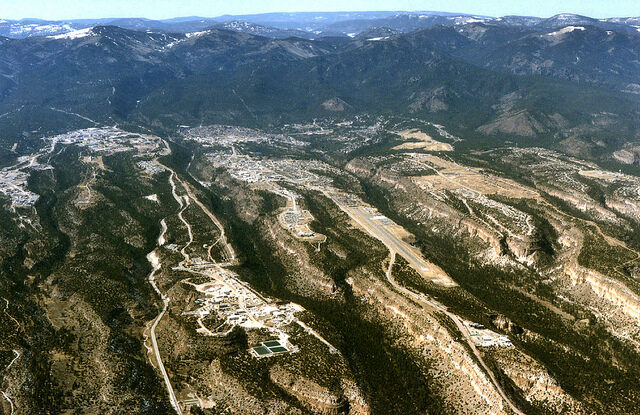
Los Alamos Green Fireballs and Project Twinkle
- Incident
- 1948-12-05
- Location
- Los Alamos, Sandia and Kirtland installations, New Mexico, United States
- Coords
- 35.8811, -106.3031
Brief
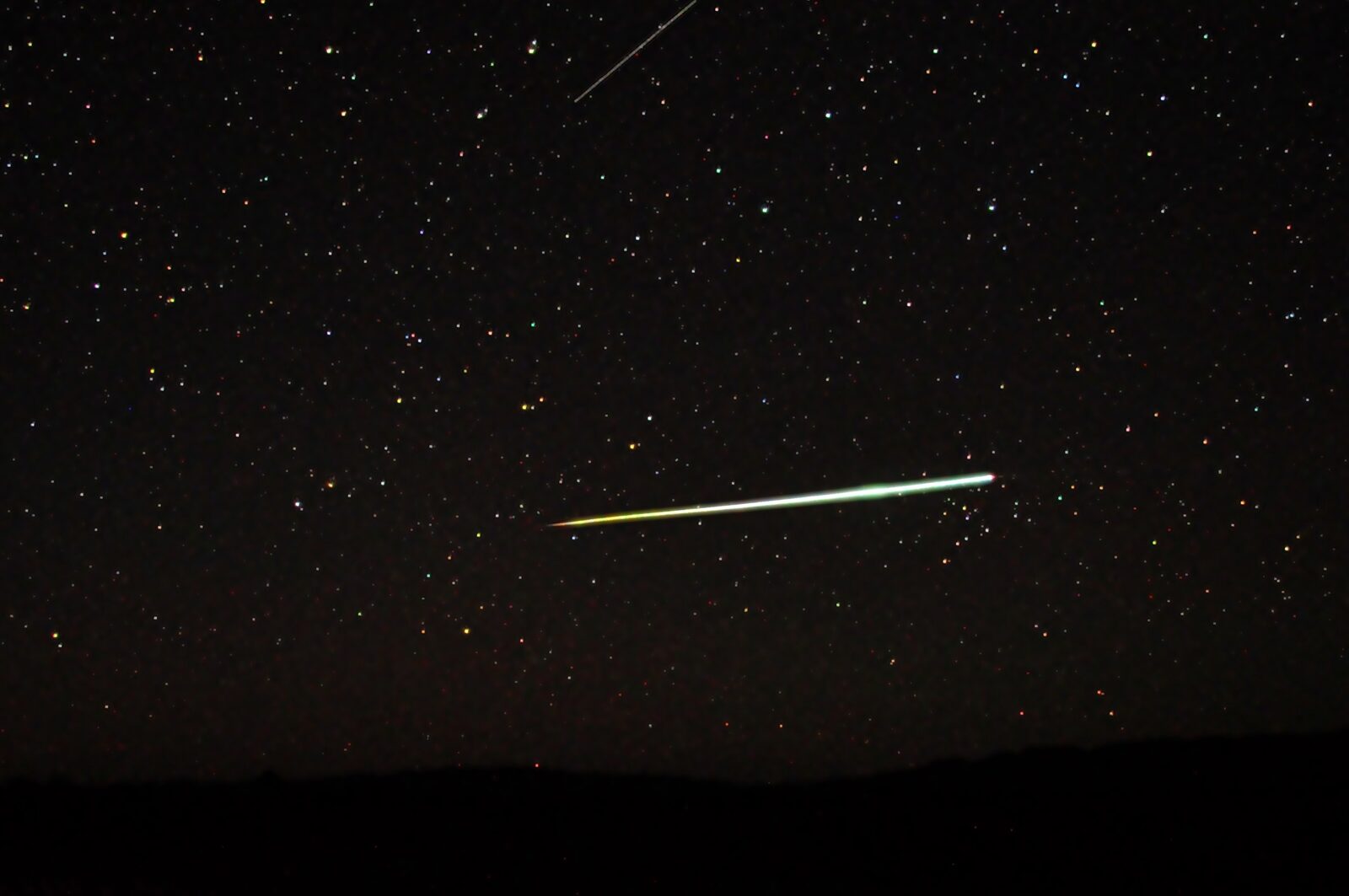
Between late 1948 and 1951, brilliant green fireballs were repeatedly observed on near-horizontal, silent paths over New Mexico's most sensitive nuclear installations. The sightings alarmed the Atomic Energy Commission, the FBI and the Air Force enough to convene a secret conference at Los Alamos on the sixteenth of February 1949 and to launch a dedicated observation study, Project Twinkle. Twinkle's final report of November 1951 closed the effort, with the official conclusion that the objects were likely natural in origin.
Filed 2026-07-11 · Last updated 11 July 2026
Briefing
Beginning on the fifth of December 1948, green fireballs appeared over the
Los Alamos area and recurred “several times over the next three months, flying
noiselessly” [2]. The objects were seen over the most sensitive nuclear
installations in the United States — Los Alamos, Sandia and Kirtland — and the
concern they generated was sufficient to convene a secret scientific conference
and, ultimately, to fund a dedicated instrumented observation programme,
Project Twinkle [1][2].
Sequence of events
Late 1948 — first sightings
- The fifth of December 1948. Green fireballs begin appearing over the Los
Alamos area, recurring several times over the following three months and
flying without sound [2].
- Some accounts place the earliest reports slightly earlier, in late November
1948 over Albuquerque, with sightings escalating through December; this
earlier dating is reported rather than documented [5].
- The twelfth of December 1948. Dr Lincoln LaPaz witnesses an event he
describes as “most certainly not a conventional meteorite fall” — appearing
“in full intensity instantly”, holding constant brightness, and travelling a
nearly horizontal path before breaking into green fragments [5].
1949 — official alarm
- The thirteenth of January 1949. A Headquarters 4th Army memorandum,
subject “Unconventional Aircraft”, is forwarded to the Director of
Intelligence. Agencies in New Mexico are recorded as “greatly concerned”, and
the matter is considered secret by both Army and Air Force intelligence [4].
- The thirtieth of January 1949. A widely-cited event is reported to have
been tracked by more than 100 observers across New Mexico and West Texas [5].
- The sixteenth of February 1949. A conference is convened at Los Alamos
Scientific Laboratory to discuss the phenomena, attended by Laboratory
representatives, the FBI, the Atomic Energy Commission and the military
[2][3].
December 1949 to November 1951 — Project Twinkle
- December 1949. Project Twinkle, a network of observation and photographic
stations, is established to instrument the phenomena [1][2].
- November 1951. The Project Twinkle final report is issued; the effort is
subsequently discontinued [1][2].
Documentary record
The central scientific observation on record is LaPaz’s own. In what is known as
the Starvation Peak incident, he personally observed a fireball of constant
intensity, “yellow green color about 5200 Angstroms”, following an “essentially
horizontal path” at constant angular velocity, lasting roughly two seconds and
making no noise — characteristics that, in his assessment, “could not be
classified as a normal meteorite fall” [4]. These observations, together with
the note that the matter “is considered secret by Intelligence Officers of both
the Army and the Air Force”, are preserved in the FBI / Project Grudge
memorandum of the twenty-second of March 1949 [4].
The Conference on Aerial Phenomena held at Los Alamos on the sixteenth of
February 1949 is recorded in a formerly-secret Project Blue Book document [3].
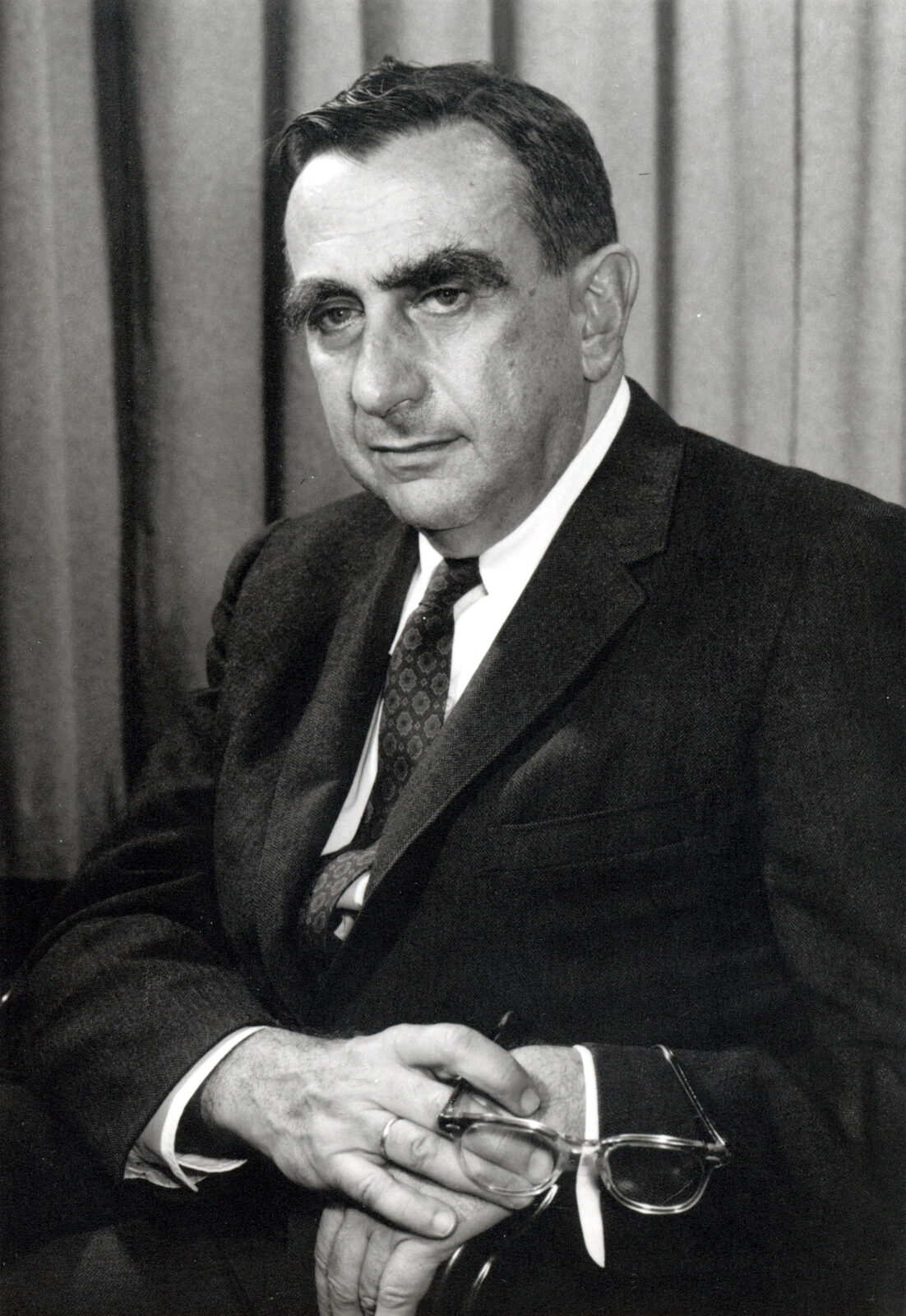
It captures Dr Edward Teller pressing LaPaz on “the absence of sound when this
thing has gone apparently overhead… within earshot of people”, to which LaPaz
replied: “That seems incomprehensible, doesn’t it, Dr. Teller?… that has been my
feeling from the beginning” [3]. Commander Mandelkorn suggested at the same
conference that high-altitude man-made objects could theoretically be inaudible
[3]. Also present were the Laboratory’s Director, Dr Norris E. Bradbury, and the
physicist Frederick Reines [2].
The Project Twinkle Final Report of November 1951 is held in the Air Force
Historical Research Agency record and is in the public domain [1]. Los Alamos
National Laboratory states that Twinkle “was discontinued after two years, with
the official conclusion that the green fireballs were likely natural in origin”,
and that the notion the objects represented a significant national security
threat was dismissed [2].
A fourth batch of declassified records under the Department of War’s PURSUE
effort was reported released on the tenth of July 2026, including a file
named “DOE-UAP-D004-Los-Alamos-Conference-on-Aerial-Phenomena-1949.pdf”, naming
Teller, Bradbury and LaPaz [5]. That release is reported by a news outlet rather
than verified against the primary tranche by this archive.
Open questions
- The verified pages of the Twinkle record confirm the report’s existence, date
and the discontinuation of the effort as “likely natural” [1][2], but do not
reproduce the report’s full internal reasoning, its station-by-station
instrument data, or its budget lines.
- No verified primary source establishes a physical explanation for the
near-horizontal flight paths, the constant brightness, or the total absence
of sound that puzzled both LaPaz and Teller [3][4].
- Whether the spectroscopic measurement of approximately 5200 Å was ever
independently reproduced is not resolved by the sources verified here [4].
- The precise number of sightings is inconsistent across sources — variously
“dozens”, “over 100”, “hundreds” — and no single primary tally has been
verified by this archive.
- The frequently-quoted verbatim conclusion attributed to the Twinkle report —
that there has been no indication the observations are anything but natural
phenomena — appears widely in secondary summaries but has not been confirmed
against a primary page. It is treated here as unverified pending the
report text itself. The same applies to a widely-repeated FBI memorandum of
the twenty-third of August 1950 said to tally approximately 150 observations
since December 1948.
Status
This file is CONFIDENTIAL — admitted on the strength of contemporaneous
government documentation: the FBI / Project Grudge memorandum, the Project Blue
Book conference record, and the Project Twinkle final report [1][3][4]. The
official disposition of the case is that the objects were likely natural in
origin [2].
The archive records, without endorsing, several lower-confidence claims. LaPaz is
reported to have advised the military and the Atomic Energy Commission that the
fireballs were likely either top-secret American “unconventional defensive
devices” or Soviet spying devices [5]. New Mexico agencies were reported to be
“of the opinion that some foreign power was making ‘sensing shots’ with some
super-stratospheric device designed to be self-disintegrating” [5]. Edward J.
Ruppelt, later director of Project Blue Book, is said to have visited Los Alamos
in early 1952 and found scientists animated at the suggestion of interplanetary
vehicles [5]. Each of these rests on a single news source and none is treated by
this archive as documented.
The green fireballs sit within the archive’s wider record of luminous, unstructured
aerial objects — see spheres and orbs — and, as a case
of sustained unexplained activity over restricted American military airspace, they
form part of the same lineage as the archive’s file on Area 51.
Updates pending direct examination of the July 2026 declassified tranche.
References
- Project Twinkle Final Report, November 1951 — Air Force Historical Research Agency, via the Internet Archive. Public domain. The final report of the Project Grudge subproject investigating the green fireballs of the American southwest.
- FOIA requests at the National Security Research Center — Los Alamos National Laboratory. Records the first sightings of the fifth of December 1948, the sixteenth of February 1949 conference, and Twinkle’s discontinuation with the conclusion that the fireballs were likely natural in origin.
- Conference on Aerial Phenomena, Los Alamos, 16th February 1949 — formerly-secret U.S. Air Force Project Blue Book record, reproduced. Contains the Teller–LaPaz exchange on the absence of sound and Commander Mandelkorn’s high-altitude suggestion.
- Project Grudge / FBI memorandum, 22nd March 1949 — SAC San Antonio to the FBI Director, referencing a letter of the thirty-first of January 1949; reproduced. Records LaPaz’s spectroscopic and kinematic observations, the Headquarters 4th Army memorandum of the thirteenth of January 1949, and the secret classification held by Army and Air Force intelligence.
- Declassified “green fireball” records raise questions about 1949 sightings — Newsweek. Reports the fourth Department of War / PURSUE declassified tranche of the tenth of July 2026, and the lower-confidence attributions recorded above.