CONFIDENTIAL
CS-26008
Project Palladium
- Incident
- 1960-01-01
- Location
- Off the coast of Havana, Cuba (Palladium Cuba test); program operated from CIA/NSA ground, naval and submarine platforms
- Coords
- 23.1136, -82.3666
Brief
Project Palladium was a Cold War CIA electronic-warfare programme, founded around 1960 by engineer S. Eugene "Gene" Poteat, that intercepted an enemy radar's own signal, passed it through a variable delay line, and re-transmitted it to inject fully controllable "ghost aircraft" into Soviet and Soviet-client air-defence radars. Its existence rests on Poteat's own published firsthand accounts and a declassified CIA Studies in Intelligence article; the popular claim that Palladium "manufactured UFOs" is a secondary interpretation Poteat's accounts do not make.
Filed 2026-07-15 · Last updated 15 July 2026
Briefing
Project Palladium was a Cold War electronic-warfare programme built inside the
CIA’s science-and-technology directorate, run from around 1960 alongside the
U-2 and A-12/Oxcart efforts [1]. It intercepted an enemy radar’s own signal,
passed it through a variable delay line, and re-transmitted it to inject fully
controllable false radar targets — “ghost aircraft” of any size, speed and
flight path — into Soviet and Soviet-client air-defence radars [1]. Its
existence is documented in program founder S. Eugene “Gene” Poteat’s own
firsthand published accounts and in a declassified CIA Studies in Intelligence
article [1][4]. The frequently repeated claim that Palladium “manufactured UFOs”
is a secondary interpretation drawn from later outlets, not a statement in
Poteat’s accounts, which describe ghost aircraft throughout [2].
Sequence of events
Around 1960 — origin
- As a new engineer in the CIA’s Office of Scientific Intelligence, cleared into
the Oxcart (A-12) programme, Poteat and a team set out to measure Soviet radar
power, coverage and operator skill — needing to know how stealthy the
yet-to-fly Oxcart had to be [1].
- To test operators directly, the team built a device that received an enemy
radar’s signal, fed it into a delay line, and re-transmitted it; by smoothly
varying the delay length they simulated a false target’s range and speed and,
knowing the radar’s power and coverage, could fly a ghost aircraft along any
path. The project was dubbed Palladium [1].
The Cuba test — approximately the early 1960s
- Operations were run covertly from ground bases, naval ships and submarines; a
typical mission combined a CIA ghost-aircraft transmitter, an NSA team
monitoring the enemy’s radar reports and radio chatter, and a support team [1].
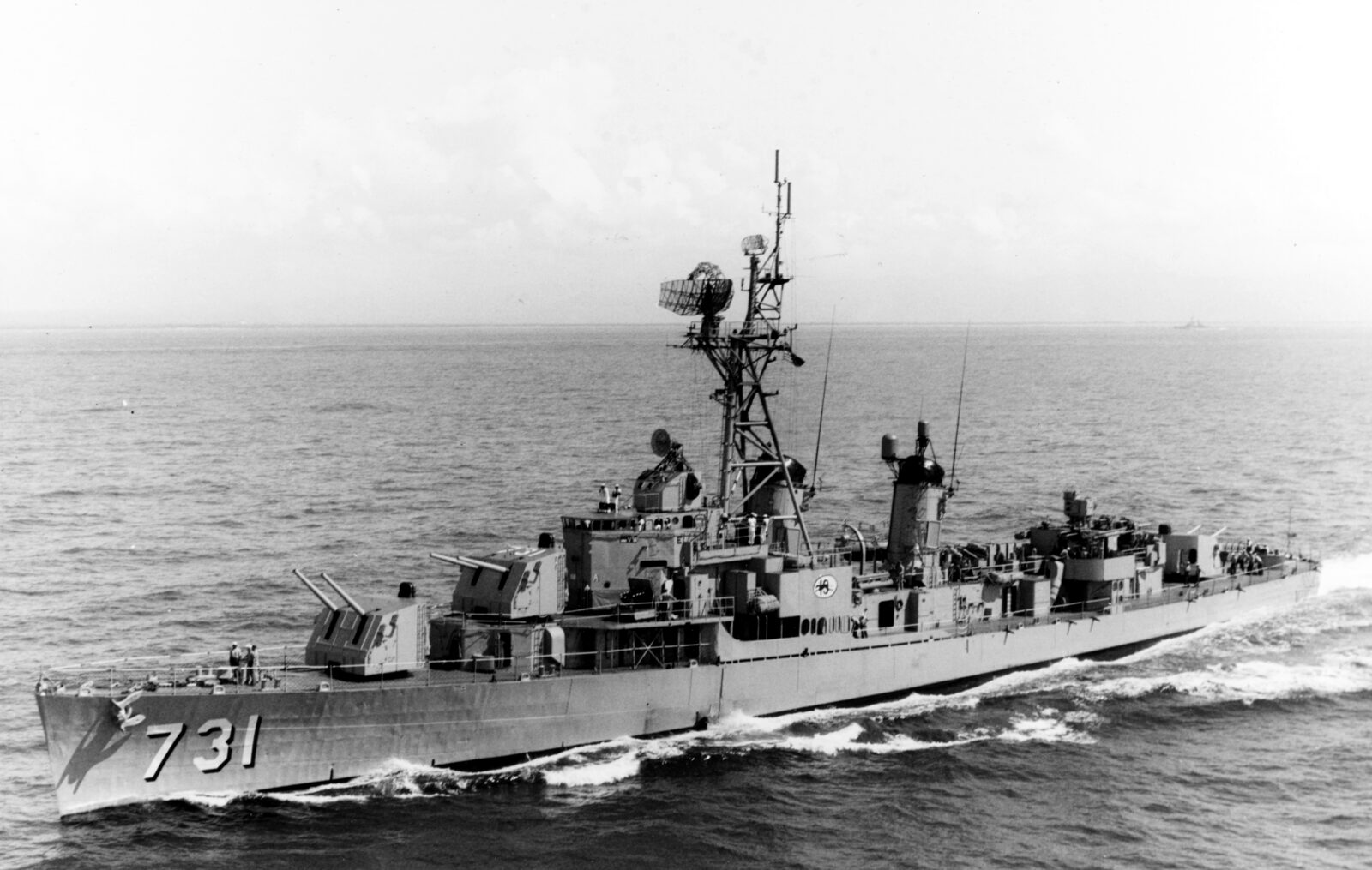
- A US Navy destroyer lay just off the Cuban coast near Havana — out of sight of
Soviet radar, with the Palladium antenna “just breaking the horizon” — and the
false target was made to look like a US fighter out of Key West about to
overfly Cuba [1].
- Simultaneously a US Navy submarine released a timed series of metallic,
balloon-borne spheres of different sizes: the aim was
to get the early-warning radar to track the electronic aircraft while the NSA
team recorded which sphere sizes the radar could and could not detect —
directly measuring the smallest radar cross-section the Soviets could see [1].
- Cuban fighters were scrambled to intercept the “intruder”; Poteat wrote the
team “had no trouble in manipulating the Palladium system controls to keep our
ghost aircraft just ahead of the pursuing Cuban fighters” [1][3].
- According to the Las Vegas Review-Journal’s account of Poteat’s 1999 paper,
the Cuban pilot radioed that he had the intruder in sight and was preparing to
fire — at which point a CIA engineer shut the system down and the phantom
vanished [3].
Documentary record
The primary source verified directly is Poteat’s own published narrative,
“Engineering in the CIA: ELINT, Stealth, and Beginnings of Information
Warfare,” in The BENT of Tau Beta Pi, Fall 1999, which describes the Cuba
test, the delay-line technique and the submarine spheres [1]. Poteat states that
his own account rests on his article “Stealth, ELINT, 1960–75: Some Beginnings
of Information Warfare,” Studies in Intelligence, Vol. 42, No. 1 (1998),
noting the volume was classified SECRET and that the referenced article had been
“recently declassified” [1]. The underlying official CIA record — “Stealth,
Countermeasures, and ELINT, 1960–1975” — is hosted in the CIA Reading Room
(DOC_0006122549); its existence and title are confirmed, but its full text could
not be retrieved for this file (the server returned HTTP 403), so no fact here is
cited to its contents [4].
The War Zone’s profile reports that Poteat “founded and directed PALLADIUM for
15 years” within the Directorate of Science and Technology [2]. The institutional
actors named in Poteat’s account are the CIA (the ghost-aircraft system), the NSA
(signals monitoring) and the US Navy (destroyer and submarine platforms) [1].
Open questions
- The verified sources give no precise date for the Cuba test; Poteat places it
in the early-1960s Oxcart window but does not date it [1].
- The number, locations and targets of Palladium operations beyond Cuba are not
specified in the fetched sources [1].
- The full declassified Studies in Intelligence text, which may contain
further detail, was not directly accessible for verification [4].
- Whether any Palladium-style operation was ever conducted against US or allied
observers — as opposed to Soviet or Cuban radar — is not addressed in the
primary account [1].
- Separately, Poteat recounts being asked during the August 1964 Gulf of Tonkin
incident whether the destroyer Maddox’s radar had been “spoofed
electronically, the way you spoofed their radar.” He does not claim
Palladium was involved; he raises the possibility of radar or atmospheric
artefacts, writes that the ship’s log gave few clues, and leaves the question
open [1].
Status
This file is CONFIDENTIAL — admitted on the strength of the program founder’s
own firsthand published account and the confirmed existence of the underlying CIA
Studies in Intelligence record [1][4]. The archive draws a firm line between
what is documented and what is inferred. Poteat’s accounts describe controllable
“ghost aircraft” and plain metallic spheres used as radar-cross-section
calibration references; they do not describe “flying-saucer-shaped” decoys, and no
primary source supports the saucer-shaping claim [1]. The link to modern US Navy
Tic Tac encounters is external interpretation: Area 51 and
Oxcart-era radar veteran T. D. Barnes told The War Zone, of recent Navy sightings,
“I don’t have the answers to what the Navy aviators saw, but in my mind, I’m
thinking, we are doing it again” — a stated opinion offered without evidence, and
one Poteat, per the same report, declined to endorse without seeing more of the
Navy’s data [2]. Treat the UFO framing accordingly. Lower-confidence
paraphrases of the system’s flexibility — that it could make a target “as big as
a B-52 bomber or as small as a bird, and anything in between” — are Poteat’s own
words to the Review-Journal and are logged as reported, not documented [3].
References
- Poteat, S. Eugene. “Engineering in the CIA: ELINT, Stealth, and Beginnings of Information Warfare,” The BENT of Tau Beta Pi, Fall 1999 — the primary firsthand narrative verified directly for this file (cited under fair use).
- Rogoway, Tyler. “Area 51 Veteran And CIA Electronic Warfare Pioneer Weigh In On Navy UFO Encounters,” The War Zone (TWZ).
- “Quiet arms race continues, retired CIA officer says,” Las Vegas Review-Journal — account of Poteat’s 1999 paper.
- Poteat, S. Eugene. “Stealth, Countermeasures, and ELINT, 1960–1975,” CIA Studies in Intelligence, CIA Reading Room DOC_0006122549 — underlying official CIA record; existence and title confirmed, full text not retrieved (HTTP 403). US Government work / public domain.