CONFIDENTIAL
UF-26015
The 1991 Mexican UFO Wave
- Incident
- 1991-07-11
- Location
- Mexico City, Federal District, Mexico
- Coords
- 19.4326, -99.1332
Brief
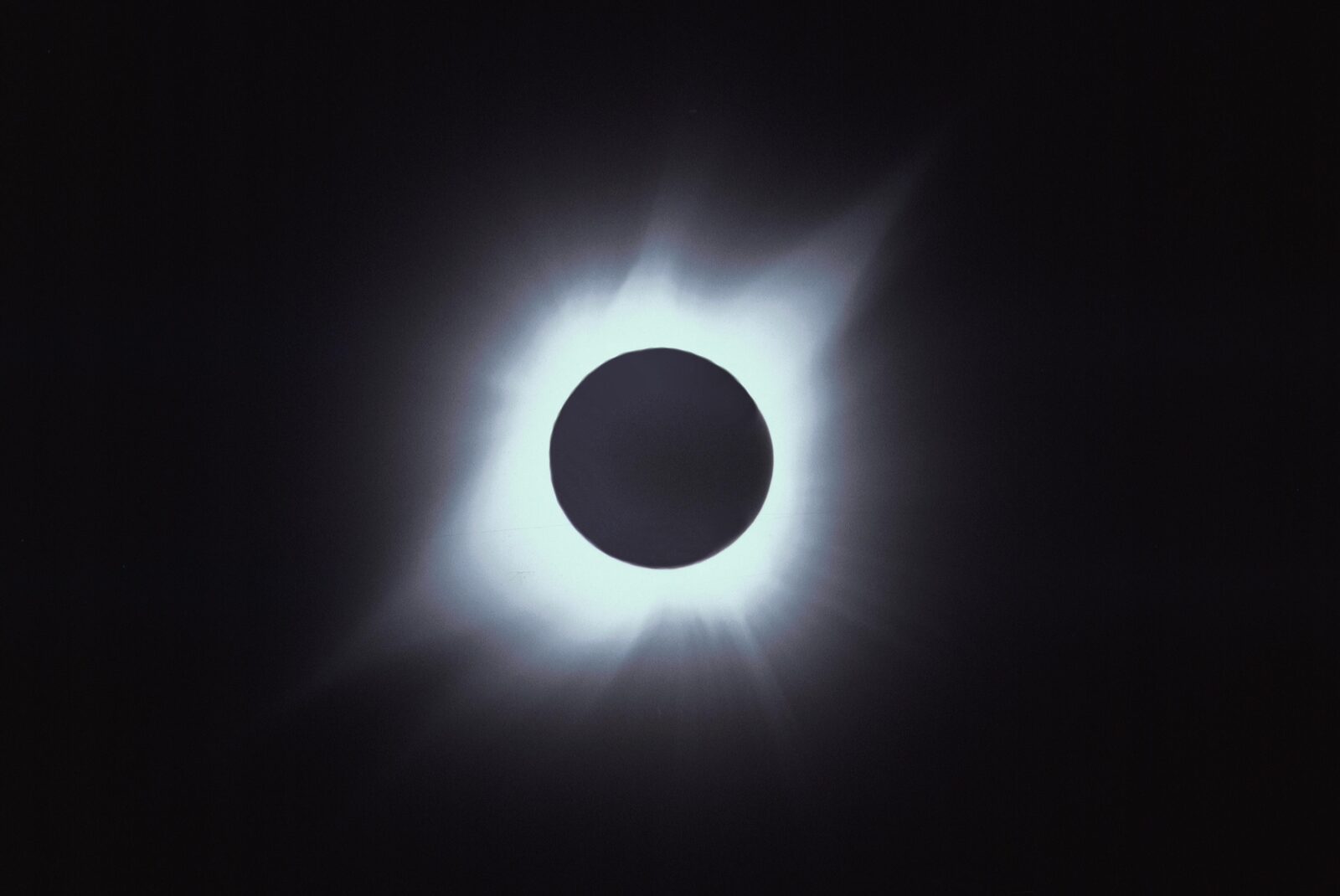
On the eleventh of July 1991, during the longest total solar eclipse of the twentieth century, numerous observers in and around Mexico City filmed a stationary or slow-moving object in the eclipse-darkened daytime sky. Journalist Jaime Maussan aggregated the amateur footage on national television within about a week, catalysing a multi-year Mexican UFO "wave"; the leading conventional explanation is that most of the videos captured the planet Venus, which was documented shining at magnitude −4.8 during totality.
Filed 2026-07-18 · Last updated 18 July 2026
Briefing
On the eleventh of July 1991, central Mexico lay beneath the longest total
solar eclipse of the twentieth century [1][2]. During and around totality,
multiple observers across the Federal District and neighbouring states
independently videotaped an object described as a metallic disc or domed shape,
often with a dark lower edge [4][5]. Within roughly a week the journalist Jaime
Maussan had aggregated the amateur footage on national television, and the event
is commonly described as the start of a sustained Mexican UFO “wave” that
continued through the decade [5][6]. No primary government or FOIA document
specific to the sightings has surfaced; the eclipse and the daytime visibility
of Venus are the only strongly documented facts in the case [3][7].
Sequence of events
The eclipse — the eleventh of July 1991
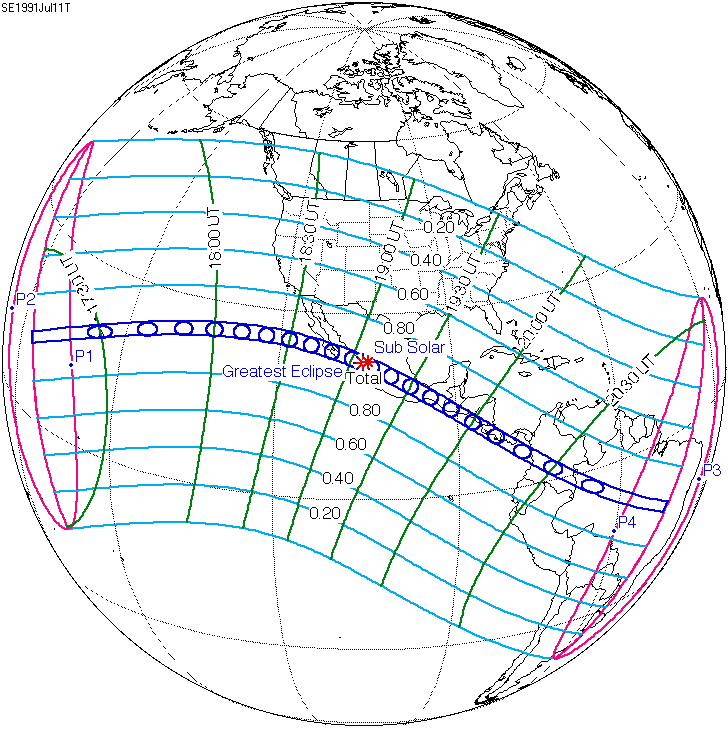
- A total solar eclipse crossed Mexico, with maximum totality of 413 seconds
(6 minutes 53 seconds) — the longest until 2132 — and greatest eclipse at
19:07:01 UTC; at gamma −0.00412 it was the most central eclipse in
approximately 800 years [1][2].
- Mexico City lay inside the path of totality, experiencing roughly 6 minutes
38 seconds of totality centred near 13:24 local time [2].
- Venus was visible in the darkened daytime sky during totality, shining
“brilliantly at magnitude −4.8,” per the NASA Johnson Space Center expedition
account led by the astronomer Paul D. Maley; stars to magnitude 1.5 were also
reportedly seen with the unaided eye [3].
The filming — around totality
- During and around totality, multiple observers across the Federal District
and neighbouring states reportedly videotaped an object described as a
metallic disc or domed shape, often with a dark
lower edge [4][5].
- Secondary accounts name an amateur videographer, Guillermo Arreguín, among
the earliest and most-shown clips, reportedly filming from outside central
Mexico City, alongside a further set of roughly fifteen to seventeen named
amateur videographers and photographers said to be filming from separate
locations between about 13:04 and 13:32 local time [4][5].
The broadcast — about one week later
- Jaime Maussan reportedly broadcast amateur footage of the object on Mexican
national television approximately one week after the eclipse; thousands of
viewers phoned in claiming similar sightings, and several mailed in their own
tapes [5][6].
- The event is commonly described as the start of a sustained “Mexican UFO
wave” continuing through the 1990s, with Maussan reportedly compiling
thousands of subsequent videos and photographs [6].
Documentary record
The load-bearing primary records in this case establish the setting, not the
object. The NASA/GSFC eclipse catalogue and the corresponding eclipse
reference record document the timing, duration, path and totality over Mexico
City [1][2]. A first-person NASA-JSC observer account documents Venus’s
brilliance and the sky conditions during totality — the physically relevant fact
for the leading explanation [3]. The most-cited conventional explanation, set
out in skeptical analysis, is that the filmed object was the planet Venus, near
peak brightness in the eclipse-darkened daytime sky, with its “domed half-disc”
appearance attributed to Venus’s roughly forty-per-cent-illuminated phase and
videotape artefacting; this is directly consistent with the NASA-JSC observation
of Venus at −4.8 during totality [3][4]. TIME magazine characterised the event
as “one of the largest mass UFO sightings ever,” while also noting that some
observers may have been seeing after-images from unprotected eclipse viewing
[6]. No CIA, FBI, AARO, Blue Book or Mexican-government FOIA document specific to
the sightings was located; CIA reading-room UFO records from 1991 concern
unrelated events [7].
Open questions
- No primary source consulted establishes a definitive count of videos; figures
of “15,” “17,” and “thousands (later)” come from differing secondary tallies
[4][5][6]. The widely repeated “17 videographers / 17 locations” is not tied
to any original, verifiable registry of the clips.
- The exact broadcast date, programme title and network of the first aggregated
broadcast are not confirmed by a primary source; secondary accounts variously
name “60 Minutos” and, later, “Tercer Milenio” [4][5].
- No consulted source provides frame-level metrology — angular size, bearing,
elevation — tying every individual clip to a single object rather than
multiple objects. The claim that videographers filmed “the same object” from
locations “80 miles apart” appears in secondary retellings but is not
supported by any triangulation data in the sources consulted [4][5].
- Specific in-clip timestamps and per-videographer locations derive from a
single skeptical compilation and are not independently corroborated [4].
- No official Mexican government or military investigation record, radar
tracking, or acknowledgement of the 1991 object was located.
Status
This file is CONFIDENTIAL — admitted to the archive on the strength of the
documented astronomical setting, chiefly the NASA/GSFC eclipse records and the
NASA-JSC observation of Venus at magnitude −4.8 during totality [1][2][3]. The
object itself rests entirely on reported amateur footage and witness telephone
accounts; no primary documentary record ties the videos to a craft, and the
leading conventional explanation — Venus — is the better-evidenced reading of
the same facts [4]. Claims of official confirmation, a definitive video count,
or Maussan’s later “5,000-video” compilation trace only to promotional or
secondary text and are not corroborated here. Related daytime bright-point
sightings are catalogued in the archive’s record of
spheres and orbs. Updates pending any surfacing of a
primary registry of the clips.
References
- NASA Goddard Space Flight Center — Total Solar Eclipse of 1991 July 11. Eclipse catalogue record: timing, duration, path and totality.
- Wikipedia — Solar eclipse of July 11, 1991. Corresponding eclipse reference record, including totality over Mexico City.
- Paul D. Maley (NASA Johnson Space Center) — 1991 Total Solar Eclipse in Mexico Results. First-person observer account recording Venus at magnitude −4.8 and sky conditions during totality.
- Tim Printy / SUNlite — The July 11, 1991 Mexico City UFOs. Skeptical compilation and the Venus explanation.
- The Residium (Frank J. Bunker) — Mexico City 1991. Secondary account of the footage, videographers and broadcast.
- TIME — Mexico City, 6 UFO Hot Spots Around the World. Characterisation of the event and after-image note.
- Central Intelligence Agency — FOIA Reading Room, UFO search. No record specific to the 11 July 1991 sightings; 1991 UFO records concern unrelated events.
Frequently asked
- What happened during the 1991 Mexican UFO wave?
- On the eleventh of July 1991, during a total solar eclipse over central Mexico, numerous people in and around Mexico City independently filmed an object described as a metallic disc or domed shape in the daytime sky. Journalist Jaime Maussan broadcast the amateur footage on national television about a week later, which is commonly described as the start of a sustained Mexican UFO wave that continued through the 1990s.
- Is there a conventional explanation for the 1991 Mexico City footage?
- The most-cited conventional explanation is that the filmed object was the planet Venus, which was near peak brightness and visible in the eclipse-darkened daytime sky. A NASA Johnson Space Center expedition recorded Venus shining at magnitude −4.8 during totality, and skeptical analysis attributes the "domed half-disc" appearance to Venus's roughly forty-per-cent-illuminated phase and videotape artefacting.
- Was there any government investigation of the 1991 sightings?
- No official Mexican government or military investigation record was located, and no CIA, FBI, AARO, Project Blue Book or FOIA document specific to the eleventh of July 1991 sightings has surfaced. CIA reading-room UFO records from 1991 concern unrelated events.
- Who was Jaime Maussan in relation to the wave?
- Jaime Maussan is a Mexican television journalist who collected, broadcast and promoted the amateur footage and is credited with catalysing the wave. The exact broadcast date, programme title and network of the first aggregated broadcast are not confirmed by a primary source.