CONFIDENTIAL
UF-26021
The Betz Mystery Sphere
- Incident
- 1974-04-06
- Location
- Fort George Island, Duval County, Florida, United States
- Coords
- 30.431, -81.429
Brief
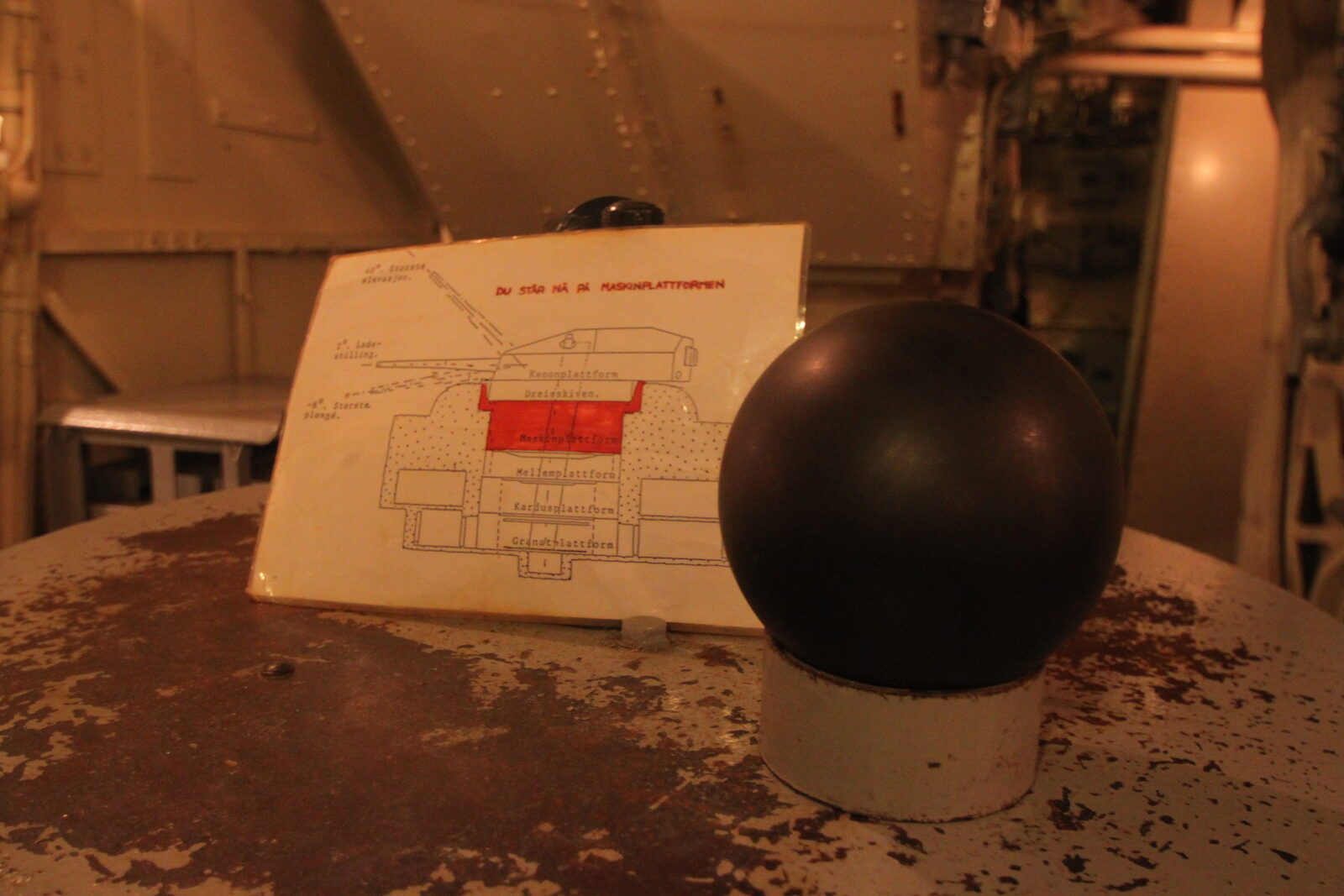
In April 1974 the Betz family of Fort George Island, Florida, reported finding a seamless polished stainless-steel sphere roughly eight inches across and weighing 21.34 pounds on their wooded property, and said it rolled, hummed and changed direction unaided. The U.S. Navy examined and X-rayed it at Jacksonville Naval Air Station that month and reported a hollow, non-radioactive, non-explosive, earth-made ball — a Navy metallurgist identified it as a large ball bearing used as a check valve in industrial piping. A National Enquirer-convened panel including Dr J. Allen Hynek reached the same "man-made" conclusion, though the manufacturer was never established and no full Navy report has surfaced publicly.
Filed 2026-08-26 · Last updated 26 August 2026
Briefing
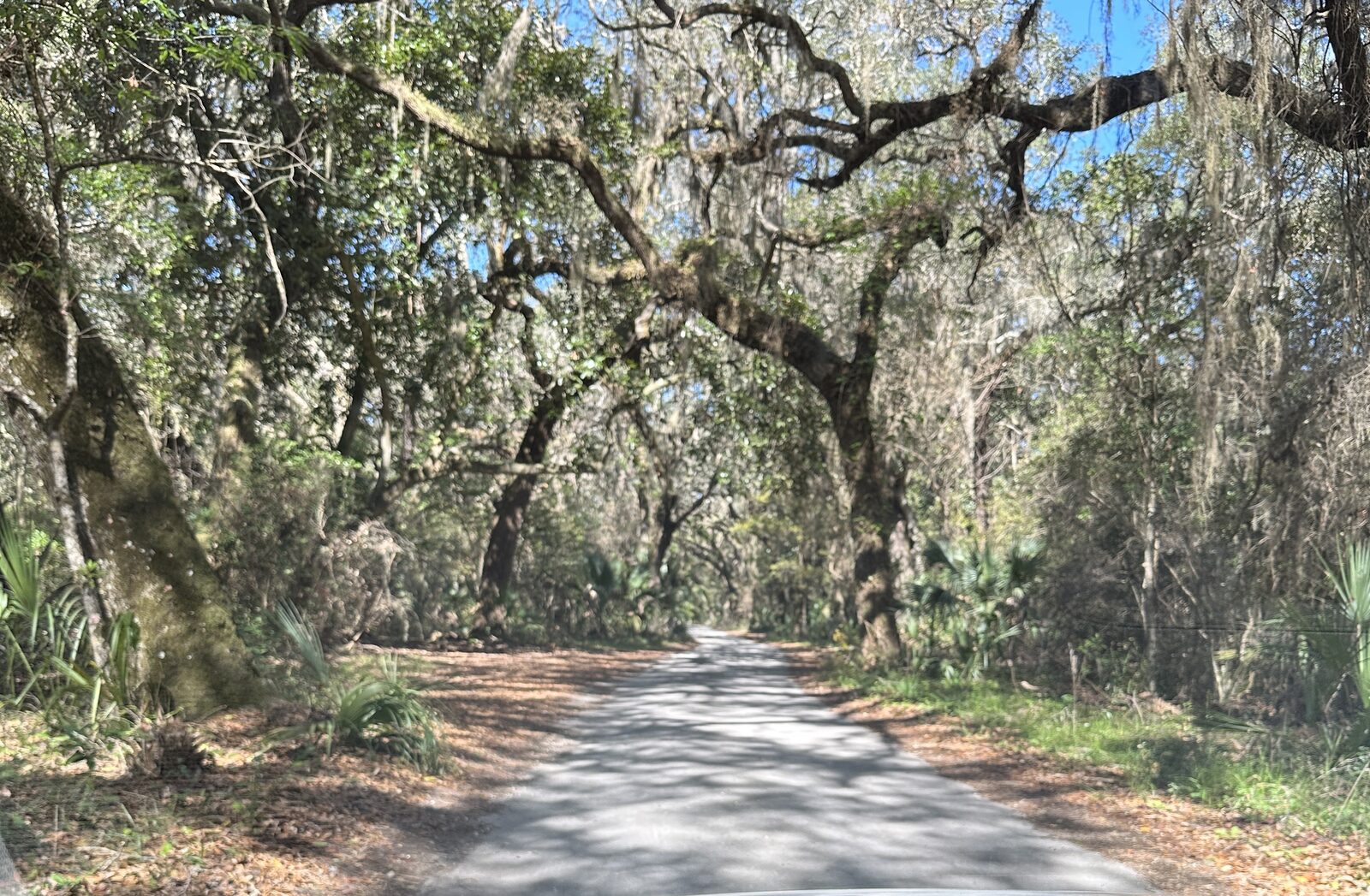
In the spring of 1974, the Betz family of Fort George Island — about fifteen
miles north of Jacksonville, Florida — reported finding a polished
stainless-steel sphere on their twenty acres of wooded land [2]. It was
described as seamless, close to eight inches across, and weighing 21.34 pounds,
and the family said it rolled, hummed and changed direction of its own accord
[1][2]. Within days the object had been X-rayed by the U.S. Navy, flown to a
newspaper’s offices, and put before a panel of scientists. Every formal
examination that has surfaced reached the same conclusion — the ball was made
on earth — and yet the manufacturer was never established, no full Navy report
has been published, and the sphere’s present whereabouts are unrecorded.
Sequence of events
The discovery — early April 1974
- MUFON’s Skylook records the find date as the sixth of April 1974 [1].
Contemporary wire copy reprinted that month described the object as found
“last week”, consistent with an early-April discovery [2].
- The sphere was found on twenty acres belonging to Mrs Jeri (Gerri) Betz on
Fort George Island; Terry Betz, a twenty-one-year-old pre-med student, is
named as the finder, the family having been investigating a fire on the
property [2][6].
- Walt Andrus, director of MUFON, took the sphere’s measurements from Mrs Betz
by telephone [1].
The Navy examination — April 1974
- The Navy examined the object “a few days” after the find [1]. The family
reportedly negotiated a two-week contract with the Navy committing it to
return the sphere if it proved not to be government property [6].
- Under chief petty officer Chris Berninger, a first X-ray attempt failed
because the machine could not penetrate the steel; two subsequent tests
succeeded and showed the contents [2].
- Berninger reported the sphere was hollow, with a half-inch shell of
high-grade but common stainless steel, eight inches in diameter, no seams,
and one small triangular mark on the outside; tiny beads of manufacturing
residue rolled inside and made noise [2].
- Berninger stated: “I don’t know who manufactured it, but I say it came from
earth… We do know it is not an explosive and presents no hazard” [2].
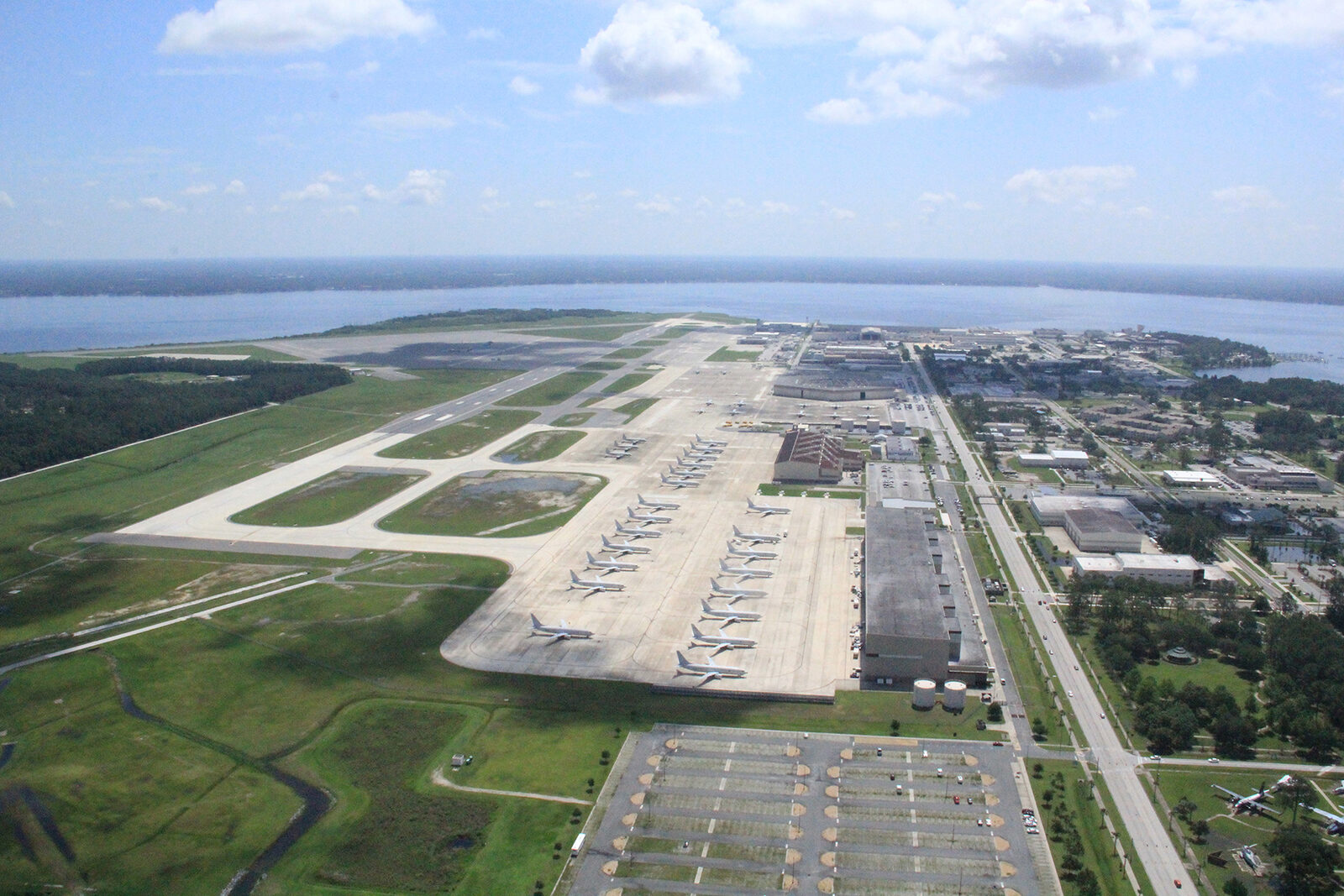
- Navy metallurgist Fred Thomas of Jacksonville Naval Air Station reported
the ball hollow and empty, weighing 21.34 pounds, nearly eight inches in
diameter, a stainless-steel alloy half an inch thick, and neither radioactive
nor explosive — in his judgement a giant ball bearing used as a check valve
in the piping systems of chemical plants [2].
The Enquirer panel — the twentieth and twenty-first of April 1974
- The ball was flown to the offices of the National Enquirer at Lantana,
Florida, then taken to New Orleans for examination by five scientists at a
UFO meeting the newspaper was sponsoring [2].
- The paper’s UFO Blue Ribbon Panel met in New Orleans on the twentieth and
twenty-first of April 1974 [1].
- Dr J. Allen Hynek said afterwards: “All of us agreed that the ball
provided us with no evidence to think it was extraterrestrial,” calling it “a
Chinese puzzle — a brain teaser,” and said its origin probably would not be
known until scientists could cut into it [2]. He did not think it was a hoax
[2].
Documentary record
The earliest surviving account is Skylook No. 78 for May 1974, which carries
the find date, the Navy involvement under Berninger, and the 7.96-inch /
21.34-pound / half-inch-shell figures supplied by Mrs Betz — and states plainly
that, as it went to press, the full reports of the Navy and Enquirer
examinations were not available [1]. The UFO Newsclipping Service No. 62
for June 1974 reproduces the contemporaneous press verbatim, including an
Associated Press story headed “‘Space Ball’ Made On Earth — Navy” and the UPI
report from Lantana carrying Fred Thomas’s findings [2]. Scans from the
Florida Times-Union archive run from “Bizarre Sphere Is Castle’s Latest
Mystery Happening” on the eleventh of April 1974 through Berninger’s X-ray
spectrographic and emission results on the thirteenth [4].
The identification story was carried locally under the Times-Union headline
“Odd Balls Said Part of Valve”, in which Robert Edwards, president of
Holley-Edwards Sales Inc., said his company was a national distributor of
stainless-steel balls used in paper mills and that the Betz ball was part of a
boiler blow-out valve [4]. The May 1974 UFO Investigator (NICAP), under
“Mysterious Steel Sphere Explained”, concluded the sphere was “probably part of
a valve used in machines at the paper plant” and attributed the rolling to
uneven floors [5]. By September 1974 Skylook noted that “various researchers
have ‘identified’ the object as a valve used in paper mill operations,” while a
SAGA magazine writer remained unconvinced [7].
The only government paper this archive can point to is a log entry: on the
eleventh of January 2019 the CIA recorded FOIA case F-2019-00800,
“INFORMATION OR RECORDS ON THE BETZ SPHERE, FOUND IN FLORIDA”, in its
January–March 2019 FOIA case log, released on the seventh of July 2021 [3].
Contested testimony
The family’s account and the Navy’s report do not agree, and the difference is
worth stating rather than smoothing over. Mrs Betz said the ball could roll
about a flat table top, apparently under its own power, in a non-concentric
circle for as long as ten minutes without rolling off, and showed maximum
activity on bright sunny days [1]. She said three or four smaller spheres
inside rattled and moved when it was shaken, and that there were no detectable
seams [1] — directly at odds with Thomas’s finding that the ball was hollow and
empty [2]. She reported a possible high-pitched sound above 15,000 hertz when
it moved, and that the family’s toy poodle whimpered and covered its ears near
it [1][2]. Thomas’s report mentioned neither erratic behaviour when the object
was rolled nor ultrasonic emissions [2]. Berninger conceded the sphere did move
at the Betz house, attributing it to the old house’s uneven stone floors and
the ball being almost perfectly balanced [2]. Mrs Betz’s own position was
narrower than the headlines: “The navy says what it isn’t. They say it isn’t an
explosive. So we still want to know what it is” [2].
Further reported claims sit outside the Navy record: Mrs Betz said an expert
from Omega Minus One, a research firm based in Baton Rouge, Louisiana, examined
the sphere for about six hours on Saturday the thirteenth of April 1974 and
“found radio waves coming from it and a magnetic field around it” [2]; the ball
was said to be magnetised with north and south poles about 150 degrees apart
[1]. Dr James Harder publicly dissented from Hynek, saying over a year later
“I don’t see how Dr Hynek could be sure whether it is man-made or not without
running further tests,” and claimed the internal spheres contained elements
with atomic numbers exceeding 140 [5]. No published test data underlying that
figure has been located. Hynek, for his part, told a Seattle radio show that
“there’s no evidence whatsoever that either I or the other members of the UFO
panel can find that would indicate that it is extraterrestrial,” and of the
movement, “I think we have concluded it largely is a little bit of wishful
thinking” [5].
An alternative provenance was offered at the time by James Durling-Jones, an
artist from Taos, New Mexico, who told reporters the sphere may have been one
of several metal balls he lost in Jacksonville three years earlier [4].
Open questions
- No Navy report on the sphere has been published in full. Skylook noted its
unavailability in May 1974 and no source consulted here reproduces the
document [1].
- Whether the CIA held or released any records in response to FOIA case
F-2019-00800 is unknown — the case log records the request, not the outcome
[3].
- The manufacturer was never identified. Berninger said explicitly that he did
not know who made it [2].
- The precise discovery date is unsettled. Skylook gives the sixth of April
1974; the earliest Florida Times-Union article in the archive is dated the
eleventh of April 1974. A widely repeated date of the twenty-seventh of
March 1974 does not appear in any primary source consulted here [1][4].
- The sphere’s present whereabouts and chain of custody are unrecorded.
- The account that the object was first X-rayed at one facility before being
moved to a stronger machine is common in later retellings, but Berninger’s
description of the two attempts names no facility [2]. One later account
places the inspection at Naval Station Mayport; the contemporaneous wire
clippings place the metallurgical work at Jacksonville Naval Air Station
[2][6].
Status
This file is CONFIDENTIAL — admitted on the strength of contemporaneous
1974 press reporting of an official examination and a logged federal FOIA case
[2][3], not on the strength of the anomaly claims. The archive’s reading is
that the identification is documented and the anomaly is witness testimony: the
Navy’s metallurgical finding and the Enquirer panel’s conclusion both point to
an industrial ball bearing, and no source consulted here contradicts them with
data. What remains genuinely open is bureaucratic rather than exotic — an
unpublished Navy report, an unnamed manufacturer, and an unanswered FOIA log
entry. The case is filed under
spherical objects for its form rather than its
behaviour, and sits closer to the archive’s
cold case material than to its craft reports. Updates
pending any release under F-2019-00800.
References
- Skylook No. 78 (May 1974), “Mysterious metal ball apparently man-made” (file 1974_05) — Mutual UFO Network / The Black Vault MUFON Archive, via Internet Archive.
- UFO Newsclipping Service No. 62, June 1974 — reprints Associated Press, “‘Space Ball’ Made On Earth — Navy”, Winnipeg Free Press, 15th April 1974; UPI, Arkansas Gazette, 23rd April 1974; and the UPI Lantana report of Navy metallurgist Fred Thomas’s findings.
- CIA Reading Room document C06802443: FOIA Case Logs, January–March 2019 — Central Intelligence Agency; records case F-2019-00800, “Information or records on the Betz sphere, found in Florida”, logged 11th January 2019, released 7th July 2021.
- Odd Ball — Extras — WJCT Public Media; scans and captions from the Florida Times-Union archive (11th, 12th, 13th and 15th April 1974), a NICAP newsletter page, and 1974 wire coverage.
- Odd Ball, Episode 4: Hynek vs. Harder — WJCT Public Media.
- The Mysterious Betz Sphere of Fort George Island — The Jaxson Magazine.
- Skylook, September 1974, “In Others’ Words” column by Lucius Farish (file 1974_09) — Mutual UFO Network / The Black Vault MUFON Archive, via Internet Archive.